This article is published in Aerospace Daily & Defense Report part of Aviation Week Intelligence Network (AWIN), and is complimentary through Mar 25, 2026. For information on becoming an AWIN Member to access more content like this, click here.
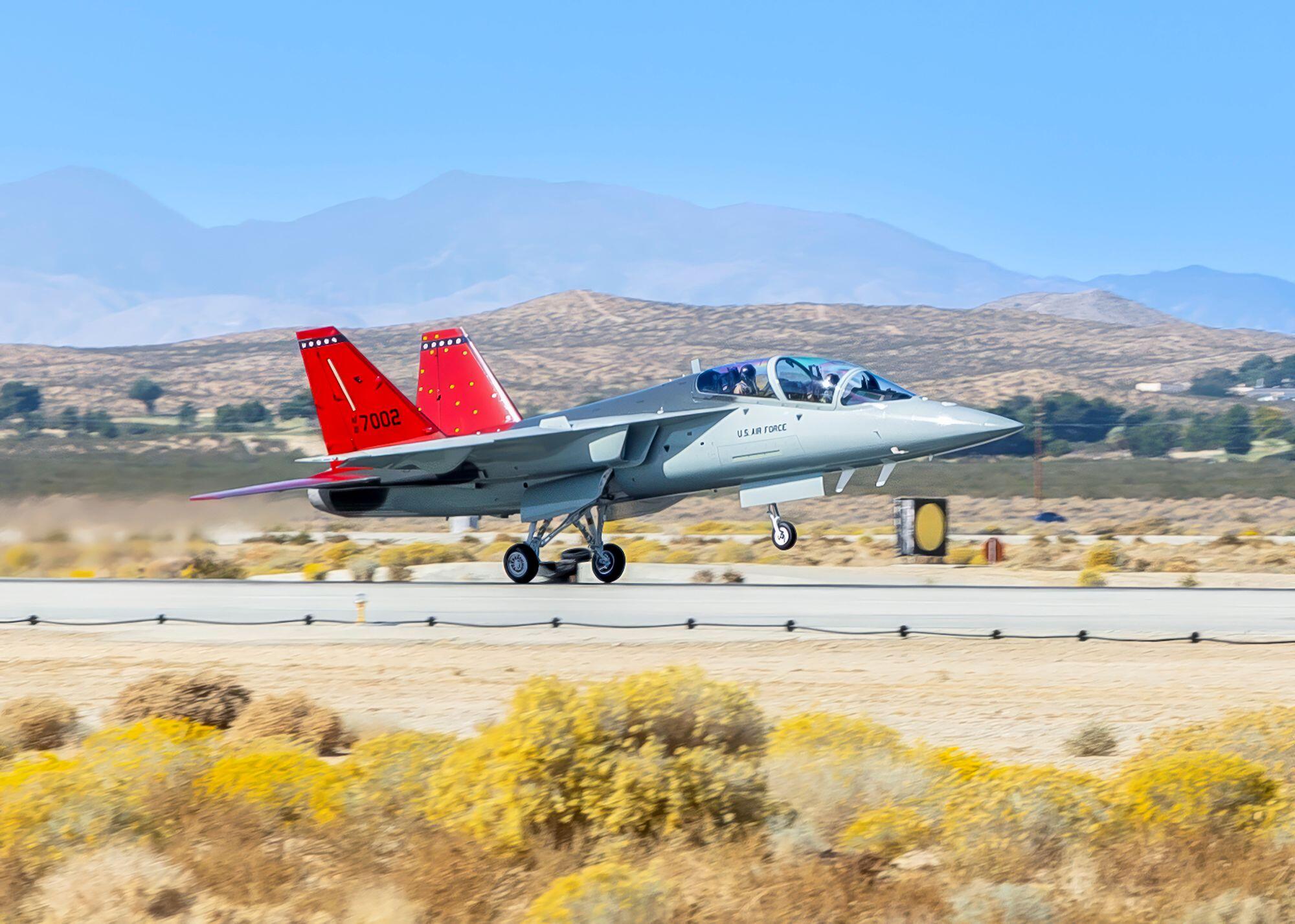
The U.S. Air Force’s Boeing T-7A trainer program is seeing testing delays mount ahead of an imminent production decision, following a change in the acquisition approach to try to speed up fielding.
The service expects a Milestone C production decision this quarter, ahead of initial operational test and evaluation starting in 2027. In the meantime, Boeing and the U.S. Air Force are looking to speed up some testing by using production-representative jets along with initial production aircraft.
However, the Pentagon’s Director of Operational Test and Evaluation in its latest annual report says that tests by contractor-owned and contractor-operated aircraft have been monitored, but they cannot be used as formal test data because these prototypes are substantially different from the five engineering and manufacturing aircraft that are being delivered.
Boeing in fiscal 2025 used its developmental tests to focus on resolving safety-of-flight issues, including the aircraft’s escape system, flight control software, high angle-of-attack stability, propulsion, noise, vibration and departure resistance, the DOT&E report says. Meanwhile, government-led developmental testing focused on wing flutter, flying qualities, aerodynamic structural loads and the initial mission system.
Developmental testing is now expected to be completed by the first quarter of fiscal 2028, a one-year delay from DOT&E’s prior projection. That said, the program is progressing on key test data ahead of the production decision, to include structural design limits and wing flutter to at least 500 kt. (575.3 mph) calibrated air speed.
“The program appears to have a clear pathway to resolving known effectiveness issues, such as limited sortie duration and high angles of attack prior to [Milestone C],” the report says.
A major issue facing the T-7 development has been the ejection seat system, which needed a redesign ahead of key tests of the canopy and ejection sequencer. As of the report’s writing, the program had completed 17 of 22 test events for the egress system and it needs to complete five qualifying sled tests under varying conditions before being certified for airworthiness.
The Air Force plans to buy 351 T-7As along with 46 simulators to replace its Northrop T-38C Talon II fleet.

Related Content