This article is published in Aerospace Daily & Defense Report part of Aviation Week Intelligence Network (AWIN), and is complimentary through Mar 26, 2026. For information on becoming an AWIN Member to access more content like this, click here.
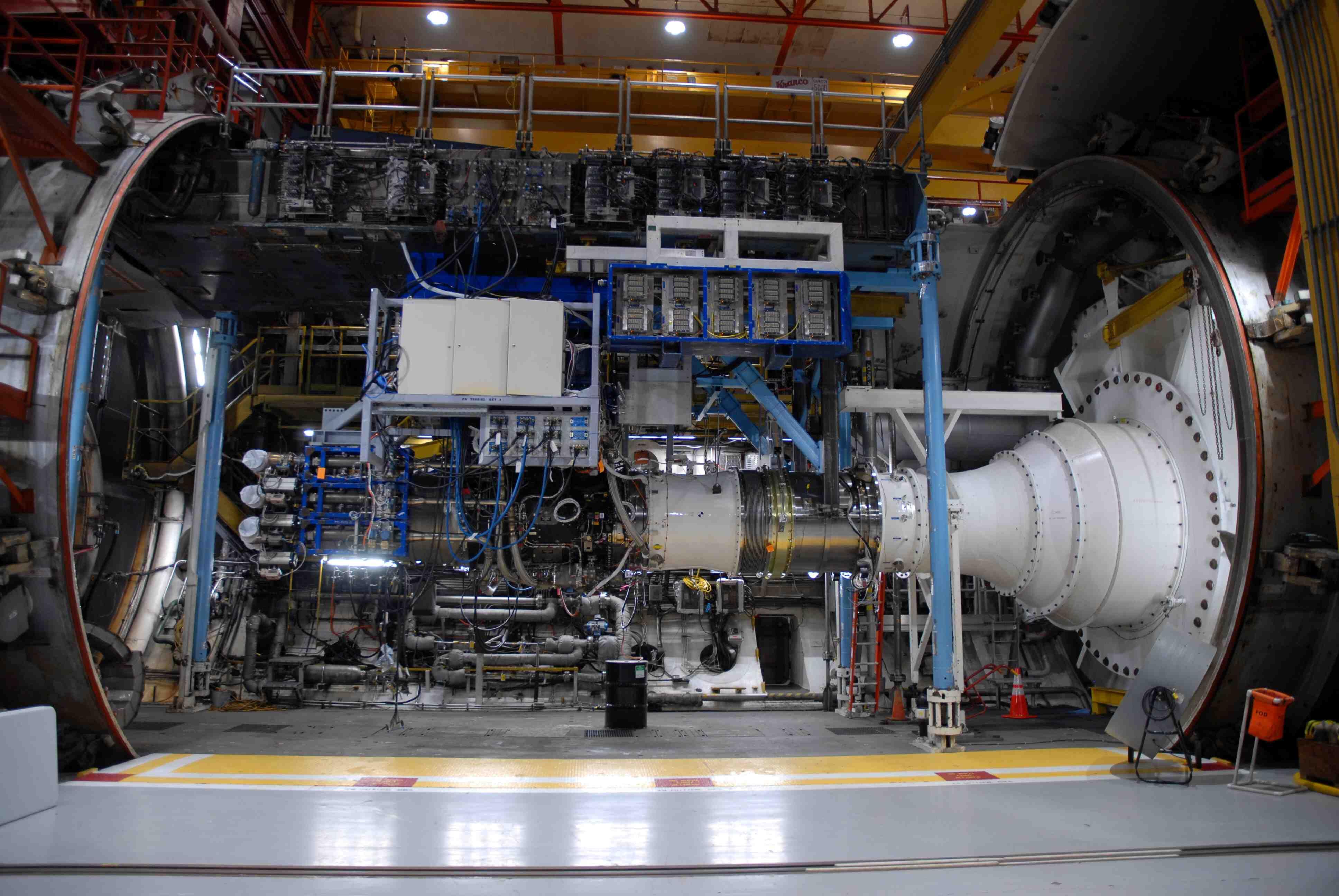
F130 in test cell at AEDC
AURORA, Colorado—Rolls-Royce is preparing to test the revised F130 dual-pod inlet configuration for the U.S. Air Force B-52J Commercial Engine Replacement Program (CERP) as part of efforts with Boeing to complete design improvements to the nacelle.
The work, targeted for the second quarter at Rolls-Royce’s crosswind test facility at NASA Stennis Space Center, follows validation of the design changes in wind tunnel tests in 2025 and comes as the engine-maker completes F130 altitude and operability evaluations at the Air Force Arnold Engineering Development Complex (AEDC) in Tullahoma, Tennessee.
Tests at Stennis will be in two phases, with the first focused on confirming that aerodynamic changes have eliminated inlet distortion issues identified in earlier test campaigns. The improvements include changes to the splitter dividing the two inlets, as well as minor profile changes to the inlet lips themselves, Rolls says.
The second phase, set for later this year, will expand to include systems integration work while repeating the inlet tests with the engines enclosed in a production-representative Boeing dual-pod nacelle. Unlike the Rolls-provided dual-pod nacelle, which is for aerodynamic tests only, the Boeing unit will include standard accessories and systems.
Rolls says the AEDC campaign included “altitude tests to demonstrate sustained performance for long-duration, high-altitude strategic missions; operability testing with distortion screens to replicate turbulent, real-world airflow and confirm engine stability under stress.” Testing also included evaluation with Boeing of the integrated drive generator “to ensure stable and reliable electrical power during all mission scenarios,” it adds.
Preparations for the start of F130 production continue at Rolls’ Indianapolis site, where vertical assembly pits have been installed in the future engine final-manufacturing facility. Although the site will be used for new-build F130 production for the CERP program starting in 2027, it will be utilized initially for modifying an initial batch of 20 BR725 engines for the flight-test program.
The initial batch, which includes engines for two shipsets plus four spares, is due to begin arriving in Indianapolis in pairs from Rolls-Royce’s Dahlewitz, Germany, facility later this year. Conversion into the F130-200 version for the Boeing B-52J will include the addition of new digital engine controls and application-specific hydraulic and fuel lines. First deliveries to Boeing for installation on two B-52J test aircraft are targeted for 2027.
Boeing meanwhile announced in January it had received a $2 billion Air Force contract for the modification of two B-52Hs into test assets for the CERP program, conversion work on which will be undertaken at the company’s San Antonio modification facility.