This article is published in Aerospace Daily & Defense Report part of Aviation Week Intelligence Network (AWIN), and is complimentary through Mar 15, 2026. For information on becoming an AWIN Member to access more content like this, click here.
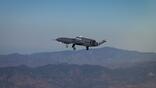
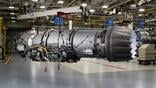
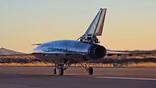
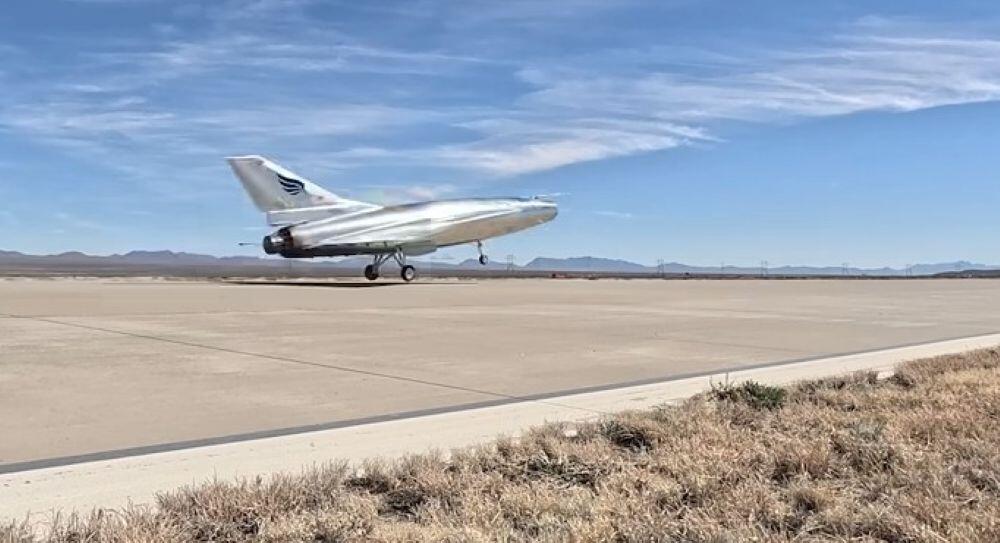
COLORADO SPRINGS—Atlanta-based aircraft developer Hermeus has successfully completed the first flight of its Pratt & Whitney F100-229-powered Quarterhorse Mk. 2.1 supersonic flight demonstrator at Spaceport America in New Mexico.
The flight of the remotely piloted aircraft, conducted on March 2, continues the company’s fast-paced development program which began with a single short flight of the smaller Mk.1 demonstrator at Edwards AFB, California, on May 21, 2025.
Although originally conceived initially as an interim stepping stone toward more capable high Mach vehicles, the Mk. 2 has emerged as a potential stand-alone product. The startup bills the vehicle as “the world’s first high-Mach unmanned aircraft for national defense.”
Similar in size to an F-16, the goal of the Mk. 2.1 “is to go supersonic,” Hermeus founder and CEO A.J. Piplica says. “Its top speed is somewhere in the Mach 1.25 range. But it won’t have all the subsystems that are necessary to go higher,” adds Piplica, who spoke to Aviation Week at the Air Force Association Air Warfare Symposium in Aurora, Colorado, on Feb. 24.
The Mk.2.1 is therefore configured with a simple pitot inlet and does not feature the variable geometry spike inlet that will fly on the follow-on Mk. 2.2 demonstrator, currently under assembly at the company’s Atlanta headquarters. “We don’t need the spike inlet to achieve that goal. We’re also not flying it with the full fuel complement that we could put in the aircraft,” Piplica says.
The Mk. 2.1. is also flying without the pre-cooler, which is a further element of the Hermeus-designed Chimera turbine-based combined-cycle (TBCC) propulsion system designed for later high supersonic and hypersonic applications. “We might go back and retrofit Mk.2.1 to include all those things, but Mk. 2.2 will have them installed and the goal of that aircraft is to demonstrate the pre-cooler in flight,” he adds.
The flight test began with a southbound takeoff from the Spaceport’s 12,000-ft.-long runway 16/34, before the vehicle returned for a northerly approach and landed on the other end of the same runway. Subsequent flights will include “subsonic patterns and a bunch of takeoff and landing approaches,” Piplica says. “We’ll make sure that’s good and then get up high for supersonic tests.”
Flight tests of the variable inlet and pre-cooler will also provide Hermeus with insight into the design of the follow-on Mk. 3 version, which will be equipped with the complete TBCC propulsion system incorporating the precooler, variable geometry inlet, F100 and a ramjet. The Mk. 3 is planned to demonstrate mode transition from turbine to ramjet power over speeds between Mach 2.5 and Mach 3.