This article is published in Aerospace Daily & Defense Report part of Aviation Week Intelligence Network (AWIN), and is complimentary through Aug 16, 2026. For information on becoming an AWIN Member to access more content like this, click here.

RAF Seeks Refueling Boom Capability For Voyager Tankers

voyager mrtt

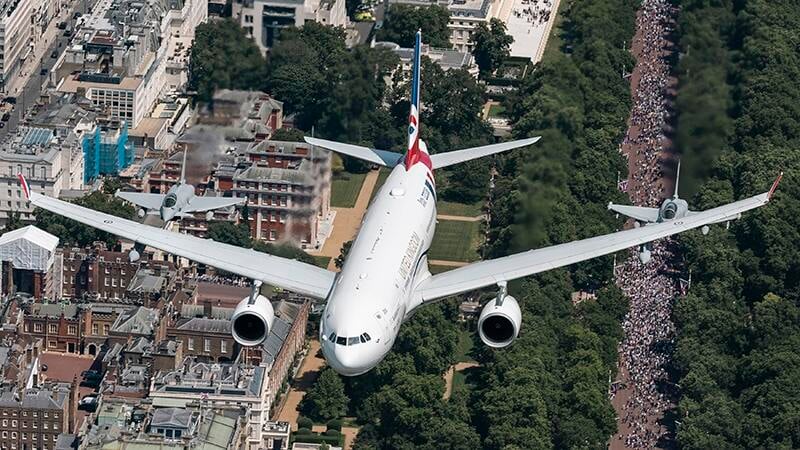
One of the UK's fleet of MRTTs, known as Voyagers.

Credit: Cpl. Tomas Barnard/UK Royal Air Force

LONDON—The UK Royal Air Force (RAF) is looking to equip its Airbus A330 Multi-Role Tanker Transport (MRTT) fleet with aerial refueling booms, allowing the aircraft to support several platforms that currently cannot receive fuel from its tankers.

RAF Chief of the Air Staff Air Chief Marshal Harv Smyth confirmed to Aviation Week in an interview that discussions are underway with refueling fleet provider Airtanker to deliver what he described as the service's “ambition to have boom tankers.”

Adding a refueling boom would represent one of the biggest capability upgrades to the Voyager fleet since it entered RAF service.

The UK fleet of MRTTs, known as Voyagers, is currently only equipped with wing- and fuselage-mounted hose-and-drogue refueling capability. Over the last 10 to 15 years, however, the service has acquired several fleets that are incompatible with that system and require boom refueling.

The limitation has forced the RAF to rely on allied tankers—particularly those of the U.S. Air Force—to support its Boeing RC-135 Rivet Joint intelligence, surveillance and reconnaissance aircraft.

Other RAF platforms unable to receive fuel from Voyager include the C-17 Globemaster III and P-8 Poseidon, with the E-7 Wedgetail and Lockheed Martin F-35A Joint Strike Fighter set to join that list. The Eurofighter Typhoon, F-35B and A400M Atlas fleets remain compatible with the existing hose-and-drogue system.

Once the E-7 and F-35A enter service, RAF front-line aircraft requiring boom refueling will outnumber those compatible with Voyager's existing hose-and-drogue system.

Smyth said the future fighter being developed under the Global Combat Air Program (GCAP) will also require boom refueling because of its significantly greater fuel capacity and near-transatlantic range requirement.

The move would also improve interoperability with allies, as increasing numbers of NATO air forces adopt boom-equipped A330 MRTTs.

No timelines for refueling boom installation have been disclosed, nor how many of the current operational fleet of 10 Voyagers might receive the upgrade.

"We need a boom tanker," Smyth said. "There's some very innovative thinking with Airtanker about how we can end up with both boom and hose-and-drogue tankers without necessarily launching an entirely new procurement program."

The Defense Investment Plan stated that £2.4 billion ($3.2 billion) would be spent on the Voyager program through 2030.

Airtanker, a joint venture between Airbus, Thales and infrastructure investor Equitix, provides the RAF's A330 fleet under the Future Strategic Tanker Aircraft private finance initiative, awarded in 2008 and due to run through 2035. The company told Aviation Week in April that it was ready to invest £1 billion to £2 billion to secure a follow-on contract and provide a boom refueling capability if required by the RAF. 

Tony Osborne

Based in London, Tony covers European defense programs. Prior to joining Aviation Week in November 2012, Tony was at Shephard Media Group where he was deputy editor for Rotorhub and Defence Helicopter magazines.