This article is published in Aerospace Daily & Defense Report part of Aviation Week Intelligence Network (AWIN), and is complimentary through Jun 05, 2026. For information on becoming an AWIN Member to access more content like this, click here.
OTTAWA—Canada’s industrial base features large aircraft manufacturers, small turbofan engine makers, mission systems suppliers and autonomy developers—all of the components necessary to develop a domestic Autonomous Collaborative Platform (ACP). And yet, so far, no company has done so.
Ottawa-based startup Dominion Dynamics—founded by Eliot Pence, a Canadian-born, former Anduril Industries executive—is working to change that.
Having received a C$50 million ($36.6 million) grant from the National Research Council (NRC) and C$21 million from a seed round led by Toronto-based venture capital firm Georgian, Dominion Dynamics plans to complete a subscale prototype of a long-range, weaponized ACP within 18 months, said Robert Waye, head of growth, in an interview during CANSEC here.
The company is working on an ACP design optimized for the unique requirements of the Royal Canadian Air Force (RCAF), Waye said. The aircraft would be based in Canada’s southern tier, be capable of taking off from short and unimproved runways and fly thousands of miles into the arctic frontier, carrying a heavy load of weapons, he said.
“We saw there’s market opportunity to build an airframe that meets the requirements of the RCAF in their Northern mandates, so that’s the aircraft that we’re designing for,” Waye said.
So far, the RCAF has been publicly silent on requirements or plans for a program of record for an ACP, a type also known as a collaborative combat aircraft (CCA). Following the lead of U.S. defense technology startups, such as Anduril, Dominion Dynamics is developing the concept of operations with a mixture of public and private funding in consultation with RCAF officials, Waye said.
The NRC contract is developing a simulation engine to digitally experiment with different approaches to the concept of operations. But Dominion Dynamics anticipates that the aircraft sometimes will have to operate beyond the reach of a human pilot flying a crewed fighter, such as a Lockheed Martin F-35A. It would instead be supervised by ground operators through a satellite link.
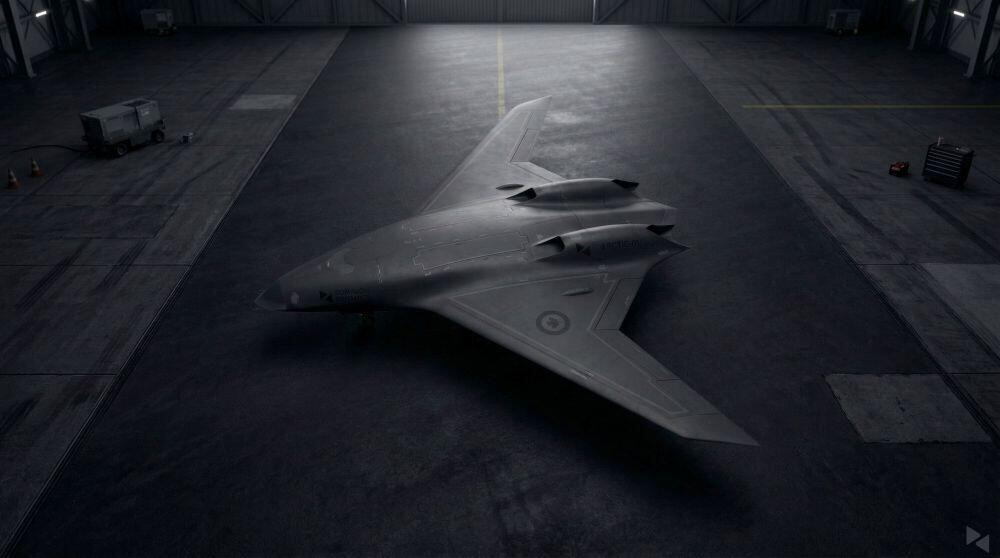
A concept rendering released in March shows the ACP with a delta-wing and two embedded turbofans. To meet the original requirements for long range, long endurance and the ability to carry multiple weapons, the Dominion Dynamics design will likely result in a large aircraft. The company is in discussions with multiple engine makers, including Pratt & Whitney Canada over the PW800, he said.
The subscale prototype will soon be moving off the drawing board. Dominion Dynamics plans to move into a 35,000 ft.² facility on June 1 near Ottawa, where the prototypes and production aircraft will be built.

Related Content