This article is published in Aerospace Daily & Defense Report part of Aviation Week Intelligence Network (AWIN), and is complimentary through Jul 12, 2026. For information on becoming an AWIN Member to access more content like this, click here.
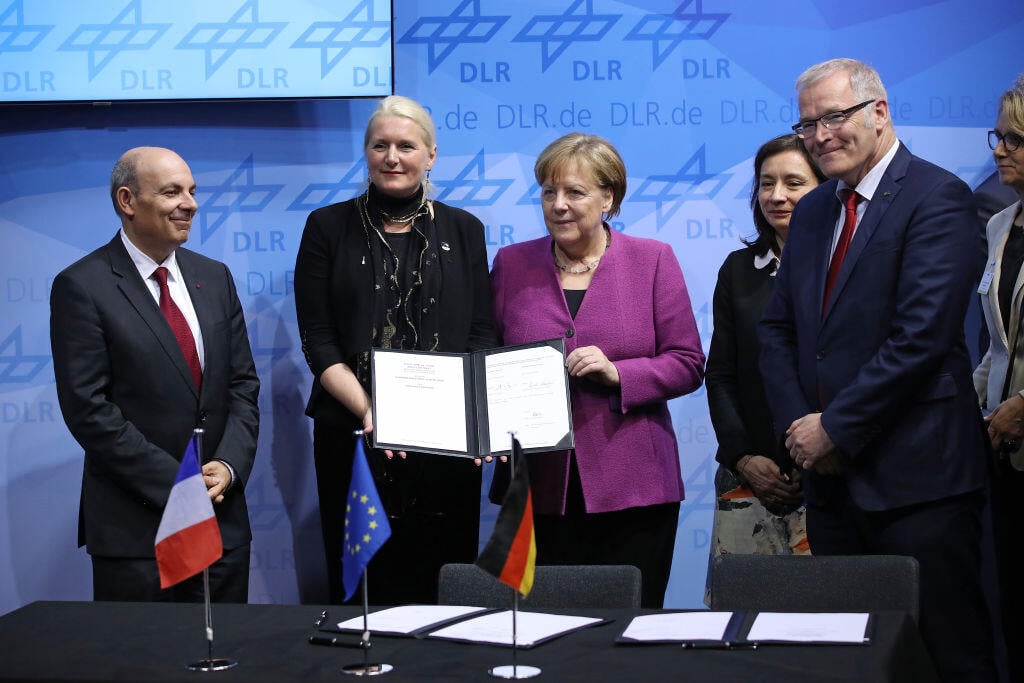
Flashback: At the 2018 edition of the ILA Berlin Air Show officials signed on for Dassault and Airbus to build a Franco-German fighter jet.
BERLIN—Eight years after Airbus and Dassault shook hands at the ILA Berlin Air Show to jointly pursue a future combat aircraft, France and Germany have decided on the eve of this year’s gathering to go their separate ways.
The failure of the so-called New Generation Fighter, the central pillar of the Franco-German-Spanish Future Combat Air System (FCAS), is largely due to industrial tensions, German Defense Minister Boris Pistorius said on the eve of ILA Berlin 2026. “An agreement was not attainable,” he told reporters.
Dassault Aviation, which was the industrial lead on the fighter program, a year ago voiced its displeasure with the structure, saying it lacked sufficient control and wanted changes. That set off months of industrial bickering. The issue came to a head with a new phase of the development program due to start in October.
Amid the tensions, other differences emerged, including over requirements. France needs an aircraft carrier-capable fighter, and one able to deliver nuclear weapons. Germany does not.
For months, politicians on both sides were trying to find a compromise, without success. Pistorius called the end “hardly surprising,” noting key hurdles simply could not be overcome.
“It is good the deadlock is over,” Airbus CFO Thomas Toepfer said in an interview. “Given the situation, this was the right and only possible solution,” he added.
While the fighter program is dead, other elements of the FCAS program are progressing. Those include, for instance, pursuit of uncrewed aircraft programs and development of a so-called combat cloud, a network that can tie future platforms together. Those parts of FCAS will progress into the next development phase.
Pistorius said it was premature to say how Germany will proceed now to address its future fighter needs to eventually replace the Eurofighter Typhoon. The government has been talking to different actors for months, he said. “We will see what way we go,” while declining to speculate on what the project may be and who might lead it.
Toepfer signaled confidence a path forward will be resolved.
Even though the writing has been on the wall for some time, Pistorius said ending a flagship defense cooperation program with France was “painful.” Still, he added, it would not overshadow the bilateral relationship and other cooperation efforts would continue.
Germany also is looking to take lessons from the experience. “With what we know today, we would not structure the program the way we did,” Pistorius said, adding, “That’s a lesson we need to learn.” The fighter program was a big, ambitious undertaking that has now collided with reality. “We have to live with that.”