This article is published in Aerospace Daily & Defense Report part of Aviation Week Intelligence Network (AWIN), and is complimentary through Aug 24, 2026. For information on becoming an AWIN Member to access more content like this, click here.

Excalibur 757 Could Test Sensors For Multiple Future Platforms

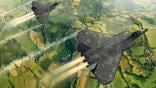
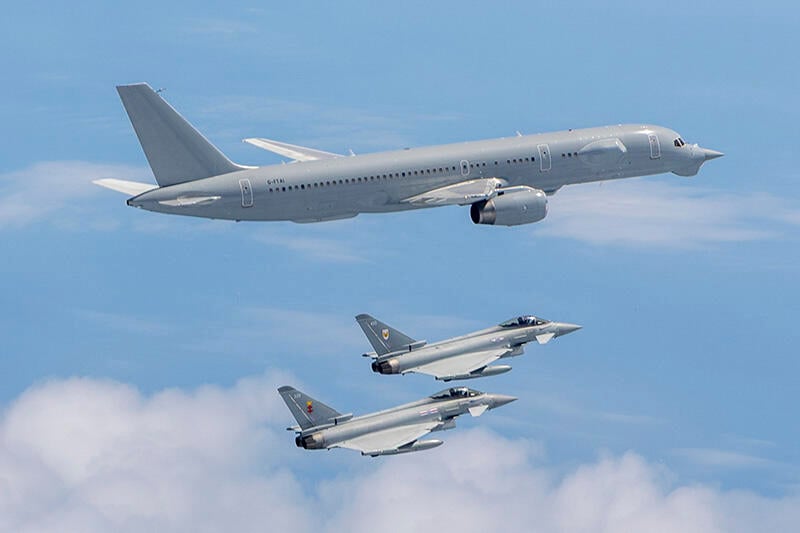
Excalibur flying with Typhoons

The Excalibur is being developed by Leonardo and 2Excel as part of Team Tempest, the UK government-industry partnership leading development of a Next-Generation Combat Air System (NGCAS).

Credit: Leonardo UK

LONDON—Leonardo expects its Boeing 757-based Excalibur airborne testbed to have long-term utility supporting the UK's Future Combat Air System (FCAS) and Global Combat Air Program (GCAP), as well as the development of other future platforms.

Now that the modified airliner has completed conversion by 2Excel Aviation, with its cheek, under-fuselage and nose fairings installed, Leonardo is preparing to begin integrating prototype sensors and communications systems—known as Technology Demonstration Programs (TDPs)—onto the aircraft over the next three years in support of the two programs.

Andrew Howard, general manager of the GCAP Electronics Evolution team and director of major air programs at Leonardo, told journalists at the Farnborough Airshow that Excalibur will be fitted with the advanced Multi-Function Radio Frequency System (MFRFS) radar, electronic warfare, infrared search-and-track and electro-optical systems.

“That's the next step along the journey, where we start to embody equipment to really unlock the value of what we've designed here,” Howard said.

Inflight testing of the sensors will mature the technologies and help accelerate their integration onto the GCAP aircraft. “That will help us understand better sensor fusion and the connections that we're trying to create between the various sensors,” Howard added. The fairings and apertures were not designed for specific sensors but instead to accommodate different designs and future modifications.

Howard said Excalibur could also have “real utility on a multiplatform basis,” particularly as the UK invests in collaborative combat aircraft through its Storm Fighter program. Technologies developed through the TDPs could also be applied to lower-cost platforms.

Looking ahead to GCAP, Howard said industry and the UK Defense Ministry had pursued “the right things,” at least in sensing terms, “We now know four or five years later a bit more about what sixth-generation aircraft will require in terms of the combination of sensors on the platform and the relative prioritization of those different sensors. It feels like, for the most part, the TDPs were good choices,” he said.

Once the TDPs have been tested, Excalibur will undergo further upgrades to support testing of GCAP operational systems in the early 2030s ahead of the combat aircraft's planned entry into service in the latter half of the decade.

Use of the 757 for the UK FCAS/GCAP initiative follows similar efforts in the U.S. and China. The Boeing narrowbody was selected because of its size, payload capacity and electrical power generation. The aircraft will operate on the UK G-register, allowing it to operate worldwide.

The aircraft was modified by 2Excel Aviation, which used two 757s during the conversion program, dismantling one aircraft to generate engineering data for modifying the other.

The modifications required changes to the pressure hull, adjustments to the aircraft's center of gravity to accommodate the heavier nose and installation of a new air-data system atop the vertical stabilizer because engineers were concerned the original system would be affected by the added fairings and resulting shock and pressure waves.

The next phase of testing will include noise testing and flights into known icing conditions.

“The choice of the 757 as essentially the donor platform to become the flying laboratory ... has proven to be really effective,” Howard said. The 757 provides the range, endurance and surplus electrical power needed to support the sensors and onboard computing systems, Howard added.

“Getting a mothership platform ready is just really the first step in the journey . . . but it becomes really valuable now as we start to apply the test activity that comes next,” he said.

Tony Osborne

Based in London, Tony covers European defense programs. Prior to joining Aviation Week in November 2012, Tony was at Shephard Media Group where he was deputy editor for Rotorhub and Defence Helicopter magazines.