This article is published in Aerospace Daily & Defense Report part of Aviation Week Intelligence Network (AWIN), and is complimentary through Apr 11, 2026. For information on becoming an AWIN Member to access more content like this, click here.
Rafale
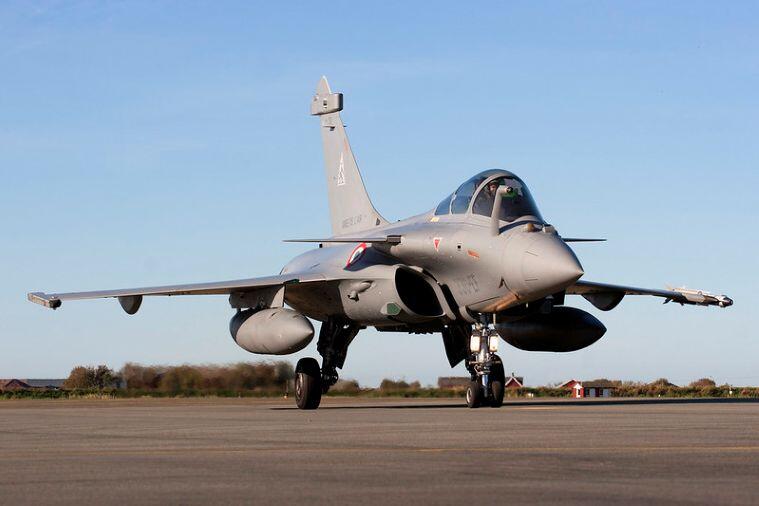
PARIS–Dassault Aviation has been gradually increasing the production rate of the Rafale fighter, aiming for four aircraft per month in 2029 and considering a further increment to five, CEO Eric Trappier said March 4.
The ramp-up is supporting export sales over the last few years, and is preparing the company to accommodate more orders. Meanwhile, Dassault is getting organized to have large subassemblies of the fighter built in India to meet the country’s requirements. As the airframer is planning for an additional, massive contract with the South Asia nation, it is gearing up for even more localized production.
Dassault delivered 26 Rafales in 2025 and is planning on delivering 28 in 2026. The supply of long-lead items is compatible with four aircraft leaving the final assembly line every month (counting 11 working months per year) in 2029, Trappier said, speaking at his company’s annual press conference.
For Dassault, the cycle between setting a Rafale production rate target and the materialization of that output stands at three years. “If we receive more orders, and we decide to go to Rate 5 in 2027, that will be effective on the assembly line in 2030,” Trappier said. “We have not made a decision. We have studied that rate and the decision will depend on orders.”
Rate 5 may take into account production in India. Dassault partnered with Tata Advanced Systems last year to establish local production of two Rafale fuselage sections per month, with the first delivery scheduled for 2028. If the Indian government signs a contract for 114 more Rafales—a proposed order that the country’s Defense Acquisition Council approved—a second final assembly line for the fighter may be created in Hyderabad. A target production rate has yet to be specified, Trappier said, stressing he is aiming for as many locally produced Rafales as possible.
India is targeting greater than 50% localization of components for future Rafales made in-country, Defense Secretary Rajesh Kumar Singh said Feb. 13. Asked whether Dassault could meet that condition, Trappier answered affirmatively. “That 50% proportion is the outcome of a calculation that relies on many parameters,” he said. “We can do it, knowing we have a potential agreement with Indian authorities on what 50% means.”
As of Jan. 1, Dassault’s backlog for the Rafale stood at 220. The company received total orders for 533 aircraft, including 323 for foreign customers.
The production ramp-up is taking place in a context of a wide-ranging hiring effort. “We renewed 40% of our workforce over the last few years, and training is a major topic,” Trappier said. He added that experienced employees take time mentoring new ones. Dassault hired 1,579 people in 2025, bringing its payroll to 15,024.