This article is published in Aerospace Daily & Defense Report part of Aviation Week Intelligence Network (AWIN), and is complimentary through Jul 12, 2026. For information on becoming an AWIN Member to access more content like this, click here.

Airbus Broadening H145M Helicopter Mission Set

h145

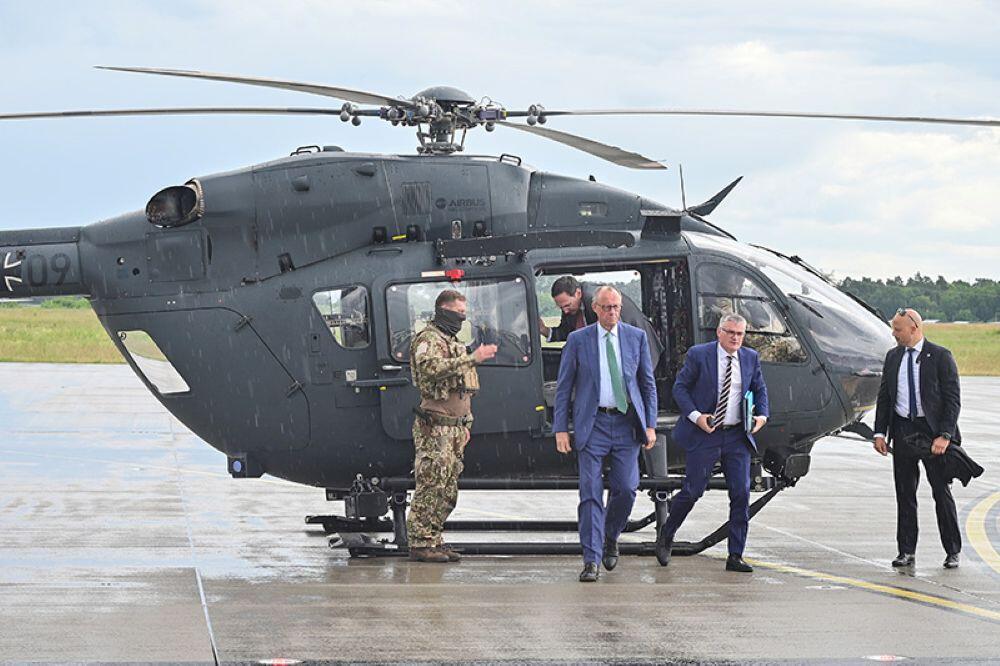
German Chancellor Friedrich Merz took great interest in the H145 helicopter during the ILA Air Show.

Credit: Messe Berlin GmbH

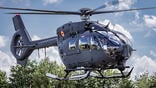
BERLIN–Airbus Helicopters is looking to broaden the role of its H145M light utility helicopter into the anti-drone mission.

Prompted by the extensive use of low-cost, one-way attack drones by Iran in the Middle East and by Russia against Ukraine, the company is exploring the use of door-mounted guns up to 7.62 mm caliber.

Ukrainian forces have made extensive use of Mil Mi-8/17 transport helicopters in this role, with the aircraft flying alongside the drones before engaging them. At one point last year, helicopters were claiming to be downing up to 40% of Russian Shahed/Geran one-way attack drones.

In the Middle East, militaries there began using attack helicopters like the Boeing Apache on drone-hunting missions using their chin-mounted cannons for drone engagements.

Constance Pinsdorf, head of the H145M program at Airbus Helicopters, said there was significant customer interest in the counter-UAV mission for the light twin-engine rotorcraft.

“Anti-drone capability is definitely in focus,” she told journalists at the Berlin ILA Air Show here on June 12. The company is also looking at a target recognition system for anti-drone use.

“There are [target recognition] systems on the market and we are staying in contact with these suppliers to understand which way these can be integrated,” Pinsdorf said.

The H145M has rapidly risen to become Airbus’ most popular defense product in recent years, with dozens being acquired for the light utility and light attack roles. Primary weapons for the latter include a gun pod and guided and unguided rockets. Airbus has also integrated the Rafael Spike ER2 guided missile onto the helicopter. The largest user will be Germany, which has ordered more than 80 aircraft to be used for training, liaison and the light attack mission. Several have already been delivered for training at the German army’s rotary-wing training school at Buckeburg. Another will be used for further development by test unit WTD61.

Other European users include Belgium, Cyprus, and Serbia, with Spain also set to receive the aircraft. During ILA, it was announced that four H145s would also be delivered to Montenegro in Germany’s first-ever government-to-government defense deal.

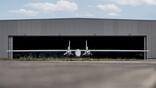
At Berlin, the airframer also announced the development of the U145, an autonomous derivative of the H145 envisioned for the logistics mission and as a mother ship for air-launched effects. Pinsdorf described it as the next step in the H145’s development journey.

U145 development has been prompted by, but is entirely separate from, its MQ-72C Lakota Connector platform being developed by its U.S.-based business for the U.S. Marine Corps with ShieldAI, L3Harris, and Pary Labs.

U145 will rely entirely on European-developed technologies and partners, relying on autonomous technologies developed for the smaller VSR700 shipboard rotary-wing UAS.

Having displayed a fuselage mockup of the aircraft at Berlin, the company is now preparing to make a first flight. An initial phase of the autonomous technology will be installed, but with a safety pilot onboard.

Further flight campaigns will follow, Pinsdorf says, “so that we have everything completely ready, completely stable and mature at the end of this decade, depending on the market needs.”

Removal of pilot-associated equipment will give the 3.8-metric-ton helicopter the ability to carry a payload of up to 1,200 kg (2,645.5 lb.) over 500 km (310.6 mi.), she says. Just as the MQ-72C will be able to operate from ships, the U145 will be able to do the same, with Airbus planning to install the company’s Deck Finder autonomous landing system on the aircraft as standard. Airbus has already signed with MBDA Germany has a development partner for the U145 to be a mother ship for MBDA’s 8-12-kg, air-launched effect. It would be launched from the aircraft’s cabin through the side doors.

The mockup was also displayed carrying Quantum Systems’ Strila high-speed, electric-powered, anti-drone interceptor, giving the U145 another anti-drone capability.

Tony Osborne

Based in London, Tony covers European defense programs. Prior to joining Aviation Week in November 2012, Tony was at Shephard Media Group where he was deputy editor for Rotorhub and Defence Helicopter magazines.