This article is published in Aerospace Daily & Defense Report part of Aviation Week Intelligence Network (AWIN), and is complimentary through Jul 12, 2026. For information on becoming an AWIN Member to access more content like this, click here.

Aerodata Moving Toward Flight Test Of Germany’s First MALE UAS

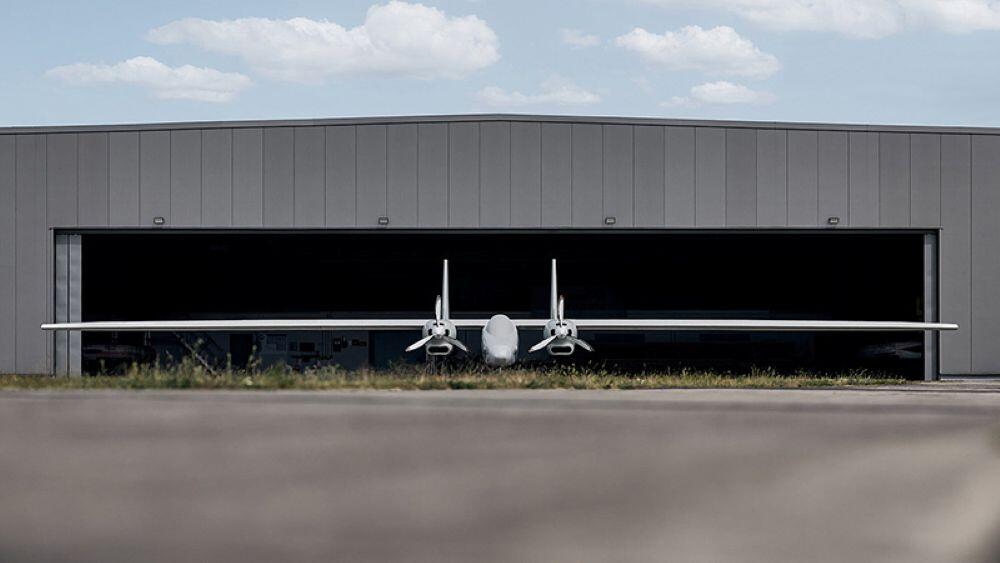
Aerodata AG
Credit: Aerodata AG

BERLIN–A German modification house specializing in the conversion of intelligence, surveillance and reconnaissance (ISR) aircraft is close to flying its first uncrewed aircraft system (UAS).

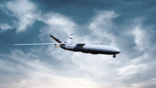
Braunschweig-based Aerodata AG has developed its AeroForce X, a twin-engine, twin-boom medium-altitude, long-endurance (MALE) UAS from clean sheet to final assembly in just 18 months. A first flight is being preparing for in October. Aerodata revealed that it was developing the aircraft in December before rolling out the prototype at an airfield near here earlier this month, just before the Berlin ILA Air Show.

The aircraft will be Germany’s first domestically developed MALE UAS. If successful, it could also be Europe’s first given the continent’s poor success rate in this key sector of the uncrewed aircraft business.

“For many years, we were looking to integrate an unmanned platform into our portfolio, but the platforms available were either too small for our sensors and our use cases,” Neset Tukenmez, CEO and president of Aerodata, told Aviation Week. MALE platforms from the U.S. or Israel were also not a fit for the company’s customer use cases, he says, so “the solution was to invest in our own platform.”

Aerodata secured backing from its shareholders to invest in the aircraft’s development.

But Tukenmez would not discuss the size of the investment, merely saying it was “huge for a small company.”

The result is a 5-metric-ton aircraft, with a payload capacity of 1.3 tons and endurance of up to 40 hr. Tukenmez says the aircraft will cost much less than other competing MALE platforms like the General Atomics MQ-9, with a low-double-digit millions of dollars price tag. He also says the aircraft is 100% German, including the engines, mission suite and communications system, making it International Traffic in Arms Regulations free.

He also would not discuss the sourcing of the engine or whether the aircraft was powered by a piston or turboprop powerplant, but German industry has strong expertise in piston engines.

Aerodata’s engineering team has completed stress tests of the 26-m-span wings, and ground runs and taxi tests are due to follow shortly.

Flight trials are planned within Germany, something that would have been almost impossible just a few years ago with regulators.

“Not that long ago, we couldn’t even talk about drones let alone flight testing them here, but now the mindset is completely different,” Tukenmez said.

Tukenmez is also encouraged by the Germany government’s strategies to boost the aerospace industry.

During the show, German Chancellor Fredrich Merz described aviation as “one of the great growth industries of our age.”

Aerodata has already seen significant interest in the AeroForce X, albeit largely from outside Europe, with “deep discussions” underway since the company released details about the aircraft, Tukenmez says. European interest has been limited so far, but he says engagement is underway with Germany as well.

In a standard configuration, the AeroForce X will feature an electro-optical camera and radar, and there are also options to add a signals intelligence capability. The company is also exploring the carriage of interceptor drones for the anti-one-way-attack drone mission.

Aerodata is primarily targeting military certification, but the design has also been configured so that civil certification could be achieved later, although this is a “long-term target,” Tukenmez says.

European MALE drone development is filled with failed attempts to compete with Israeli and U.S. platforms. Airbus is currently leading the development of the Eurodrone, but a first prototype is not expected to fly until 2027, six years after program launch. Piaggio’s development of the Hammerhead UAS derivative of the P.180 Avanti turboprop failed when the prototype crashed into the Mediterranean Sea. More recently, Leonardo has teamed with Turkey’s Baykar to try to short-circuit the European MALE UAS market. Aeroforce X also bears more than a passing resemblance to Turkish Aerospace Industries’ (TAI) Aksungur twin-engine UAS. But Tukenmez says the Aerodata aircraft is in a different weight category, 1.7 metric tons more than the TAI-built platform.

Tony Osborne

Based in London, Tony covers European defense programs. Prior to joining Aviation Week in November 2012, Tony was at Shephard Media Group where he was deputy editor for Rotorhub and Defence Helicopter magazines.