This article is published in Business Aviation & AAM Report part of Aviation Week Intelligence Network (AWIN), and is complimentary through Oct 21, 2026. For information on becoming an AWIN Member to access more content like this, click here.

Johann Bordais, Eve Air Mobility CEO.
As rival electric vertical-takeoff-and-landing (eVTOL) aircraft developers increasingly pursue hybrid propulsion, defense and other markets, Embraer-backed Eve Air Mobility is staying focused on battery-electric urban air taxis.
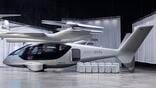
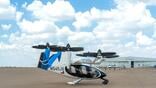
The Brazilian company is targeting certification of its four-passenger Eve-100 by the end of 2028 and has logged 72 flights with its remotely piloted engineering demonstrator.
CEO Johann Bordais recently sat down with Aviation Week editors Ben Goldstein, Lee Ann Shay, Michael Bruno and Joe Anselmo to discuss Eve's certification roadmap, industry consolidation, production plans and finances. A partial transcript follows:
Aviation Week: What are the main milestones between now and your targeted certification at the end of 2028?
Bordais: It all started with the engineering prototype. It's full-scale, remotely piloted and fully carbon fiber. We could have gone directly to the conforming prototype, but we wanted to learn because no one has done this before, not even Embraer. It's the first time Embraer has flown vertically, and the first time we've flown a vehicle remotely. We're up to 72 flights.
The first phase was hover, which we completed in April. Now we're going through transition, increasing the speed envelope from 30 kt. to 50 kt., then 80–85 kt. At 85 kt. we turn off the lifters and become wingborne. That can happen by the end of this year.
In parallel, we're working with approximately 25 suppliers to complete critical design reviews. Some are already done and we have parts on hand. We'll start assembling the first conforming prototype by year-end. It will fly with a pilot by the end of next year, and we'll have six conforming prototypes for certification at the end of 2028.
Aviation Week: How many eVTOL manufacturers do you expect to reach certification by the end of the decade?
Bordais: I think consolidation is natural. Five years ago, everybody wanted to get into it because, for the first time, we had the technology for a fully electrified air taxi with one pilot and four passengers. But it's not simple. It takes expertise, money, a portfolio of customers, knowledge of certification and product development.
Consolidation has already begun, and it will keep happening. Only the ones that certify and get to the starting line—and certification is the starting line—will make it. My prognosis is two to three by the end of this decade.
I've said for three years that we don't want to be the first one. We want to be the right one. But we might as well be the first one. Why not? It's not the priority, but it might happen because of our discipline and execution.
Aviation Week: Competitors are pursuing hybrid aircraft and defense markets. Why is Eve sticking with battery-electric urban air mobility?
Bordais: We believe in our UAM [urban air mobility] model because that's what customers want, and that's where we have to start. Maybe eventually we'll do something else, but let's focus. We have a cash runway, customers and certification to go through.
Urban air mobility is all about electrification. You want something quieter, with lower operating costs, and that's the value proposition of a fully electric vehicle. For regional air mobility, why not hybrid, until batteries allow us to do that?
But 99% of our customers' routes are 30–40 km (18-25 mi.). Our aircraft has a maximum range of about 80–85 km, so we're covered. It's also why we chose lift-and-cruise instead of tiltrotors. Tilt is a good option, but for certification and operating costs, we believe lift-and-cruise is the right decision. We want to minimize downtime and keep the aircraft flying.
Aviation Week: How quickly will you ramp up production, and at what rate does Eve break even?
Bordais: We have to be realistic. Urban air mobility is going to happen, but how fast? No one can tell. That's why we went for a modular factory in Taubaté, Brazil, with eventual capacity of 480 aircraft a year.
Are we going to start with 480? No! We're talking about 40–60 aircraft annually, then going up to 100. When we hit 100 aircraft, that's when we break even. We see that taking 2-3 years.
The first module has a maximum capacity of 120 aircraft a year. Beyond that, we'll add equipment, shifts and people. Once we hit 480, we'll talk about another factory. For now, it's Brazil.
Aviation Week: Does Eve have enough cash to reach certification without raising additional funds?
Bordais: To make the right product, we postponed entry into service. It was a responsible decision to ensure the vehicle had the right performance. But that decision had consequences.
We wanted to make sure our cash runway was enough, and we've gone through a program this year of synergies with Embraer to extend it. Our liquidity, over $500 million, will be enough until certification. Then we can focus on getting the ecosystem ready, entering service and selling the aircraft. So yes, we do have enough cash.

Related Content