This article is published in Business Aviation & AAM Report part of Aviation Week Intelligence Network (AWIN), and is complimentary through Nov 07, 2026. For information on becoming an AWIN Member to access more content like this, click here.
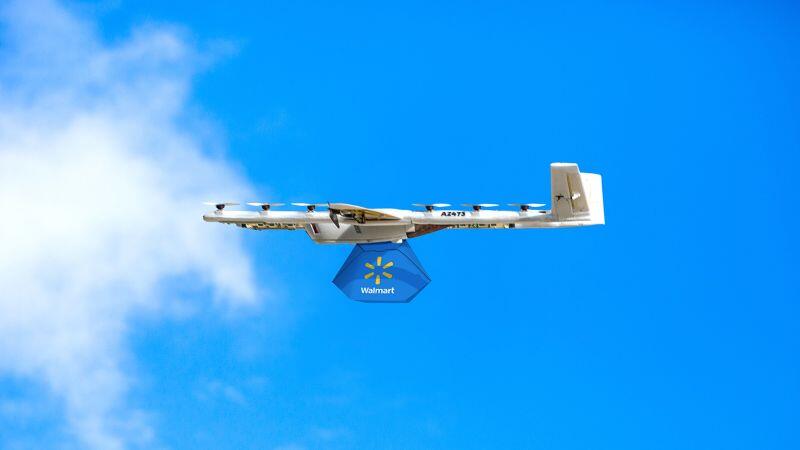
LAS VEGAS—As drone deliveries and other uncrewed aircraft operations pick up pace, Google’s Wing and Robinson Helicopter Company see a growing need for technologies to separate aircraft at low altitudes.
But the two companies differ on how much the system should rely on reserving blocks of airspace in advance, as opposed to maneuvering during flight to avoid unexpected traffic.
Speaking at an NBAA Business Aviation Convention & Exhibition panel here, Wing’s Dallas Brooks, head of standards and aviation, said strategic deconfliction—reserving a path through airspace for a flight at a particular time—will become increasingly important as the density of drone operations grows.
Wing and other operators are using an industry-developed uncrewed aircraft system traffic management (UTM) system to coordinate flights. Brooks said the system allows operators to reserve a trajectory through time and space before a flight begins.
But as traffic increases, a drone maneuvering dynamically to avoid another aircraft could leave its reserved airspace and force other flights to replan, posing a risk of cascading disruptions, he added.
“As the scale increases and you get thousands and thousands of operations, throwing dynamic on top of strategic [deconfliction] actually increases risk and hazards,” Brooks said. “Trying to do that with thousands of aircraft that were previously locked into deconfliction on the fly adds a tremendous amount of risk.’
Brooks added that dynamic avoidance can offer more flexibility in lower-density areas, while a mix of strategic and dynamic measures may be appropriate elsewhere.
Robinson Helicopter President and CEO David Smith said dynamic deconfliction will remain important in busy metropolitan areas where helicopters and other aircraft operate on unscheduled missions and may not be participating in a UTM system.
“One of the challenges I think we’ll face with scaling is there’s a tremendous amount of opportunity in some of the big metropolitan areas, but there’s a lot of unscheduled traffic that will make this a very difficult thing to do without heavy reliance on deconfliction,” Smith said.
Smith highlighted gaps in electronic surveillance coverage and the incomplete adoption of ADS-B across the aircraft fleet as challenges to scaling UAS safely. He said operators will need multiple layers of protection as drone operations expand into airspace used by helicopters on public safety and other missions.
Cargill’s Calvin Rieb, who leads the company’s global drone program, said he is also concerned about encounters between drones, including aircraft flown by first responders that may need to enter an area quickly.
“I think it’s the low-level deconfliction that is truly the challenge,” Rieb said. “How does the technology all interconnect and communicate, and what’s that glue, so we can all exchange information quickly?”
Brooks said the UTM system currently operates on a largely first-come, first-served basis. The industry consortium is discussing proposals for giving priority to disaster relief or medical flights over routine deliveries, including how to verify and activate that priority, he said.
The panel also addressed the FAA’s proposed Part 108 rule for beyond-visual-line-of-sight drone operations. FAA Emerging Technologies Division representative Rachel Carlstrom said the agency is using data from existing operations conducted under exemptions and waivers to inform the rule.
Rieb said Cargill, which operates roughly 100 drones globally, expects to pursue certification under Part 108 to accommodate growth. “Shifting to the compliance-based approach is going to be a lot easier for us than multiple waivers with different use cases [in] different areas,” he said.
Brooks also cautioned against using artificial intelligence to make aircraft decisions. Wing relies on sophisticated automation designed to produce predictable behavior, he said, while AI could help analyze rules and model scenarios.
“Aviation safety is based on predictability,” Brooks said. “When you know what it’s going to do, you can program safe solutions around it.”

Related Content