This article is published in Business Aviation & AAM Report part of Aviation Week Intelligence Network (AWIN), and is complimentary through Nov 07, 2026. For information on becoming an AWIN Member to access more content like this, click here.
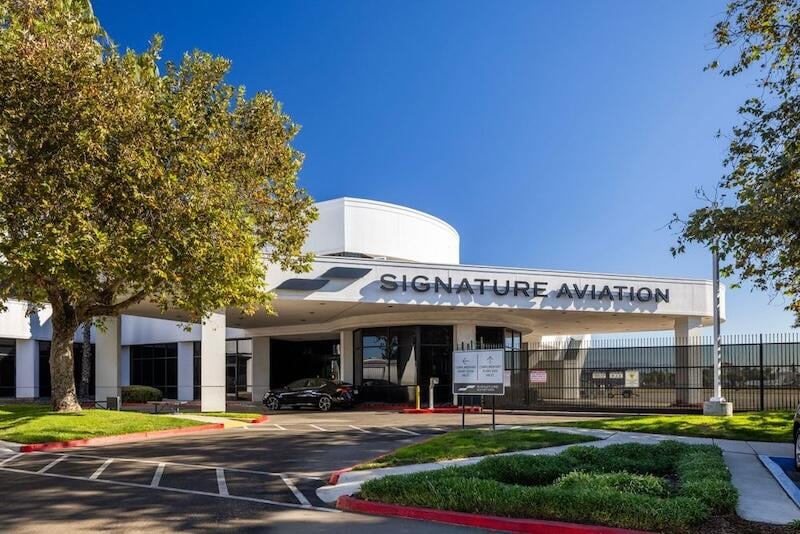
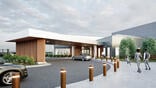
Signature Van Nuys - West.
Signature Aviation plans to continue expanding and modernizing its global fixed-base operator (FBO) network, targeting a larger slate of FBO, hangar and ramp projects in 2027 following billions of dollars of capital investment over the last five years.
The company has invested roughly $3.6 billion since 2021 across infrastructure, safety and technology initiatives, according to Chief Commercial Officer Derek DeCross. That spending includes new and renovated terminals, hangars, ramps and offices across the company's network of more than 200 private terminal and FBO locations worldwide.
“We have great investors, fortunately, that believe in the space, and it's fueled a lot of growth,” DeCross said. “We're always in the market. We look at a lot of different deals, both in terms of acquisitions of existing chains and FBOs, as well as opportunities for greenfield expansion to build things ourselves.”
Signature expects to complete six new or heavily renovated FBOs, 11 hangars, five offices, four temporary FBO facilities, one charter terminal and nine ramp projects in 2026, DeCross said. The pace of expansion is going to increase even more in 2027. Signature is planning 10 new or substantially renovated FBOs, 12 hangars, five offices, three temporary FBOs and 17 new or renovated ramps next year, he said.
Smaller-scale refreshes involving more narrow improvements like paint and carpeting are planned for 14 FBOs in 2026 and 15 in 2027, he added.
Expansion is taking place through a combination of investment in existing locations, greenfield site development and acquisitions. Signature recently acquired the former Castle & Cooke Aviation FBO at Van Nuys Airport, giving the company three locations at the major Southern California business aviation airport.
Internationally, Signature opened a new terminal in Glasgow, Scotland, in March and is expanding into Costa Rica with a new facility at Guanacaste Airport in Liberia expected early next year.
“We always ask when we're looking at new markets—what can Signature bring to the table?” DeCross said. “Why would this market make sense for us to expand into? And once we launch it, how confident are we that we'll be able to succeed and ramp up quickly?”
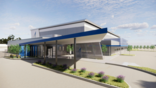
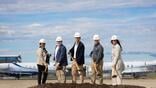
Signature is also adapting its infrastructure to a business aviation fleet that is increasingly trending toward larger aircraft. In May, it broke ground on a 22,000-ft.2 hangar at Roanoke-Blacksburg Regional Airport, Virginia, which was designed to accommodate newer large-cabin business jets.
“We see a lot of that upgrade activity into larger jets, and so we need to make sure our hangar capacity meets those specifications,” DeCross said.
Another major investment is ongoing at Signature's FBO at Eagle County Regional Airport near Vail, Colorado, in advance of the planned 2027 closure of Aspen/Pitkin County Airport for runway work. As a result, Signature expects traffic to shift to other airports during that closure and plans to draw on its network at Eagle, Denver-area Centennial and Rocky Mountain Metropolitan airports to meet additional demand.
The spate of investments comes as Signature continues to see resilient demand for private aviation. DeCross said the company has not observed a significant impact on demand from higher fuel costs, although it continues to monitor the supply chain for risks. He highlights higher aircraft deliveries and growing OEM backlogs, increased aircraft utilization and customers upgrading into larger jets as continuing trends in the marketplace.
Private aviation demand has also received a boost from major sporting and cultural events. Across 37 Signature bases analyzed during FIFA-related events this year, the company recorded 45,786 general aviation operations, up 25% from the year-ago period. Bases supporting major matches averaged 106 operations per day, or 38% higher than a year ago.
Signature also sees artificial intelligence (AI) as a tool for improving efficiency as its network expands. The company is exploring the use of AI in functions including pricing, demand forecasting, infrastructure capacity, booking and customer targeting. DeCross said Signature believes AI will benefit team members and customers by shifting workers away from routine administrative tasks toward increased customer engagement.
“AI should make us more human in the sense that it allows our team members not to focus on a lot of these mundane tasks,” he said. “It lets them focus on the guest experience: eyes up, engaging the guest. AI is not going to do that piece—only the people can do that, especially for the clientele we're serving. They expect warmth and connectivity.”
Signature's investments are also shaped by how customers actually use its facilities. Despite the emphasis on modernizing its FBO terminals, the average customer spends just 3 min. 20 sec. inside its terminals, according to past time-and-motion studies conducted by the company.
“That drives where we make investments,” DeCross said. “It doesn't make sense for us to put in a huge art gallery at one of our FBOs . . . But people love coffee, and you better make sure it's good coffee.”

Related Content