Textron, Signature Mobilize For Massive Special Olympics Airlift

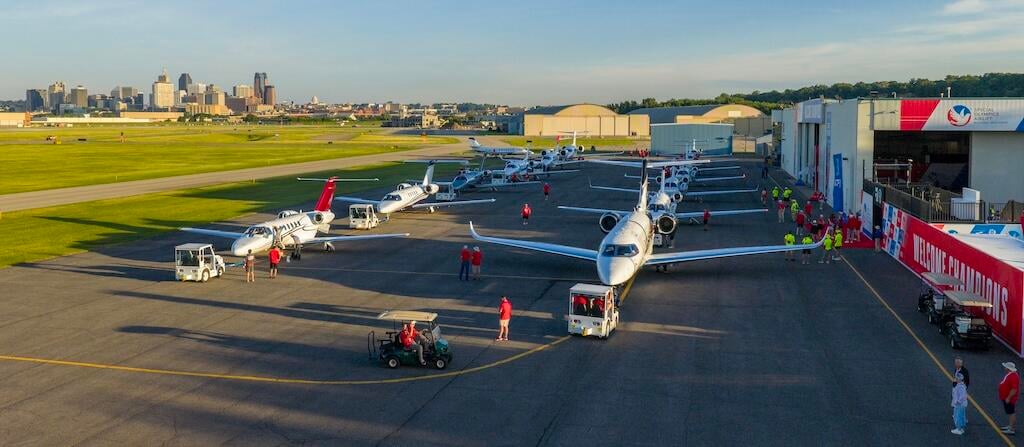
aircraft involved in the Special Olympics Airlift

This year’s Special Olympics Airlift is expected to involve about 120 Cessna, Beechcraft and Hawker aircraft carrying more than 800 athletes and coaches from across the U.S.

Credit: Textron Aviation

More than 100 volunteer aircraft owners and pilots are expected to transport over 800 athletes and coaches to the 2026 Special Olympics USA Games as part of what organizers describe as the world’s largest peacetime airlift.

The Special Olympics Airlift, organized by Textron Aviation, has been transporting athletes to and from the games since 1987. This year’s event is expected to involve about 120 Cessna, Beechcraft and Hawker aircraft carrying more than 800 athletes and coaches from across the U.S.

“It started in 1987 with our previous chairman, Russ Meyer, who agreed with leaders of the Special Olympics to transport Special athletes to the USA Games via partnership with our customers,” said Stephanie Harder, VP of corporate communications and public affairs at Textron Aviation and co-chair of the airlift. “That enduring legacy has continued for nearly four decades.”

The scale of the operation is substantial. Participating aircraft are expected to arrive at or depart from St. Paul Downtown Airport at roughly three-minute intervals during a 10-hr. period.

“We like to say that for two weeks we become an airline,” said Jennifer Whitfield, Textron Aviation’s director of human resources and fellow airlift co-chair. “We not only handle and work with our customers on the participation and the transport of the athletes, but everything from ground logistics to baggage to transportation, routing, following weather, partnerships with the FAA, making sure there’s activities and drinks and snacks and medical support if needed.”

Signature Aviation, which is serving as the exclusive FBO sponsor, will support operations at 17 departure locations around the country.

“Coordinating over 100 participating aircraft across 17 locations absolutely requires precise scheduling and coordination with all the heavy arrivals and departures within short windows,” said Derek DeCross, Signature’s chief commercial officer. “When they arrive, they’ll be welcomed by cheers, high fives and just a jubilant overall atmosphere.”

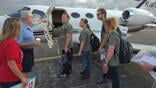
For many athletes, the flights will be their first experience with private aviation. For some, it will be their first experience flying at all.

“The awareness when they arrive at their departure location that they have this incredibly heightened and elevated travel experience starts their games journey in a way that sets them up as champions,” Harder said. “Once you participate in the airlift and you see the impact that this contribution has on the Special Olympics athletes, it’s a feeling that you can’t ever replace.”

The return flights can be just as memorable as the arrivals.

“The arrival weekend of the airlift gets a lot of attention, and it should, because it’s great,” Whitfield said. “As exciting, or maybe even more impressive, is watching those athletes come back for departure weekend with the medals around their necks, and they get to tell everybody in the airlift about the stories of their competition and their success.”

Ben Goldstein

Based in Rhode Island, Ben covers advanced air mobility and is a contributor to Aviation Week’s Business Aviation & AAM Report.