Sounding Board: Cirrus Aircraft’s Todd Simmons On The Market, Future
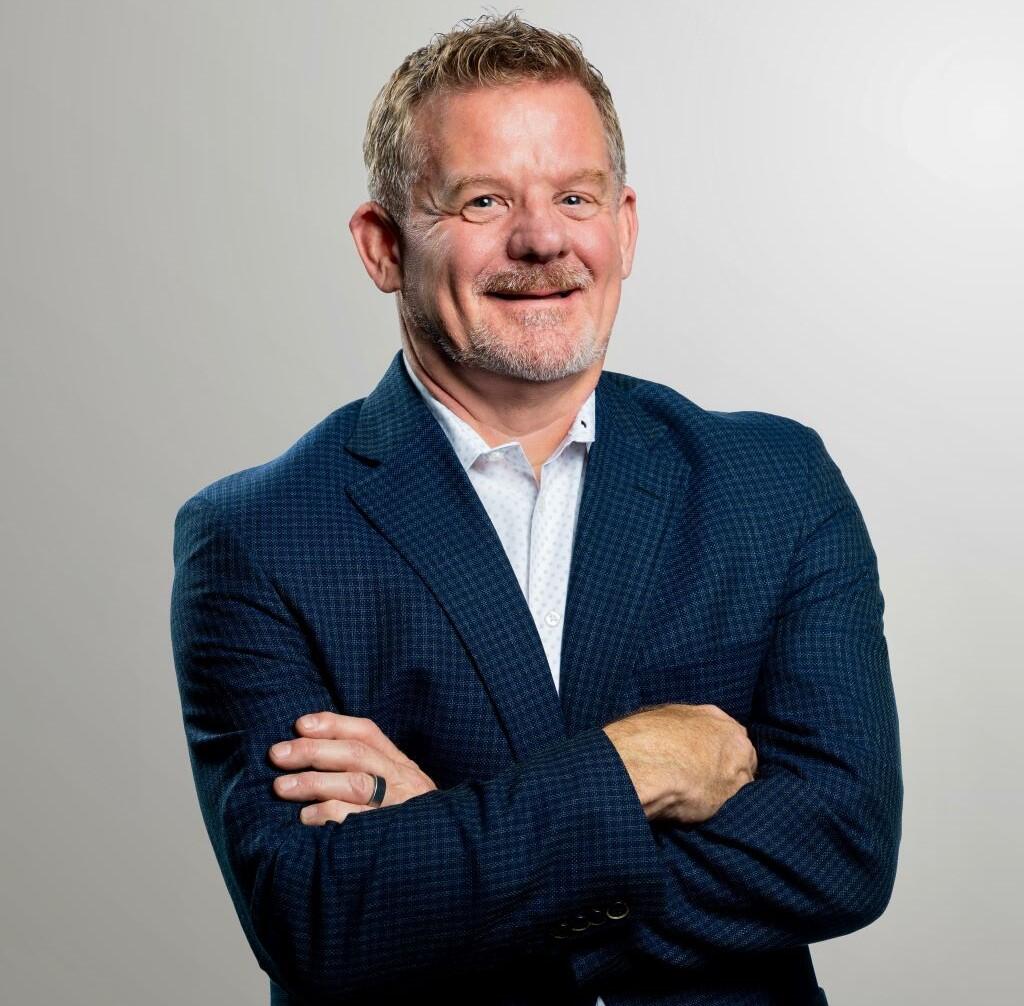
Todd Simmons is president of customer experience at Cirrus Aircraft.
Todd Simmons is president of customer experience at Cirrus Aircraft in Knoxville, Tennessee. Simmons joined Cirrus in 2008 and assumed his current position in 2015. Previously, he has held positions of senior manager at Delta Air Lines, founder and owner of the Mission Chair and president of CubCrafters, according to LinkedIn.
Q. What originally brought you into the aviation industry?
A. I consider myself blessed that aviation has been such a significant part of my life. I love to tell the story. My grandfather was a B-26 pilot in World War II. Then he had three sons, and all of them had a role of some sort in aviation. The youngest was a helicopter pilot in the Navy. My dad was a medic in the Army, a field medic in the Vietnam era. The middle brother was an aerospace engineer and had a 30-plus year career at Beech Aircraft. He was the chief structures engineer on the Beech Starship–Bob Simmons. He (worked on) the Duchess and Bonanza, Baron and even King Air. He had this long career. I say that because when someone asks me, ‘How did you get here?’ Who could have known that in the mid-80s, when they’re imagining an all-carbon fiber airplane, the Starship, that I would be at Cirrus. We build an all carbon-fiber airplane.
That’s another ‘Standing on the Shoulders of Giants’ example.
Although (the Starship) was not a commercial success, it was a technological marvel. Now I’m in this generation, I have some brothers that are pilots. My son is a pilot. Flying is not what I do; it’s who I am.
Q. What is the market like today?
A. The market is vibrant right now for both our products, the SR and the SF (Vision jet). The market remains vibrant. We’re not quite at the pre-COVID highs, but we continue to see market demand that exceeds pre-COVID levels. There has been some normalization. I think it’s fair to say. On average, the backlog is about a year-and-a-half, give or take, for the SR, depending on configuration. And the backlog for the SF Vision jet is closer to a year, maybe slightly more. The SF has been quite consistent at the 100-delivery mark that we saw last year. We’re on a similar, if not slightly higher trajectory, as we look ahead. So, the market has been fairly consistent.
Q. Cirrus Aircraft has delivered around 700 Cirrus Vision SF50 jets since the initial delivery at the end of 2016. What are your customers like? How many customers are new to aviation?
A. It’s really impressive in regard to having delivered 700 airframes.
We’re really building on the strength of the company. We’re asked often, how do you attribute the success? I think it’s as simple as we’ve delivered nearly 10,500 SRs and you’re building on the strength of that foundation ... We’re putting those pieces together, and I think those are the things that get us to 700 in that timeframe.
About how many of those 700 came from the SR? The answer is about 70% of those current Vision jet owners either came from an SR, and in many cases still own an SR, so they’re adding the jet, while about 30% have come new into the Vision jet. I think you have to see it either as a company that aviation is new to them (and) what is their entry point? The entry point can be a Vision jet. A second point of entry for the Vision jet is supplemental lift. I’m adding on a capable turbine airplane that flies at 31,000 ft., in excess of 300 knots true airspeed, so two to three passengers for that regional trip 500, 600, 700 nm. It does that trip efficiently ... It’s single engine versus twin engine. And the most important part, a single engine airplane with a full airplane parachute and (Garmin) Safe Return. You’re talking about the most advanced safety technologies available on any general aviation airplane—plus type rated pilots, plus turbine engine reliability. You’ve built a combination that’s safe for companies who are either adding on a turbine platform to an existing turbine fleet, or they’re coming in new to aviation. And for the third place, they’re coming up from the SR. They already know about aviation, they’re simply moving up in performance, moving up in range, etc.
Q. Where are your biggest markets?
A. Of that 700, approximately 80% are in the U.S. and about 20% are outside the U.S., predominantly, Western Europe and Brazil. But of the 80% in the U.S., so many of those customers are in the western U.S. Our growth engine is still North America, particularly the U.S. I will tell you, there has been a shift and it’s not necessarily unique to Cirrus. We now see Brazil as a country being almost as strong as the entire European continent. I think there’s a couple things happening ... I think there has been some stability in Brazil.
There has been less environmental, sustainable pressure in Latin America, particularly in Brazil. In Europe, that’s a real issue. I think those (issues) are continuing until we get a little bit of settling of Europe recognizing the imperative value of general aviation to the economy, whether it’s small business, whether it’s humanitarian efforts, whether it’s organ transplant, search and rescue, police, law enforcement, all those things. I think Europe’s got to figure that out ... The reality is, we have seen Europe be slightly less impactful than it once was (and) Brazil be more impactful than it was. That’s actually a slight shift over the last 24 months.
Q. What is your biggest challenge right now?
A. Although the supply chain at Cirrus is stable, it can also be just better than fragile ... I think that stability of the supply chain is one of the most prominent. The other one that is a little bit more unique to our SR line is getting a very clear and straight-line visible path on our fuel solution as we work to get lead out of 100 low lead. That affects our business. Is it the challenge at today’s doorstep? It’s not. At the same time, I think Cirrus is going to continue to play a prominent, leading role in supporting the industry to have a smooth transition from a leaded fuel to an unleaded fuel. That is critical because that is the foundation that feeds all of this business ... Some of the candidate replacement fuels are not quite ready for prime time yet. Really, the focus has been materials compatibility, or in some cases, materials incompatibility. It might be compatible with the engines, cylinders, internal of the engine, but it might have some incompatibility issues with the gasket, seals, things of that nature in the fuel delivery systems on the airplane. We are big bore, high compression engines—Continental IO550s to be specific in the SR22 and 22T.
Lead in the fuel is the key for us to maintaining performance. So, finding the right replacement is paramount—it’s critical to Cirrus. We are absolutely the most impacted in some ways.
Q. You mentioned that you’re seeing more first-time customers coming into the market. What is happening there?
A. It’s notable to us that right after COVID, when the entire industry saw a demand none of us have seen before, including quite an influx of new buyers, some of the highest numbers you saw on a percentage basis were as much as 40% were new to aviation, meaning people coming in. That number gradually tapered off from the ’22 to ’24 timeframe, into ’24 and into ’25 down to about 25% at Cirrus. That’s still historically strong—25% is probably double any number we had seen before COVID of new into aviation. Think about that. I don’t have a relative or a business colleague into aviation, but I’ve seen what that can do, and I want to get in. That in some ways helped us—forced us to shape our business around making it easier to own the airplane, to service the airplane, to train. What we saw is that number moved to about 25%. In the last 12 months, it’s ticked back up again closer to 30 to 35%. I’m not a politician, but I think there’s been some settling with the current administration, whether that’s with tariffs (or) that’s with policy and sort of beginning to say at some point, we’re going to move past that. If there was any hesitancy with the initial part of the administration, I think now you’ve just seen, [customers say], at some point this is all going to shake out. We’re going to go back to focusing on our priorities, which is in the case of a business, adding the airplane for business, or in the case of personal flying or personal aviation continuing that way.
Q. That high number of new entrants into aviation is shaping your business. A percentage of Cirrus customers are not pilots when they buy an aircraft, for example. How are you responding?
A. It’s forced us to offer, for example, a program called Cirrus One.
Cirrus One is now available in Central Florida and Scottsdale, Arizona, and that’s the comprehensive aircraft ownership and management solution program, meaning that we will help you maintain the airplane—if you want to become a pilot, train for the airplane. If you are not a pilot, but yet you own the airplane, we provide pilot services. All that to say, you can now acquire a Cirrus, a Vision jet, and you don’t have to be a pilot to get the capability of the airplane. That’s an example of how people are coming in new to aviation and recognizing that the journey and the commitment to being a pilot has a certain timeframe to it, but we want to be able to get the capability of the airplane first. Through Cirrus One, we can do that. The trend is in play in all of this part of aviation in general.
The move toward managed solutions versus corporate flight departments and employees as corporate pilots—that’s Cirrus’ way.
We’ve shaped and tailored a unique program to personal aviation. You don’t have to be a pilot. Our pilots, the pilots at Cirrus, will fly the airplane safely for your regional transportation needs. All of that continues to drive higher demand for the airplanes themselves, whether as a pilot or as a nonpilot. When it’s easy to own, operate, train and maintain the airplane, it’s easy to buy one and put it to use. And that is how we think about it. We focus on making it easy, because aviation can be hard. The airplane is one piece we do. But these other business innovations, whether it’s factory direct training, our services in Central Florida, in McKinney, Texas, and Scottsdale, Arizona, at the Vision Center—adding type rating training in Scottsdale. Those are non-aircraft business innovations that are making access to the airplane easier. We are not letting that be farmed out to a third party. That’s sort of the magic to how we think about it.
Q. Are fractional or charter operators incorporating Cirrus aircraft into their fleets?
A. The majority have been to the current owners of SRs. So, they’re tending to own them personally. We are beginning to see a few—whether that’s either a fractional or a third-party managed solutions or third-party Part 135. An owner may own the airplane, put it into a Part 135 operation through a lease-back construct and that airplane is flown Part 135 for a charter. There is not a lot of it now but some. There are several Vision jets on Part 135 certificates.
But it is a relatively new and emerging market, to be fair.
Q. Are there plans to stretch the Vision jet or add a second jet to the Cirrus product lineup?
A. Well, you know, I’m not going to tell you all those things, but I will say it this way. We’re always thinking about how we can expand the performance or the capability of the airplane—whether it’s the SR or the SF. And you see that in these generations of aircraft. So, we’ve demonstrated when the technologies are right for the airplane, when they are fully integrated, when we have quality, reliability and the technologies are integrated in a mission capable way, we’ll bring it to the market. But we won’t bring it to the market before then. Now, we are looking to go in places in the market where no one else is. And that’s exactly where the jet is. It flies at an altitude of 31,000 ft. That’s not common for other airplanes ... We see tons of opportunities in technology and advancement and capability, but we’ll only bring them when they’re fully vetted, fully integrated and fully tested. And Cirrus is good at that. So, I’ll stop there ... It’s when the time is right.

Related Content