This article is published in Aerospace Daily & Defense Report part of Aviation Week Intelligence Network (AWIN), and is complimentary through Aug 05, 2026. For information on becoming an AWIN Member to access more content like this, click here.

DHC-515 Program Hits Major Assembly Milestones

DHC-515

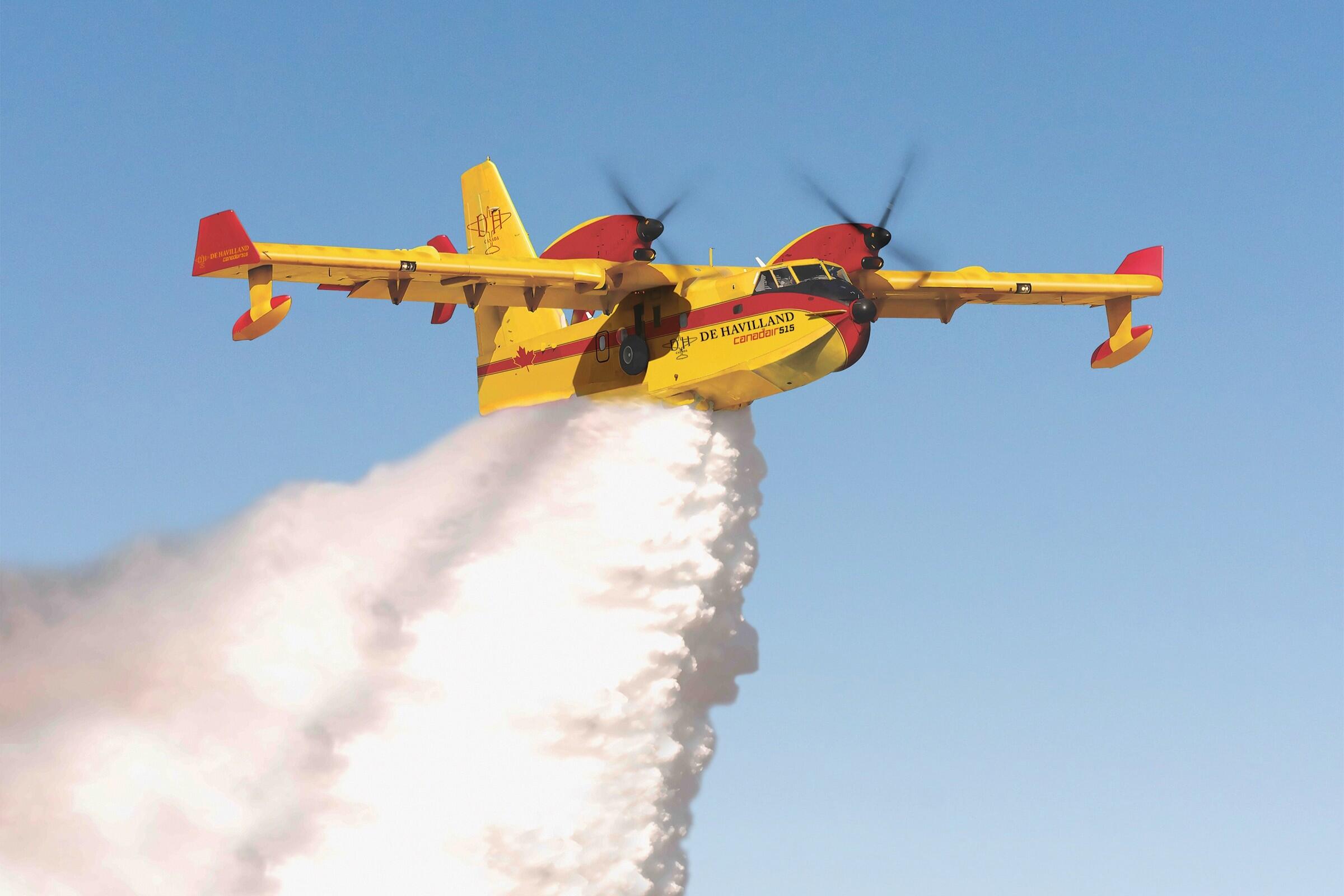
The DHC-515 is an evolution of the Canadair CL-415 and CL-215, incorporating advanced materials, corrosion protection and upgraded avionics.

Credit: De Havilland Canada

LONDON—De Havilland Canada is advancing production of the first four DHC-515 amphibians destined for European customers following the relaunch of the twin-turboprop firefighting aircraft.

In a video released for the Farnborough Airshow, the airframer said several major milestones have been reached, including the successful joining of the cockpit and hull of the first aircraft.

The aircraft’s mid-fuselage has been completed and is being integrated with the forward fuselage. The program’s first wing box has been completed, enabling installation of the 28.6-m span wing later in production.

The company is targeting a first flight in late 2027 or early 2028, De Havilland Canada officials told Aviation Week in March.

“The progress we’re making reflects the expertise of our team and reinforces our commitment to delivering the DHC-515 to customers who need this unique capability,” said Brian Chafe, De Havilland Canada’s CEO.

The milestones come as European governments battle major wildfires in France and Spain, with several countries deploying aircraft to assist firefighting efforts. About 38 DHC-515s are on order from customers in Europe and Canada, including two additional aircraft ordered by the French government for its Sécurité Civile aerial firefighting service, doubling its planned fleet to four and complementing its existing fleet of CL-415s.

Although it shares the same basic airframe as the CL-415/CL-215 family, the DHC-515 incorporates a new water-drop control system, an updated cockpit and changes to the wing root and landing gear to improve maintainability.

The last CL-415 was delivered to Morocco in 2015. The aircraft’s type certificate transferred from Bombardier to Viking in 2016, before Viking merged with De Havilland Canada.

Most DHC-515 orders to date have come through a European Commission-backed joint procurement of 22 aircraft for six countries to strengthen regional aerial firefighting capacity. That order provided the production certainty and scale needed to restart the program.

Additional orders have since come from Canadian provinces, including Alberta’s order for five aircraft, as well as commitments from Manitoba and Ontario.

The company believes the total market could reach 100 aircraft, driven by growing demand for aerial firefighting and the need to replace aging CL-215 and CL-415 fleets.

Tony Osborne

Based in London, Tony covers European defense programs. Prior to joining Aviation Week in November 2012, Tony was at Shephard Media Group where he was deputy editor for Rotorhub and Defence Helicopter magazines.