This article is published in Business & Commercial Aviation part of Aviation Week Intelligence Network (AWIN), and is complimentary through Aug 24, 2026. For information on becoming an AWIN Member to access more content like this, click here.

Archer Launches Twin Military, Civil Hybrid VTOL Programs

Archer Halo

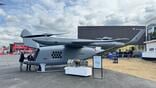
Halo is the civil/commercial variant of Archer's hybrid vertical-takeoff-and-landing (VTOL) aircraft.

Credit: Archer Aviation

FARNBOROUGH—Archer Aviation's decision to launch two autonomous hybrid vertical takeoff and landing (VTOL) aircraft—Halo for commercial applications and Thunder for military missions—reflects its belief that a major new dual-use market is emerging, Chief Technology Officer Tom Muniz says.

The startup behind the Midnight electric VTOL air taxi says technologies developed for that aircraft can be applied to both programs unveiled at the Farnborough Airshow. “We've become convinced that the market for this new aircraft, in both civil and defense applications, is massive, and it would be foolish not to invest in it,” Muniz said.

He stressed the company remains committed to Midnight, which continues to represent the bulk of Archer's development effort. However, he said the defense and dual-use autonomous market could outpace the civil air taxi sector over the next several years.

Thunder is being developed with Anduril, which has worked with Archer on the program for more than two years. Archer is responsible for the aircraft, while Anduril is developing mission systems and defense payloads.

The two aircraft will share a hybrid-electric propulsion system combining a turbogenerator for cruise power with batteries that supplement high-power flight phases. Muniz said the architecture improves efficiency while simplifying the tiltrotor design by replacing complex mechanical shafts and gearboxes with redundant high-voltage electrical systems.

Muniz added that the defense market offers a faster path to deployment because military aircraft face fewer certification hurdles than civil passenger aircraft. That could allow Archer to mature technologies before expanding into commercial applications, particularly in less-congested environments such as offshore operations. Still, he acknowledged that widespread autonomous operations in civilian airspace will require regulatory approval and public acceptance.

To support that transition, Archer also announced development of Zee, a generative artificial intelligence (AI) model designed to provide contextual aviation intelligence and eventually coordinate large fleets of autonomous aircraft.

Angus Batey

Angus Batey has been contributing to various titles within the Aviation Week Network since 2009, reporting on topics ranging from defense and space to business aviation, advanced air mobility and cybersecurity.