
Aircraft Overview: Piper M-Class
Aircraft Overview: Piper M-Class
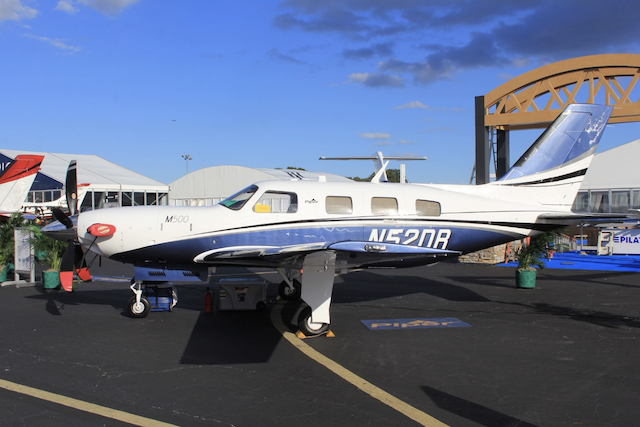
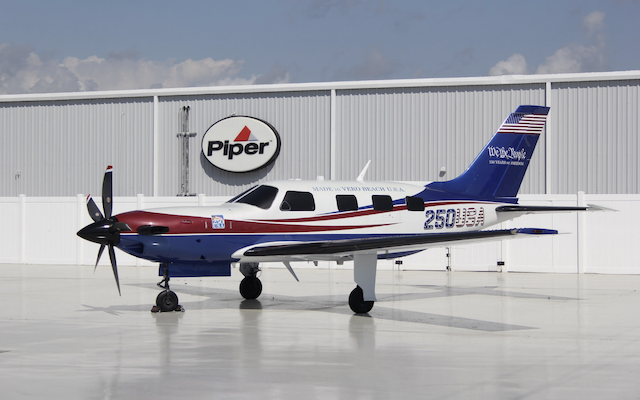
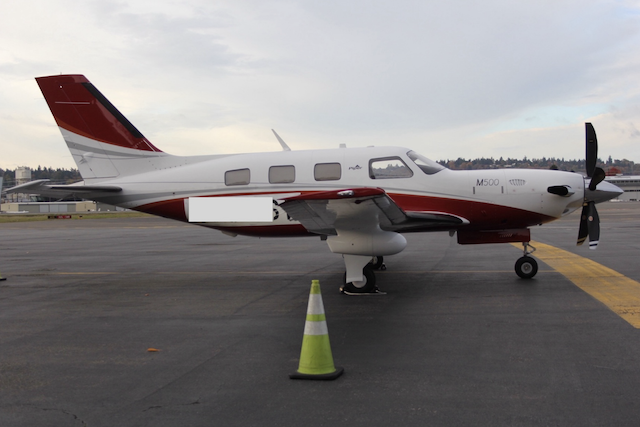
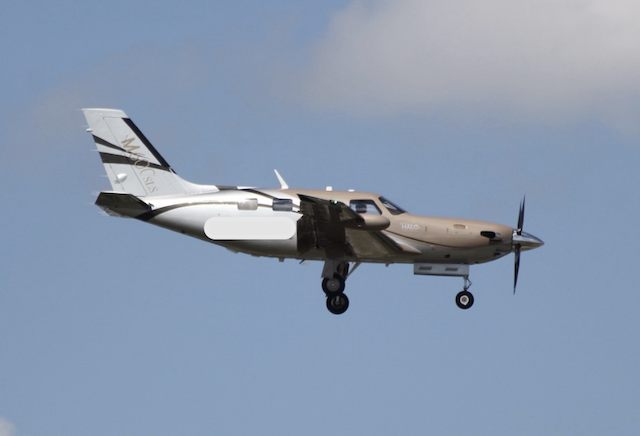
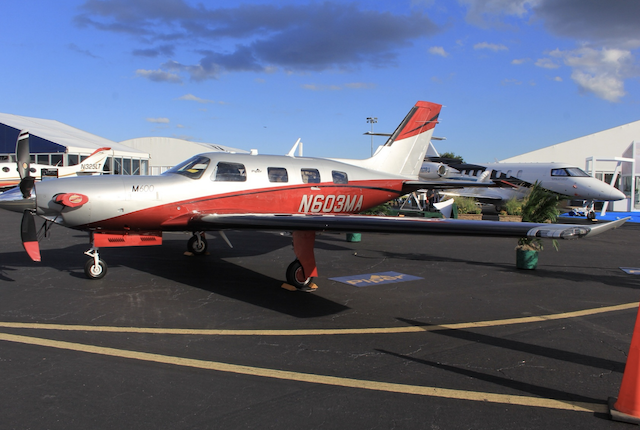
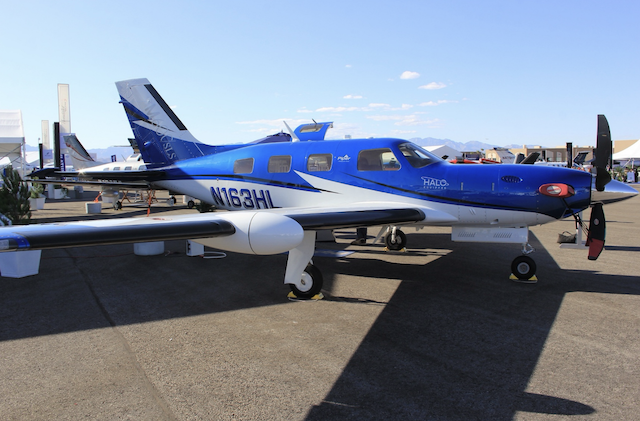
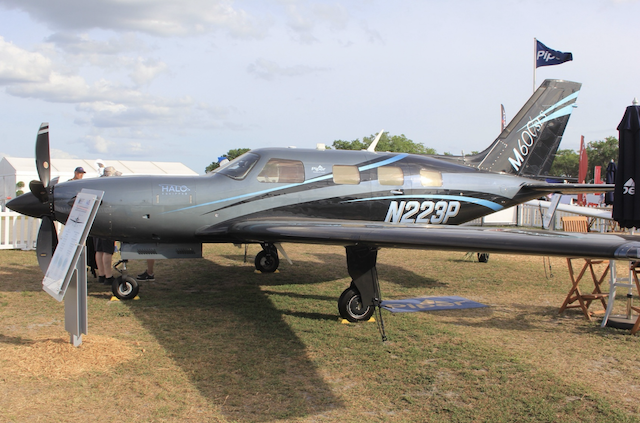
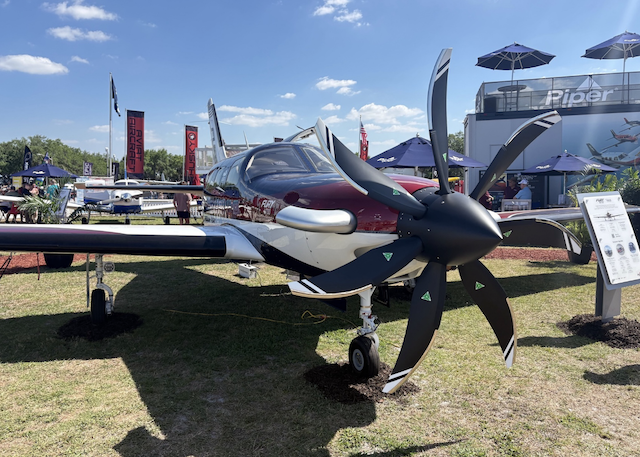
The M500, M600, M600/SLS and M700 Fury are part of Piper Aircraft’s M-Class series of single-engine turboprop airplanes that are based on the company’s PA-46 type.
Specifically, the M500 and M600 are commercial designations of the PA-46-500TP and PA-46-600TP, respectively, variants of the type that were first certified on Sept. 27, 2000, and June 16, 2016.
An upgraded version of the M600 that incorporated several avionics and cabin improvements was announced on Oct. 30, 2019, with that upgraded airframe marketed as the M600/SLS.
On Feb. 6, 2024, Piper announced the latest version of the PA-46 type, the M700 Fury, a commercial designation of the PA-46-701TP.
Subsequently, that PA-46 variant received FAA approval on Feb. 29, 2024.
Cabin
All three of these PA-46 variants are certified to seat up to six people, including the pilot.
M500 and M700 Fury passengers are accommodated in a cabin has a 12.3-ft. length, 4.1-ft. width and 165-ft.3 volume.
The maximum baggage weight of the PA-46-500TP, -600TP and -701TP is 100 lb.
Avionics
One of the features that differentiates the M500 from the M600/SLS and M700 Fury is the Garmin avionics system that those airframes are equipped with.
The single required pilot operates currently produced M500 airframes by utilizing Garmin’s G1000 NXi integrated flight deck, while the M600/SLS and M700 Fury feature the G3000 integrated flight deck.
Although they are equipped with different Garmin avionics systems, all three M-Class airframes have the avionics manufacturer’s GFC 700 automated flight control system (AFCS) installed.
Other standard features of the M600/SLS’ and M700’s G3000 installation include a pair of GTC 575 touchscreen cockpit management units and the HALO Safety System.
Retail Values
Mission and Performance
From a performance perspective, the PA-46-500TP, -600TP, and -701TP are limited to a maximum operating altitude of 30,000 ft., while the maximum operating speeds of those variants differ.
The PA-46-500TP is limited to a maximum operating speed (VMO) of 188-kt. indicated airspeed (KIAS), an airspeed limitation that the PA-46-600TP and PA-46-701TP increase to 250-kt. calibrated airspeed (KCAS). Additionally, those latter PA-46 variants are limited to a maximum operating Mach (MMO) of 0.55 Mach.
Piper also markets the M500 as being capable of a maximum cruise speed of 260-kt. true airspeed (KTAS), a performance figure that the M600/SLS increases to 274 KTAS.
Similar to those VMO/MMO limitations and maximum cruise speeds, the maximum range of the M500—1,000 nm assuming zero wind and International Standard Atmosphere (ISA) conditions—is also less than the M600/SLS’ 1,658-nm range.
Based on the same criteria as the M500’s range, the M700 Fury’s maximum range is 1,852 nm, with that variant of the M-Class also capable of an increased maximum cruise speed of 301 KTAS.
The M500’s takeoff distance is 2,438 ft., and its landing distance is 2,110 ft., both of which assume a 50-ft. obstacle.
While the 2,635-ft. takeoff distance and 2,659-ft. landing distance of the M600/SLS are greater than the same distances for the M500, the M700 is capable of a 1,994-ft. takeoff distance and 1,950-ft. landing distance, all of which also assume a 50-ft. obstacle.
Unlock the data behind the charts with Aviation Week Intelligence Network’s Fleet & Data Services. Learn more at aviationweek.com/bcaaircraftoverview.
Utilization Overview
Variants
Although both the M500 and M600 are powered by a single Pratt & Whitney Canada PT6A-42A turboprop engine, the takeoff and maximum continuous power limits differ, with the M500’s PT6A-42A limited to 500 shp and the M600’s engine increasing that limitation to 600 shp.
In contrast to the M500 and M600/SLS, the M700 Fury is certified to be equipped with a PT6A-52 engine that further increases the takeoff and maximum-continuous engine limitations to 700 shp.
On the M500, the PT6A-42A powers a four-blade Hartzell propeller that is “constant speed, full feathering and reversible.”
The M600/SLS and M700 Fury also have a Hartzell propeller which has those features, but the propeller for the M700 Fury has five blades, a feature which was available as an option for the M600/SLS.
Other differences between the PA-46-500TP, -600TP and -701TP include the weights, usable fuel capacities and useful loads. In addition to being limited to a 5,092-lb. maximum takeoff weight (MTOW), the M500’s standard empty weight is 3,436 lb., and its standard useful load is 1,698 lb.
The M600/SLS’ MTOW (6,000 lb.), standard empty weight (3,650 lb.) and standard useful load (2,400 lb.) are increased in comparison to the PA-46-500TP-based M500.
While the M700 Fury retains the same MTOW as the M600/SLS, its 3,735-lb. standard empty weight and 2,315-lb. standard useful load differs from the M600/SLS’ weights.
Similar to those differences in weights, the usable fuel capacities of the M500, M600, and M700 Fury are also not the same.
The usable fuel capacity of the M500 is 170 gal., a capacity that the M600/SLS and M700 raise to 260 gal.