
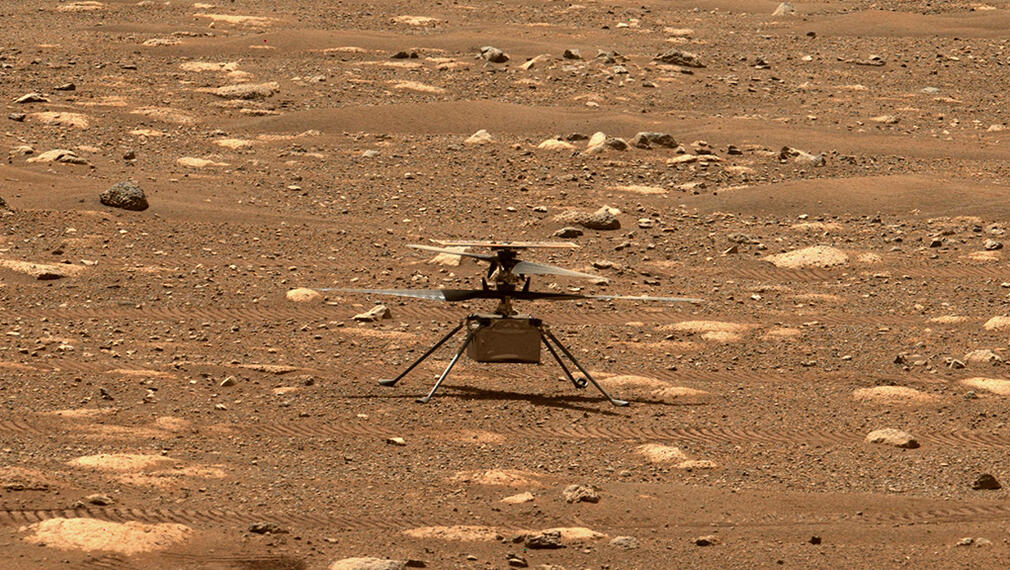



“How do we use aerial mobility in the future on Mars, to help not just robotic exploration, but to help human exploration?”
Ellen Stofan
Smithsonian


More Space Content From Aviation Week & Space Technology



Jun 29, 2026
As satellites multiply and spacecraft become more maneuverable, concerns grow that space lacks the equivalent of air traffic control.
Jun 25, 2026
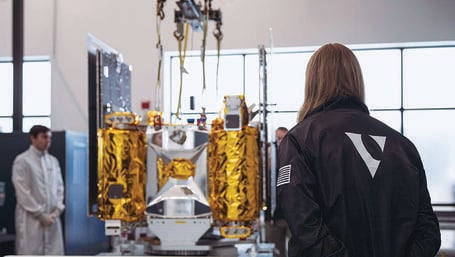
Victus Haze put the service’s rapid-response space concept to the test, launching and commissioning a satellite in record time.
Jun 25, 2026
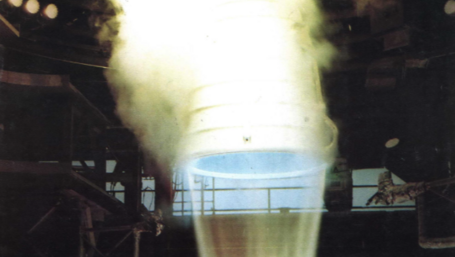
NASA tested the first Space Shuttle main engine at 76% power for 45 seconds in July 1976, using small nozzles before switching to flight-size versions.
Jun 19, 2026
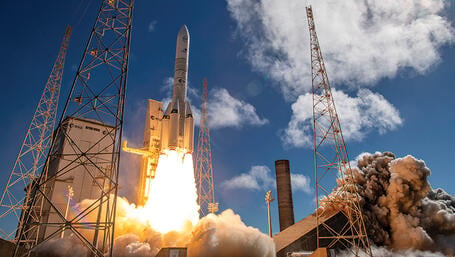
Europe inaugurates its most powerful Ariane rocket but still eyes further mission expansion.
Jun 18, 2026
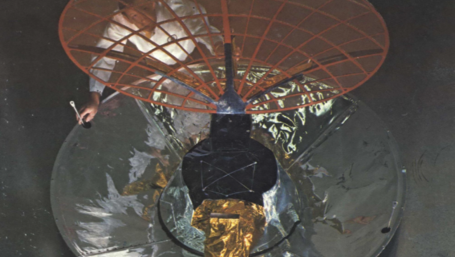
Indonesia's Palapa 1 domestic communications satellite undergoes checks by technicians at Hughes Aircraft Company's assembly facility at El Sagundo, California, as seen on the cover of the June 21, 1976, issue of Aviation Week & Space Technology.

Jun 18, 2026
The Pentagon and Congress appear ready to dissolve the Space Development Agency and the Space Rapid Capabilities Office’s specific authorities in 2027.

Jun 18, 2026
Colonizing Mars hinges on an untested assumption that humans can reproduce and thrive on another planet—raising biological and ethical risks.

Jun 17, 2026
As a recipient of Aviation Week's 20 Twenties award, Daniella Bezuidenhout is making significant contributions to the future of urban air mobility through her research on aircraft noise prediction.