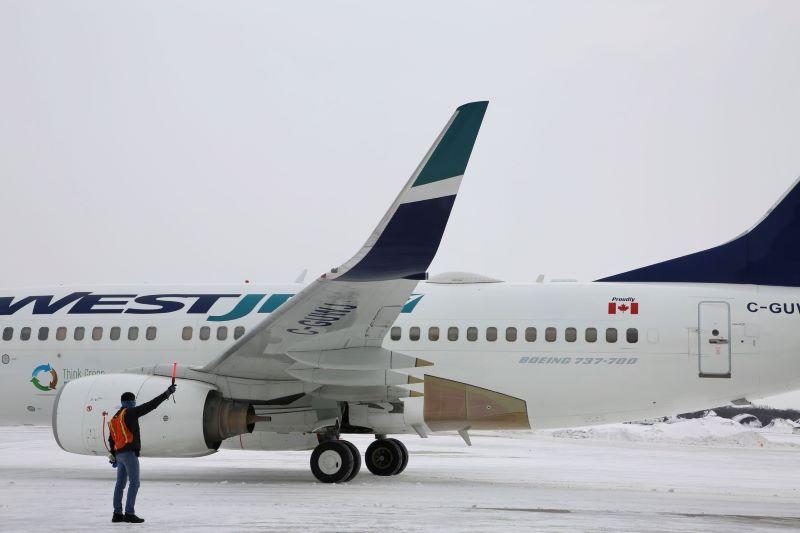
WestJet has just completed retrofits on “densified” aircraft to reverse previously increased seating capacity. This follows backlash the Calgary, Canada-based carrier received over the decision to add additional seating to some Boeing 737s.
Although most interested parties would be pleased with this change, from an environmental standpoint, the carrier is now slightly less efficient. The Carbon Analysis considers this effect and assesses WestJet’s overall efficiency.
Ultimately, the decision to remove a row of seats from the aircraft will have only a minor impact on efficiency. Emissions are now spread between 174 seats, as opposed to 180. Other operational factors, such as load factors and routing, can play a far more significant role.
For WestJet, however, fleet has been the main driver of efficiency. The chart shows a substantial overall reduction in emissions per ASK (Available Seat Kilometer) since 2021. In that time, the Canadian carrier has increased the number of 737 MAX 8s in its fleet by almost 400%. Furthermore, WestJet’s 737-800 fleet has expanded while the less efficient 737-700 variant has reduced.
Also clear on the chart is a marked improvement first seen in 2024. In 2023, both Swoop and Sunwing Airlines were integrated into WestJet. Pre-2024, their efficient low-cost carrier performance is shown on the chart. WestJet clearly benefitted from obtaining these carriers’ operations and has continued to improve efficiency through 2026.
WestJet offers a hybrid experience rather than completely low-cost, and this is reflected in its efficiency. While not dreadfully inefficient, it’s clear that some strategic compromises are made to boost passenger comfort. This has resulted in a balanced performance, with low emissions per ASK, but certainly scope to continue improving.