This article is published in Air Transport World part of Aviation Week Intelligence Network (AWIN), and is complimentary through Oct 24, 2026. For information on becoming an AWIN Member to access more content like this, click here.

FAA Administrator: Safety, Risk Management Top Priorities

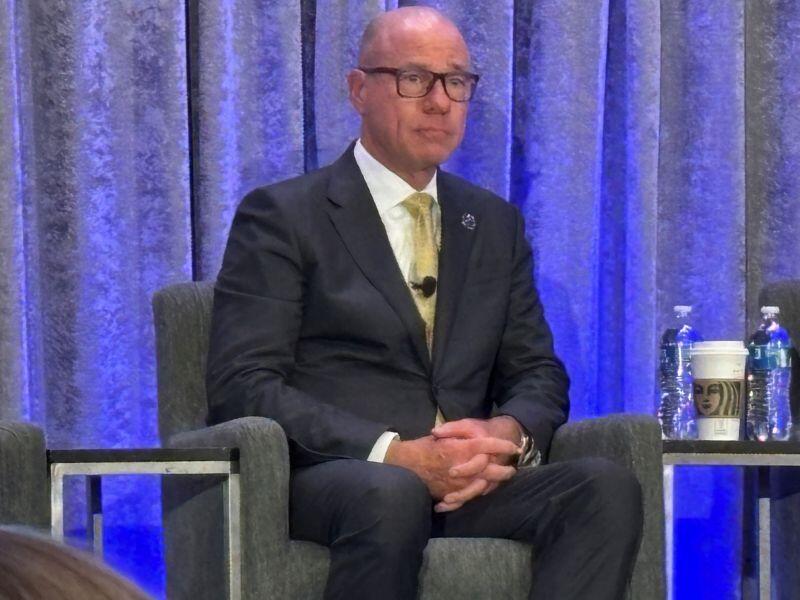
FAA Administrator Bryan Bedford.

FAA Administrator Bryan Bedford.

Credit: Karen Walker

WASHINGTON—Safety and risk management has become a renewed focus for the FAA since the fatal collision of American Eagle Flight 5342, a Bombardier CRJ700 operated by regional carrier PSA Airlines, with a US Army helicopter close to Reagan National Airport in January 2025. FAA Administrator Bryan Bedford, who took up the role in July 2025, explained what that safety focus means under his leadership.

Addressing the Regional Airline Association’s (RAA) Leaders Conference in Washington DC on Sept. 23 in a fireside conversation with RAA president and CEO Faye Malarkey Black, Bedford—who was CEO at regional carrier Republic Airways before becoming administrator—said that on coming onboard, he studied some FAA history.

“There are two core things that every administrator does. The first thing they do is reorganize the FAA, the leadership team, and then they announce a modernization plan. When I came onboard, I had 18 direct reports, and you just can’t manage 18 lines of business and so, as we set about restructuring the FAA, it was also a perfect time to restructure the safety office. We had no single point of safety. Across all these different lines of businesses there was a piece of the safety ecosystem but there was no place where everybody had line of sight on everything.  So, we have fixed that and the safety management team is fully operational now,” Bedford said.

“I think the [FAA] safety culture was always strong. It may not have been well aligned but the mission is safety and efficiency with safety above all. Now we are bringing data to identify what are truly the highest risks within the NAS [national airspace system] and how do we stratify that risk?”

Bedford said that across the aviation industry, organizations and companies have made risk management a strategic initiative.  

“We have taken those practices into the FAA and focused on where we have high risk versus low risk or high frequency versus low frequency and how we are looking at mitigation, even when it’s low frequency but high risk, and ask how are we addressing that?”

Bedford highlighted voluntary safety disclosure programs as one part of the safety management toolbox. “Everybody has voluntary safety disclosure programs and within different lines of business, technicians, flight attendants, pilots, dispatchers respond differently. What you are looking for is are we getting responses? And do people believe that voluntary safety disclosures actually translate into action?

“So, we are really focused on re-tasking ourselves across the lines of business to promote the fact that everybody has a voice in safety and we want to hear your voice,” Bedford said.

Asked how FAA was working with industry to improve safety, Bedford responded, “I think there’s a lot we can learn from one another. Collaboration has been the key strategic initiative for us; it’s happening already. We have been out with the industry collaboratively and individually, not only with safety officers but also with the leadership teams across industry. I think there’s a lot we can learn in terms of the safety best practices that industry has. And I think there are things that, obviously, we can share with industry, but what we don’t want is to not learn from the failures of the past.”

Karen Walker

Karen Walker is Air Transport World Editor-in-Chief and Aviation Week Group Air Transport Editor-in-Chief. She joined ATW in 2011 and oversees the editorial content and direction of ATW, Routes and Aviation Week Group air transport content.