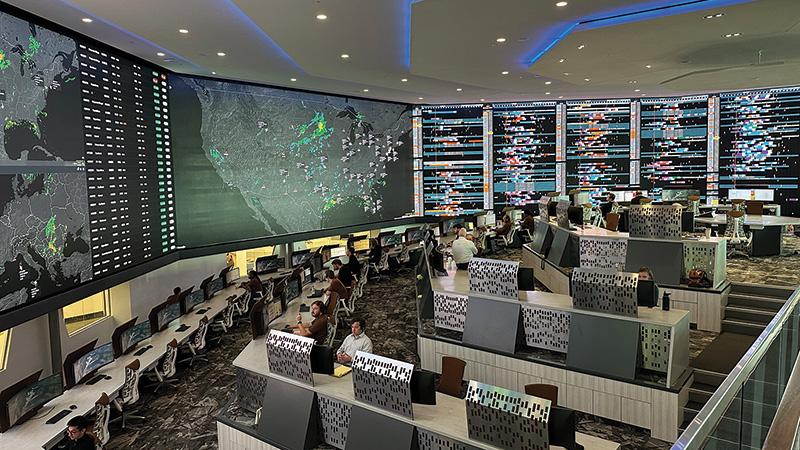
Flexjet’s Global Operations Control Center.
The adage “make a good first impression” may be more important now than ever as our attention spans continue to decrease due to factors such as digital distractions, overstimulation and multi-tasking environments.
And given that one of private aviation’s biggest assets is maximizing people’s time by making travel efficient, some companies have recently made steps to distinguish their service by making each second count for their customers—including those first impressions.
Two companies that I recently spoke with exemplify this.
Signature Aviation, billed as the largest private aviation terminal network in the world, hired industrial engineers to examine its FBOs to look at how customers flow through its facilities.
Signature found that on average it takes 192 sec. “from the time [customers] arrive at an FBO to getting on their airplane,” says company CEO Tony Lefebvre, so it has “these very tight moments to make an impression.”
In evaluating how to provide the best experience, it discovered some FBOs needed to be redesigned. The standard cookie-cutter approach was not inviting. It also determined its technological backbone needed to be upgraded. What Lefebvre says is “game-changing” technology is being rolled out now (see page 36).
Flexjet, which launched as a fractional aircraft provider 30 years ago, has also weighted customer experience heavily.
Flexjet is differentiating itself from other fractionals as being a luxury and “experiential” provider, says company CEO Michael Silvestro. For instance, it launched its Red Label service—for midsize aircraft and bigger—that is designed to provide unrivaled cabin service, luxurious interiors and dedicated crew.
On the infrastructure side, it is investing in private terminals and maintenance facilities to control more of the flight variables.
To finely tune its operations, it opened a $50 million Global Operations Control Center two years ago at its headquarters outside of Cleveland, Ohio. That center features gigantic LED panels—1,572 to be exact—that display the status of each of its aircraft. Tiers of workstations fill out the middle of the ops center, where all operational staff—including schedulers, maintenance control, flight and staffing managers—work together to efficiently manage the fleet.
Actions such as these caught the attention of a consortium including LVMH, whose brands include Louis Vuitton, Christian Dior and Bulgari, which is investing $800 million in Flexjet as of a few months ago.
As Flexjet's business continues to become more sophisticated, its fleet is changing, too. In September the operator announced the addition of three $96 million Gulfstream G700s to its long-haul fleet with more expected, following a $7 billion order in February for Embraer aircraft.
Flexjet’s goal is not to be the biggest fractional operator, but rather to be bold and bespoke.
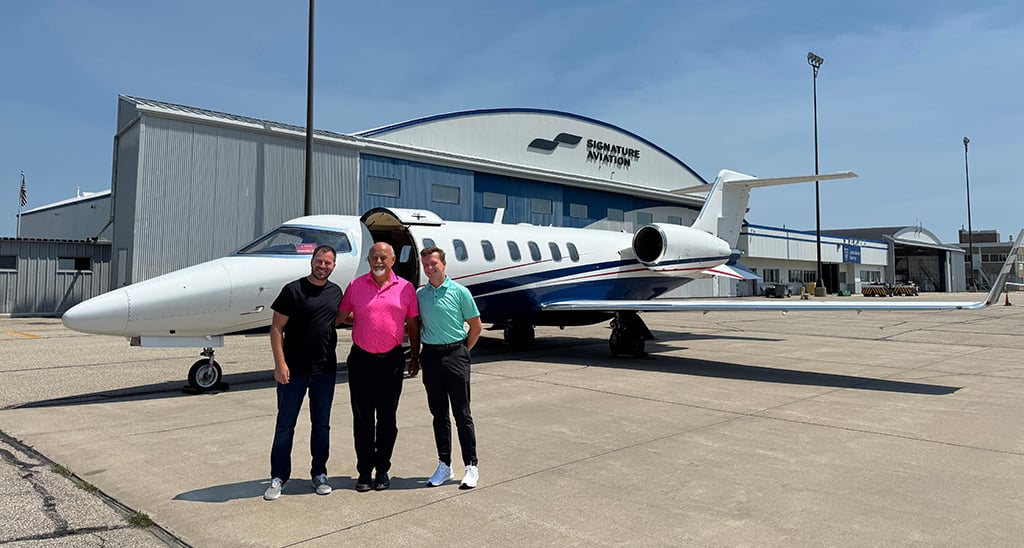
CAN soars to CANCER CARE milestone
Speaking of customer service, the Corporate Angel Network (CAN) just transported its 70,000th cancer patient. See video at youtu.be/i8VCE5LJsP8. Kudos to CAN and all of the private aviation companies that have helped reach this milestone in fighting cancer.

Related Content