This article is published in Aviation Daily part of Aviation Week Intelligence Network (AWIN), and is complimentary through Oct 02, 2026. For information on becoming an AWIN Member to access more content like this, click here.

Boeing Tackles 737 MAX Software Glitch With -10 Certification Looming

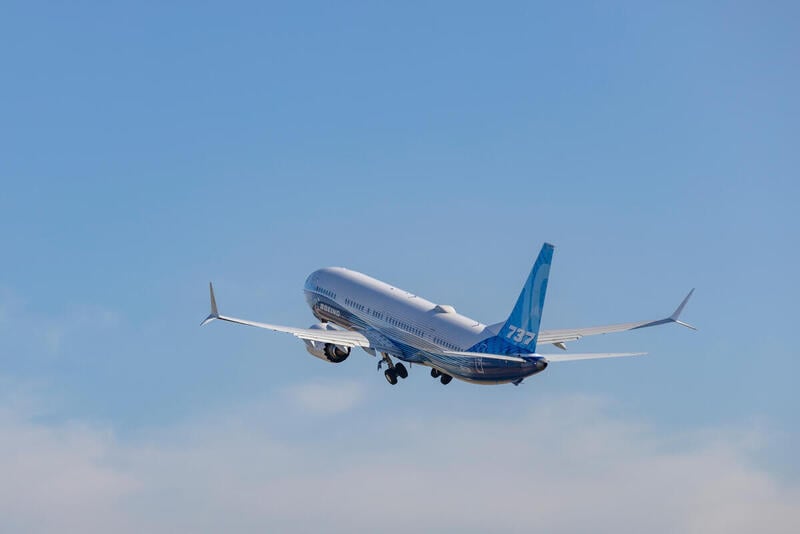
Boeing 737-10

Boeing is working to fix a software issue affecting 737 MAX family aircraft.

Boeing is working to correct a flaw in the 737's automated flight guidance software which, in the case of a landing missed approach, forces the crew to resort to manual control or secondary pitch control modes.

The navigation issue, which Boeing informed operators of in August, comes as the company prepares to begin deliveries of the recently certified 737-7 and secure the long-delayed FAA approval for the stretched 737-10, the final version of the MAX family. Although Boeing says the software issue does not present a safety concern, it remains unclear if the problem will impact the timing of either milestone.

According to The Wall Street Journal, which first reported the problem, both Southwest Airlines and United Airlines have requested that Boeing pause 737 deliveries until updated software is tested, developed and installed.

"Last month, we informed all 737 operators about a software issue where pilots may not have access to automated flight guidance during a specific landing scenario," Boeing said. "We shared information with operators that reinforced existing pilot procedures for safely handling such cases. Our engineers are working on a software update to permanently address the issue," it added.

The software problem occurs following a missed approach, when a pilot alters the programmed flight path. At that point, according to Boeing, the flight management computer software issue may result in the flight guidance system incorrectly transitioning from VNAV (vertical navigation) mode to a simpler, more rudimentary level of automation for pitch control, like level-change or vertical speed.

Boeing says pilots are trained to safely land an airplane without automated vertical navigation. It notified the FAA of the issue as part of its safety review process. Work is taking place under the FAA's oversight to complete the software update.

Boeing also says it is working directly with airlines to formalize a procedure that will allow pilots to re-enable automated VNAV should the situation occur.

Guy Norris

Guy is a Senior Editor for Aviation Week, covering technology and propulsion. He is based in Colorado Springs.