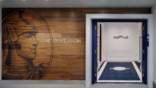
Zurich Airport computed tomography (CT) 3D scanners.
Zurich Airport (ZRH) is set to become the latest major airport to allow passengers to keep liquids and electronics in carry-on bags, enabled by the deployment of computed tomography (CT) 3D scanners.
The new rules at ZRH are set to take effect June 26, applying to passengers starting their flight itinerary at the airport. ZRH said liquids and electronics will be able to stay in carry-on bags at all checkpoint screening lanes.
“Since the end of 2025, the screening lanes in the security control building have been gradually converted to the new CT technology,” said Roman Jung, project manager at Zurich Airport. “The project is currently in its final phase. From [June 26] onwards, no conventional screening equipment will remain in operation.”
A number of airports in Europe and the U.S. have been easing the liquids and electronics restrictions that have been in place at security checkpoints for two decades as CT scanners—similar to those used in medical imaging—become more prevalent. But there has been no blanket lifting of the rules, and passengers often encounter varied restrictions at different checkpoints while traveling.
Earlier this year, London Heathrow (LHR) became the largest airport in the world to roll out CT scanners at security checkpoints across all its terminals. LHR made a £1 billion ($1.3 billion) investment to deploy the technology at all of its checkpoint lanes. With passengers no longer having to remove liquids and electronics from their hand luggage, fewer trays are needed, leading to faster processing, according to the airport.
The European Commission has said the “progressive lifting” of liquids and electronics restrictions depends on the “availability, certification and deployment” of approved CT scanners at given airports. The UK Department for Transport has said it is in the process of approving airports with appropriate CT scanners to allow passengers to keep liquids and electronics in carry-on baggage.
Berlin Brandenburg (BER), Dublin (DUB), Edinburgh (EDI), London Gatwick (LGW) and London Stansted (STN) are among the airports that have adopted CT technology.
Brussels Airport (BRU) recently said that it plans to begin deploying CT scanners in 2028, with all checkpoints fitted with the technology by mid-2029. This will then allow departing passengers originating at BRU to keep liquids and electronics in hand luggage.
“By summer 2029, all 19 screening lanes on departure are to be equipped with the new scanners,” BRU reported. “New scanners for transfer passengers’ screening will then be introduced in a later stage.”
An increasing number of Transportation Security Administration (TSA) screening lanes at U.S. airports—including all checkpoints at some airports—have CT scanners allowing passengers to keep liquids and electronics in carry-on bags. At Baltimore/Washington Thurgood Marshall International Airport, for example, very visible large signs at security checkpoints advise passengers to leave liquids and electronics in their bags.
Unlike the TSA’s change in the checkpoint shoes-off rule last year, no formal announcement has been made regarding liquids and electronics. But the agency has confirmed to Aviation Week that “passengers screened in security lanes with CT units do not need to remove their travel-size liquids bag or electronics.”
While many U.S. airports have changed the rules, a full nationwide deployment of CT scanners is not expected for the foreseeable future.

Related Content