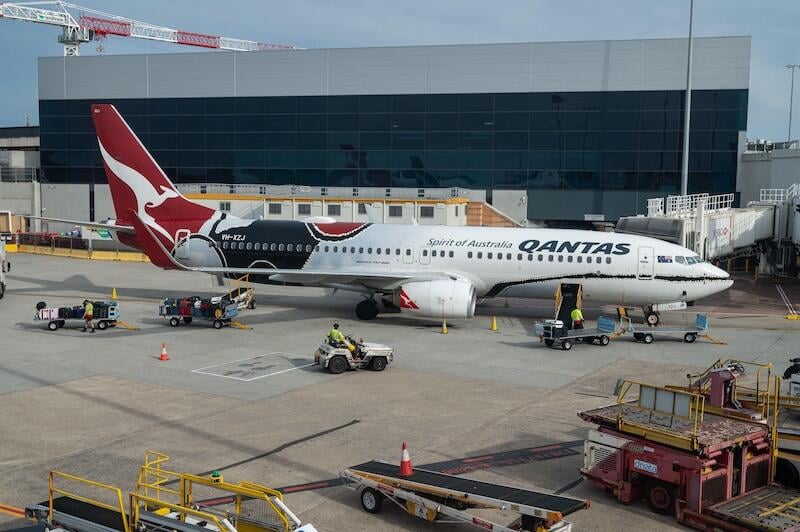
A Qantas jet at MEL.
The latest news on airports globally, with updates on financing, infrastructure expansion and sustainability initiatives.
July 27
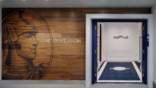
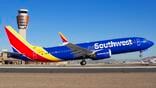
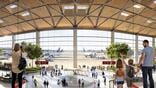
Melbourne Airport (MEL) reached an agreement with Qantas Group related to the airport’s A$4.5 billion ($3.1 billion) expansion and overhaul of Terminal 2, which handles international flights. The expansion of the terminal will include adding five widebody gates, which Qantas has agreed to occupy. Terminal 2 currently has 20 gates. “Qantas intends to base some of its Airbus A350-1000LRs at Melbourne Airport, which will enable the airline to operate flights to new international destinations,” according to the Australian airline group. Qantas said the agreement “provides significant room” for the growth of LCC subsidiary Jetstar at the airport. MEL is “already the low-cost carrier's largest port, operating up to almost 1,000 flights per week in peak periods and accounting for around 45% of its overall domestic passengers,” Qantas noted. Qantas added that it is designing a new international business lounge offering “sweeping views of the airport from a new space built above Terminal 2.”
London Heathrow Airport (LHR) reported revenue for the first half of 2026 of £1.7 billion ($2.3 billion), up 0.3% year over year. Adjusted operating costs for the period increased 6.4% year over year to £814 million, “driven largely by increased government taxes (business rates and national insurance) and investments in new technology which aims to drive future efficiencies and further improvements to operational performance,” according to LHR. Adjusted EBITDA decreased 4.6% year over year to £915 million. Adjusted profit before tax for the six months was £115 million, down 5% year over year.
Dubai Airports, which manages Dubai International (DXB) and Dubai World Central-Al Maktoum International (DWC), announced three senior appointments. Kan Ni was named senior vice president of airport operations, a promotion from vice president of the Airport Operations Control Center (AOCC). Khalid Ishaq will replace Ni as the AOCC vice president, having been promoted from head of AOCC integration. Additionally, Ahmad Al Bastaki was named vice president for technology operations and cybersecurity.
Rome Fiumicino Airport (FCO) opened a new office complex with 70 offices and 35 meeting rooms. FCO said it accommodates 600 workers. The new complex, construction of which started in January 2024, will be home to the FCO offices of Air Canada, Alaska Airlines, American Airlines, Delta Air Lines, Emirates Airline and ITA Airways, as well as a number of ground handling and car rental companies.
Austin-Bergstrom International Airport (AUS) in Texas named Karen Korir chief officer for infrastructure and systems. She comes to AUS from the Houston Airports System (HAS), which runs Houston Bush Intercontinental and Hobby airports. Korir served as HAS director of planning and development.
Brussels Airport (BRU) acquired four new airfield firefighting vehicles from fire truck manufacturer Rosenbauer, as well as simulators to train emergency responders using the vehicles. The total investment is nearly €6 million ($6.8 million). Five firefighting vehicles that had reached the end of their service life were retired, according to BRU. The new trucks weigh 39 metric tons, have a top speed of 115 kph (71 mph) and are “specifically designed for rapid intervention on the airfield,” the airport said. The trucks’ “roof-mounted water cannons can discharge up to 5,200 liters of water per minute,” BRU noted. “One of the [trucks] is also equipped with a steel piercing nozzle, enabling firefighting agents to be injected directly into an aircraft cabin or cargo hold so that fires can be tackled more effectively.” The airport said protocols require the BRU fire service to arrive on the scene of an airfield incident within 3 min. BRU now has around 25 firefighting vehicles in its fleet.

Related Content