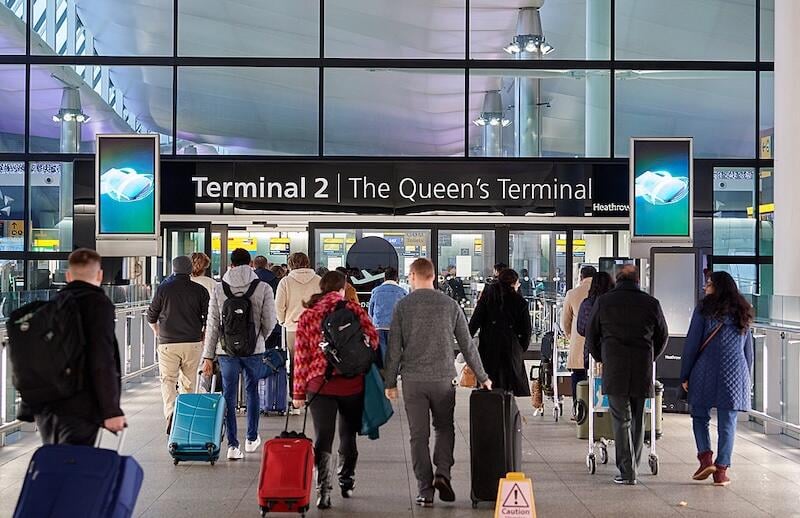
London Heathrow Airport (LHR) handled a record 40 million passengers in the first half of 2026, with transfer traffic rising 5.4% amid weaker demand to and from the Middle East.
Overall passenger numbers at the UK hub increased 0.2% from 39.9 million a year earlier. The airport says Asia-Pacific traffic grew 7.9%, while North American volumes rose 1.6%. Cargo throughput increased by almost 1%.
“Despite geopolitical headwinds, we welcomed a record 40 million passengers in the first half of the year while delivering strong customer service, culminating in passengers ranking Heathrow as one of the best airports in the world,” CEO Thomas Woldbye says.
The passenger growth was accompanied by a modest increase in revenue, which rose 0.3% to £1.73 billion ($2.3 billion) in the six months to June 30. However, adjusted operating costs increased 6.4% to £814 million.
Adjusted EBITDA fell 4.6% to £915 million, while adjusted profit before tax declined 5% to £115 million. Statutory profit before tax more than doubled to £447 million from £203 million, and cash generated from operations increased 2% to £880 million. The airport reported liquidity of £3.8 billion and paid shareholders a £200 million dividend during the period.
Heathrow is advancing plans for a third runway as the UK government consults on a draft expansion National Policy Statement. The airport says the privately funded project could support 60,000 jobs and generate £40 billion in economic growth.
OAG Schedules Analyser data shows airlines offered about 25.3 million departing seats from LHR during the first six months of 2026, down 1.4% year on year. Frequencies declined 1.6%, although the number of destinations served increased from 218 to 223 and the carrier count rose from 76 to 83.
Capacity between Heathrow and the Middle East fell 16.5% due to the geopolitical crisis in the region. Qatar capacity dropped 24.1%, while Saudi Arabia declined 24.5% and the United Arab Emirates fell 11.6%.
By contrast, Heathrow's scheduled Asia-Pacific capacity increased 6.7% as airlines added more nonstop Europe-Asia flights amid disruption to connecting traffic through the Middle East. India recorded one of the largest gains, rising 13.6%. Mumbai capacity increased 19.2%, New Delhi rose 10.8% and Bengaluru grew 18.5%. Seoul Incheon and Kuala Lumpur also recorded double-digit growth.
North American capacity was broadly stable, declining 0.9% to about 6.17 million departure seats. The U.S. remained Heathrow’s largest country market despite a 1.4% reduction, with capacity to New York John F. Kennedy International Airport down 8.1% and Los Angeles falling 5.4%.
Heathrow’s latest results come against a backdrop of continued growth in European aviation. Eurocontrol recorded an average of 36,201 daily flights across its network during the week of July 13-19, up 1.9% year on year. The UK was Europe’s busiest state, with 6,523 daily arrivals and departures, while Heathrow ranked as the fourth-busiest airport with an average of 1,331 flights per day.
Europe-Asia-Pacific traffic was 10% higher than a year earlier and Europe-North Atlantic flights increased 1%, Eurocontrol said. Europe-Middle East traffic remained 3% lower.

Related Content