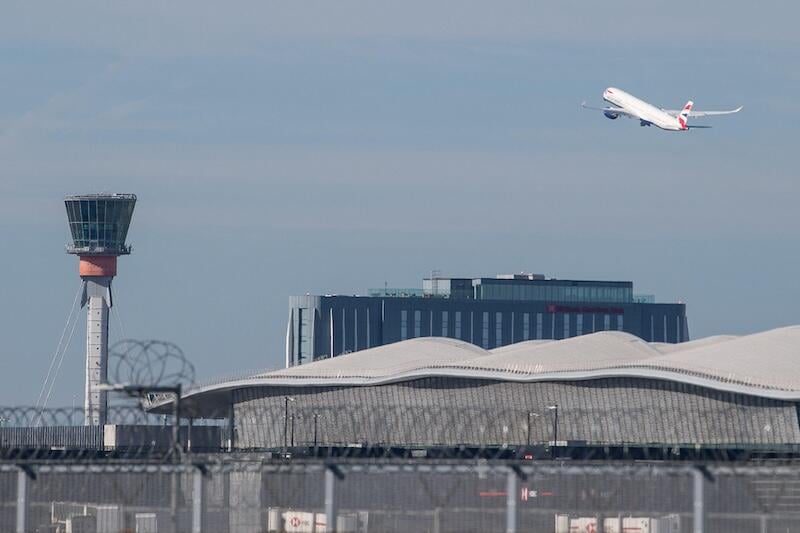
Heathrow Airport.
The UK Civil Aviation Authority (CAA) has proposed modest increases to the fees London Heathrow Airport can charge airlines during the 2027-31 regulatory period, rejecting the airport’s request for significantly higher charges to fund a larger investment program.
Under the regulator’s initial proposals for the so-called H8 price control period, Heathrow will be allowed to charge airlines between £27.20 and £30.50 ($36-$40) per passenger, with a midpoint average of about £28.80 over the five-year period. That compares with an average charge of £28.40 during the current H7 period.
The CAA says average per-passenger charges will increase by about 1%, which is £5.40, or 16%, below Heathrow’s proposed level but £5.80, or 25%, above the level proposed by airlines. Heathrow had proposed the higher charges to fund expansion and terminal upgrades, but airlines including British Airways owner International Airlines Group and Virgin Atlantic opposed the increase, saying the UK gateway already has some of the world’s highest airport charges.
“Our primary duty is to protect consumers, and at the heart of today’s proposals is doing the right thing for passengers using Heathrow Airport, while supporting sustainable growth, investment and efficiency,” says Selina Chadha, group director of consumer and markets at the UK CAA. “Our proposals for the airport charges levied by Heathrow on airlines strike the right balance between keeping passenger prices fair, while enabling the airport to make the investment needed to improve services for the future.”
The CAA’s proposals effectively scale back Heathrow’s planned capital investment program for the H8 period. Heathrow had proposed spending around £9.4 billion ($12.4 billion) during the five years, supported by higher passenger charges. Airlines countered with a lower investment plan of about £5.4 billion.
Following its review, the CAA has proposed the airport spend between £5.4 billion and £6.1 billion, saying this level of investment will allow it to maintain safe operations and deliver service improvements without imposing excessive costs on passengers. This includes a focus on operational reliability after the airport was forced to close temporarily and cancel more than 1,300 flights in March 2025 after a fire at a nearby electrical substation caused a power outage.
Heathrow CEO Thomas Woldbye says the airport will assess the regulator’s initial proposals and evaluate their impact on investment plans. “We will now review the CAA’s initial proposal in detail to fully understand the implications for delivering the innovation, progress and improvements customers expect,” he says. “On the face of it, the CAA’s proposal may force choices that create trade-offs for service and delay delivery.”
A Virgin Atlantic spokesperson describes the proposals as “a more reasonable starting point” than Heathrow’s business plan, but stresses that “the final settlement must prevent passengers paying for an unjustified level of shareholder returns.”
“Heathrow is already the world’s most expensive airport, and capital investment during H8 needs to deliver value for money and the improved experience that consumers and businesses deserve,” the spokesperson adds. “The CAA should also prioritize substantial regulatory reform in parallel to ensure affordable and efficient expansion costs.”
The CAA emphasized that the H8 price control process is separate from its work on Heathrow capacity expansion, including plans for a third runway. The price control is being set based on Heathrow operating as a two-runway airport, with expansion-related costs to be considered under separate regulatory arrangements.
The CAA will now consult airlines, Heathrow and other stakeholders on the initial proposals before publishing final proposals in November. A final regulatory decision is expected in April 2027.

Related Content