Sun PhuQuoc Airways (SPA) has identified Frankfurt, London, Prague, Melbourne and Sydney as potential destinations for its planned Boeing 787-9 fleet as the Vietnamese carrier prepares to expand its network beyond Asia.
The airline plans to build a fleet of about 100 aircraft by 2030, including 20 widebodies, expanding from domestic and regional flying into longer-haul markets.
“Looking towards 2030, our ambition is to operate approximately 100 aircraft, including around 80 narrowbodies and 20 widebodies,” Phan Anh Nghia, deputy manager of network planning, told Routes. “The introduction of the 787-9 is expected to be an important step in this next phase, giving SPA the range and operating capabilities to evaluate selected long-haul markets.”
The plans outline a rapid expansion for an airline that began operations in late 2025. During 2025-26, Sun PhuQuoc is targeting a fleet of 28 narrowbodies and five widebodies, supporting domestic trunk routes and services to Northeast and Southeast Asia.
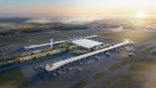
The fleet is expected to reach 45-50 narrowbodies and eight to 12 widebodies during 2027-28. That phase would enable further expansion into Central Asia, Australia and the Middle East while increasing the airline’s ability to carry passengers through its planned hub at Phu Quoc International Airport (PQC).
The Airbus A330 will provide the initial widebody capacity. Phan said the aircraft would be deployed selectively on medium- and longer-haul international services, including potential routes to Central Asia and the Commonwealth of Independent States (CIS), as well as higher-demand markets elsewhere in Asia.
“The Airbus A330 will play an important role in SPA’s next phase of network development by expanding capacity and enabling services on selected medium- and longer-haul international routes,” he said.
The aircraft could also be used on domestic or regional routes when demand and scheduling requirements support widebody deployment. However, Phan said Sun PhuQuoc would match capacity to individual markets rather than use the A330 simply to extend its geographic reach.
“Our approach is to deploy widebody capacity selectively and progressively, matching aircraft type to market requirements rather than expanding range for its own sake,” he said. “This will help SPA balance customer experience, network development and commercial sustainability.”
OAG Schedules Analyser data shows Sun PhuQuoc is scheduled to offer about 3.98 million two-way seats across 29 airport pairs during the northern winter 2026-27 season. Approximately 1.01 million of those seats are on international routes.
The airline’s largest international markets include Seoul, Kuala Lumpur, Hong Kong, Bangkok, Taipei and Singapore. Its developing Central Asian network includes Almaty, Kazakhstan, while scheduled services also extend to China and India.
Over the next 12-24 months, Northeast Asia will remain a priority, including South Korea, Taiwan, Hong Kong and selected cities in mainland China. Singapore, Bangkok and Kuala Lumpur are among the Southeast Asian markets under consideration, alongside India and further destinations in Central Asia and the CIS.
Phan said route selection would depend on demand, competition, bilateral rights, slots, aircraft availability, seasonality and expected profitability. Local distribution and support from airports and tourism organizations will also form part of the assessment.
“Ultimately, our fleet strategy is not simply about increasing aircraft numbers,” Phan said. “It is about building the right capacity for each stage of our growth, strengthening international connectivity through Phu Quoc and establishing a sustainable foundation for SPA’s long-term development.”

Related Content