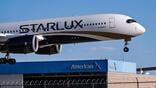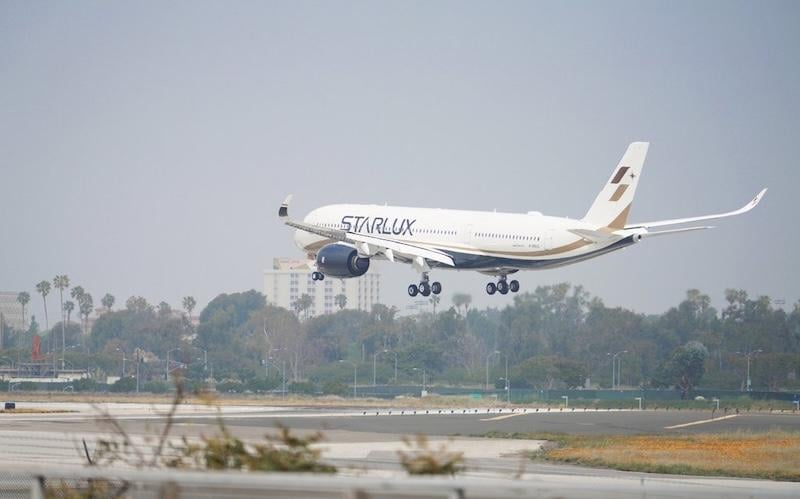
Taiwan’s Starlux Airlines will enter the European market this summer with the launch of nonstop service between Taipei and Prague, adding capacity to a growing Asia-Central Europe market.
The route linking Taiwan Taoyuan International Airport and Prague’s Václav Havel Airport will launch on Aug. 1 with 3X-weekly flights, increasing to four per week from October. Flights will be operated by Airbus A350-900 aircraft in a four-class configuration that includes first class.
The airline currently operates 36 international routes, including long-haul services from Taipei to the U.S., linking Taiwan with San Francisco, Ontario, Los Angeles and more recently Phoenix Sky Harbor. However, the Czech capital will mark the carrier’s debut in Europe.
“Prague is a long-favored destination for Taiwanese travelers, and growing semiconductor industry ties are expected to further drive demand between Taiwan and the Czech Republic,” Starlux CEO Glenn Chai says.
The Taipei-Prague market is currently served exclusively by China Airlines, which launched the route in July 2023 using A350-900 aircraft. According to OAG Schedules Analyser data, the carrier operates the service twice a week, rising to 3X-weekly flights from summer 2026, offering about 1,800 two-way seats once the increase takes effect. Starlux’s entry will initially add a similar number of weekly seats, giving it roughly a 50% share of capacity in the market.
Sabre Market Intelligence data shows that O&D traffic between the Czech Republic and Taiwan totaled about 40,300 two-way passengers in the 12 months to June 2025, up 28.7% year over year and more than fivefold compared with the year to June 2023, when no nonstop service was available. Around 61% of passengers traveled nonstop, while Dubai was the largest one-stop connecting hub.
Beyond Prague, traffic between Taiwan and the wider Central and Eastern Europe region reached about 259,000 two-way passengers in the same period, up 12.6% year over year, highlighting broader regional demand potential.
Starlux operates a fleet of 30 aircraft, including 10 A350-900s, and recently took delivery of its first A350-1000. A further 17 A350-1000s remain on order as the carrier continues to build out its long-haul network.

Related Content