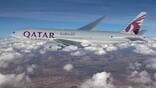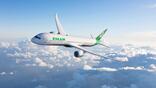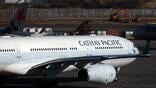
Hong Kong–Taipei retained its position as the world’s busiest international air route for a second consecutive year in 2025, while nine of the 10 busiest routes overall were in the Asia-Pacific region, according to analysis of OAG Schedules Analyser data.
Airlines offered 6.83 million two-way seats between Hong Kong and Taipei during the year, a modest increase from 6.78 million in the previous 12 months. Capacity, however, remained well below the 7.97 million seats recorded in 2019, when the 500-mi. (434-nm) sector was also the world’s busiest international route.
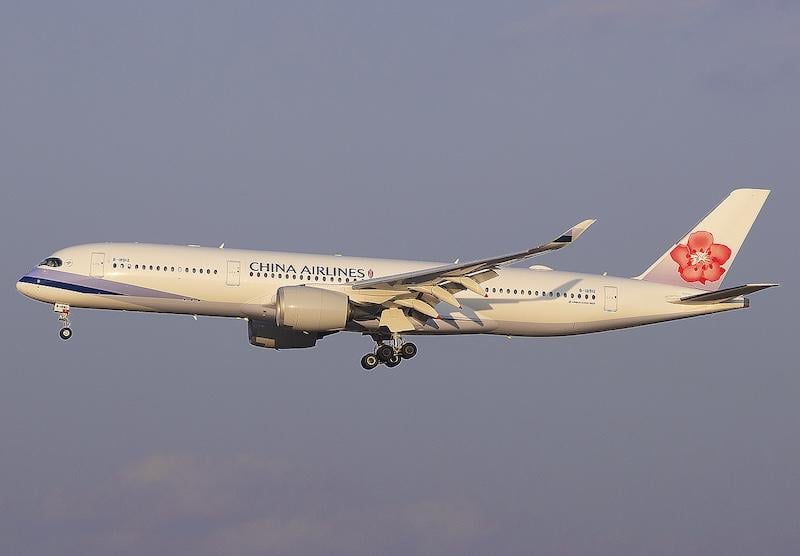
Seven carriers currently serve the route, led by Cathay Pacific Airways with a 39% share of capacity. EVA Airways accounted for 20.9%, followed by China Airlines at 13.1%.
Asia-Pacific continued to dominate the global rankings for international traffic, accounting for seven of the world’s 10 busiest cross-border routes in 2025. OAG data shows that the Cairo-Jeddah sector retained its position as the second-busiest international route, with 5.7 million seats, highlighting the strength of religious and labor traffic between Egypt and Saudi Arabia.
Kuala Lumpur-Singapore climbed from fourth to third place as capacity grew 3.2% year on year, while Seoul Incheon-Tokyo Narita slipped to fourth after capacity fell 6%. Seoul Incheon-Osaka Kansai rounded out the top five, with 4.97 million seats.
The only route in the international top 10 not involving an Asia-Pacific or Middle East airport was New York JFK-London Heathrow, which ranked 10th for a second straight year. Capacity on the transatlantic route totaled 3.97 million seats in 2025, down about 1% from 2024.
While international routes were dominated by Asia-Pacific markets, the busiest air routes globally were all domestic, led once again by South Korea’s Seoul Gimpo-Jeju sector. Airlines offered nearly 14.7 million seats on the 280-mi. route in 2025, a 3.3% increase year on year but still well below the 17.4 million seats recorded in 2019.
Seven carriers operate the Gimpo-Jeju market, collectively providing around 97 return flights per day. Korean Air and Asiana Airlines together controlled 51% of total capacity.
Japan dominated the remaining top domestic rankings. Chitose-Tokyo Haneda ranked second globally with 12.1 million seats, followed by Fukuoka-Tokyo Haneda with 11.5 million. Vietnam’s Hanoi-Ho Chi Minh City route placed fourth worldwide with 11.2 million seats, while Saudi Arabia’s Jeddah-Riyadh rose to fifth with 9.9 million seats.
The Chinese domestic service between Shanghai Hongqiao and Shenzhen Bao'an was the only new entry in the top 10, edging out Guangzhou Baiyun-Shanghai Hongqiao.
Excluding routes from Sao Paulo Guarulhos and Sao Paulo Congonhas to Porto Alegre–Salgado Filho International Airport—which was closed for much of 2024 due to flooding—the largest year-on-year increase in absolute capacity was on the Jeddah-Riyadh route, which added about 1.15 million seats between 2024 and 2025.
Shanghai Pudong-Osaka Kansai recorded the second-largest increase, with capacity up by around 1.13 million seats, despite renewed China-Japan tensions toward the end of 2025. The Turkish domestic route between Cukurova and Istanbul Sabiha Gokcen ranked third, growing by approximately 1.08 million seats year-on-year.

Related Content