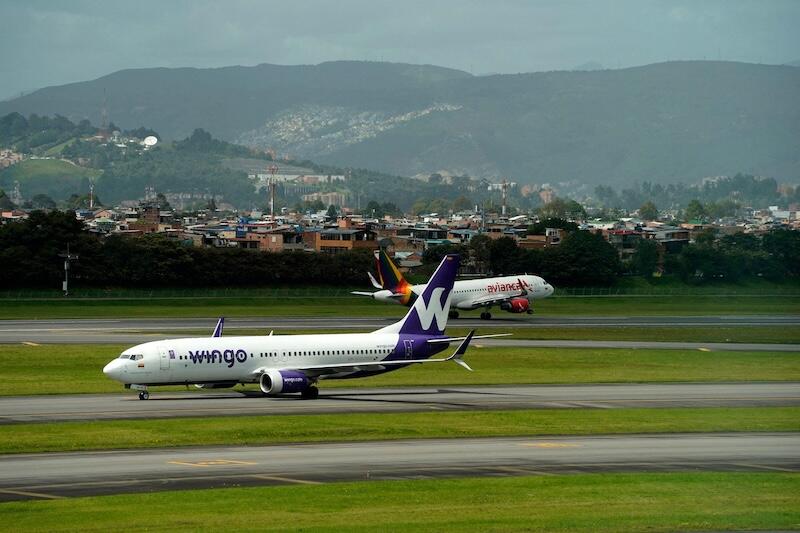
Bogota El Dorado International Airport.
Colombia is positioning air connectivity as a central pillar of its tourism and trade strategy, as the country posts record international capacity and seeks to diversify its global route map.
In 2025, Colombia recorded its strongest international connectivity performance since records began. The country had 30 airlines linking 31 countries and 60 international destinations, serving 11 Colombian cities. International capacity surpassed 14.9 million seats and 79,050 frequencies by year-end—up 11.6% in seats and 10.2% in frequencies compared to 2024.
“A major success in 2025 was the launch of 22 new international routes,” ProColombia President Carmen Caballero tells Routes, highlighting new links with North America, Central America, the Caribbean and South America. First-ever nonstop services included GOL’s flights from Brasilia and Manaos to Bogota, Avianca’s Dallas-Bogota route and new flights from Tampa, Monterrey, Cordoba and Belen. Additional growth came from JetSmart, LATAM and Wingo.
Canada emerged as a particularly dynamic market. “Canada was a standout market in 2025, with four new routes launched by Air Canada, Air Transat and Sunwing,” Caballero says. Frequencies from Canada rose 24.6%, reaching more than 250,000 seats—an increase of 21.1% year on year.
More News And Analysis From Routes Americas 2026
Looking ahead, five additional international routes are already confirmed for 2026, including WestJet’s Toronto-Medellin service, Viva’s expansions from Mexico City to Medellin and Cartagena, Wingo’s Aruba-Bucaramanga link, and World2Fly’s Madrid-Cartagena route.
On source markets, Caballero says, “ProColombia is prioritizing North America, Europe and selected long-haul markets, while continuing to strengthen regional connectivity within the Americas.” The U.S. remains Colombia’s largest source market, with 359 weekly frequencies and more than 64,500 weekly seats connecting 12 U.S. cities with seven Colombian destinations.
At the same time, the agency is laying the groundwork for long-haul expansion. “Participation in Routes World 2025 in Hong Kong was key in this effort,” Caballero says, adding that ProColombia held 28 strategic meetings exploring “indirect connectivity, triangular routes and phased entry strategies.”
She adds that “collaboration is central to our approach,” with ProColombia working alongside Bogota’s El Dorado International Airport, other Colombian gateways and aviation authorities to align route development with tourism promotion and demand stimulation.
On longer-term prospects, Caballero pointed to sustained demand growth. “Between 2022 and 2025, Colombia welcomed more than 20.8 million non-resident visitors, confirming the growing confidence of stakeholders and international travelers,” she says.
However, she acknowledged ongoing challenges, adding that “ensuring route sustainability, particularly for long-haul services, will require continued coordination between tourism promotion, airport preparedness and airline economics.”

Related Content