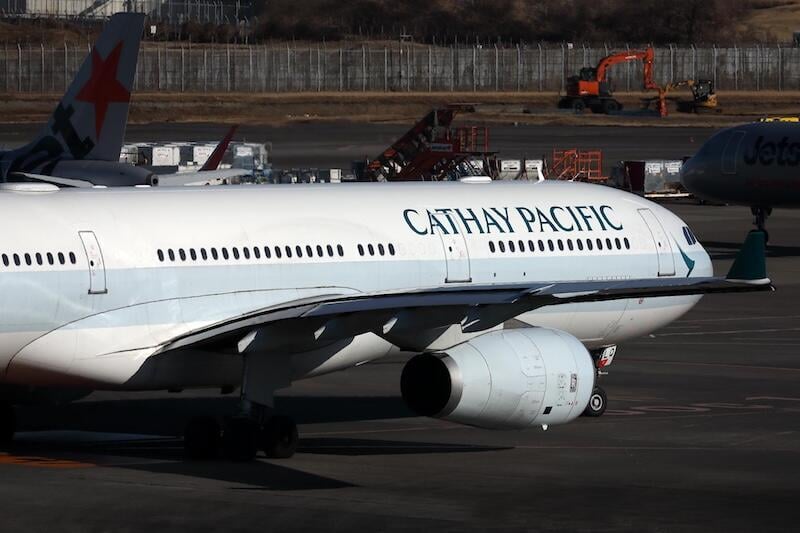
Cathay Pacific will become the sole airline to offer nonstop service between Hong Kong and Kazakhstan when it launches flights to Almaty in the first quarter of 2027, marking the carrier’s entry into Central Asia.
The Oneworld alliance member plans to open a 3X-weekly service between Hong Kong International Airport and Almaty International Airport using Airbus A330-300 aircraft. The announcement was made during a visit to Kazakhstan by a Hong Kong Special Administrative Region (HKSAR) delegation led by Chief Executive John Lee Ka-chiu and reflects Cathay’s efforts to strengthen connectivity with countries participating in China’s Belt and Road Initiative, Beijing’s infrastructure and trade development strategy.
“Central Asia is a strategically important Belt and Road region that offers ample business opportunities,” says Lavinia Lau, Cathay’s chief customer and commercial officer. “As Hong Kong’s home hub carrier, Cathay has aligned interests with the HKSAR government in strengthening our connectivity with this emerging market.”
The new route will give Cathay its first destination in Central Asia and comes as airlines across the region continue to expand links between Kazakhstan and Greater China. Although there are currently no nonstop flights between Kazakhstan and Hong Kong, service between Kazakhstan and mainland China has grown rapidly over the past year.
According to OAG Schedules Analyser data, capacity between Kazakhstan and mainland China during the northern summer 2026 season is projected to reach approximately 1.08 million two-way seats, up from 728,800 seats a year earlier. The number of nonstop routes between the two markets has increased to 20 this June from 13 during the same period in 2025.
Recent additions include Air Astana’s services from Almaty to Shanghai Pudong and from Guangzhou to Astana, while low-cost subsidiary FlyArystan is preparing to commence new routes from Aktau to Urumqi and Almaty to Xi’an later this month.
Cathay says the Kazakhstan launch follows the launch of flights to Urumqi in China’s Xinjiang region, a market that serves as a gateway between China and Central Asia.
OAG data shows that Air Astana offered an Almaty-Hong Kong route before the pandemic, but the route has remained suspended since 2020.

Related Content