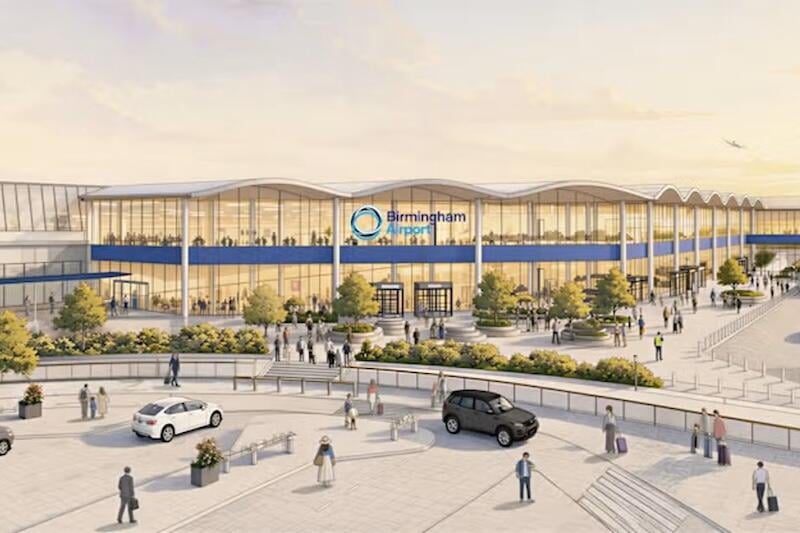
Birmingham Airport (BHX), England, has unveiled a draft £2 billion ($2.7 billion) master plan designed to enable the airport to handle about 30 million passengers annually by 2041, more than double its current traffic.
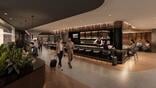
The proposals focus on making fuller use of BHX’s existing runway rather than constructing another. The terminal would expand by about 60%, while the number of aircraft stands would increase from 42 to between 70 and 75.
Longer-term airfield projects could include a new south pier, an extension of the international pier and a satellite building north of the terminal. Investment is also planned in baggage facilities, taxiways, surface access and passenger processing.
The first phase could begin in 2027, subject to the outcome of an eight-week public consultation starting Oct. 16. Birmingham expects to finalize the master plan in early 2027, but individual projects would require separate approvals.
“The £2 billion proposed investment is unprecedented at Birmingham Airport and will take our airport close to 30 million passengers,” Birmingham Airport CEO Nick Barton says. “This level of ambition sends a strong signal of support and confidence in our airport and wider region.”
BHX handled a record 13.65 million passengers during 2025, up from 10.2 million a decade earlier. Under the master plan, annual aircraft movements would rise from fewer than 100,000 in 2025 to about 180,000 by 2041.
The increase in movements would therefore be slower than passenger growth, with the airport expecting average passengers per flight to rise about 20% as airlines deploy larger aircraft.
BHX forecasts that long-haul traffic could triple over the 15-year period, supported by expanded Middle East and South Asia services, the restoration of scheduled transatlantic flights and potential new links to the Far East. The airport also aims to increase its share of air travel generated within the Midlands from about 35% to 45%, partly by recapturing passengers who currently use airports elsewhere in the UK.
OAG Schedules Analyser data shows airlines offered approximately 5.56 million departure seats from BHX during summer 2026, up 3.3% from 5.38 million a year earlier. The number of scheduled destinations increased from 128 to 135, while departures rose by a similar percentage to about 30,500.
Ryanair increased capacity by 16.8% to 1.42 million seats and EasyJet expanded 16.9% to approximately 871,800. Jet2.com remained Birmingham’s second-largest airline, providing 1.24 million seats, up 2.5%. Together, Ryanair, Jet2, EasyJet and TUI Airways accounted for more than three quarters of the airport’s summer capacity.
The master plan would provide infrastructure for further airline growth, but Barton warned that its delivery depends on a stable tax and regulatory environment. The airport says its business rates bill has already doubled amid uncertainty over the valuation of English airports.
“This planned growth over a 15-year period details the length of investment cycles at airports, and unless tax and regulatory environments are made more favorable and stable for major infrastructure investment, they may not materialize,” Barton says. “Nor will the growth in the UK we all so badly need, in order to deliver our country’s potential.”
UK Transport Secretary Heidi Alexander says the government supports airport expansion that contributes to regional economic development.

Related Content