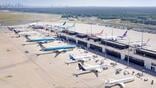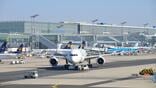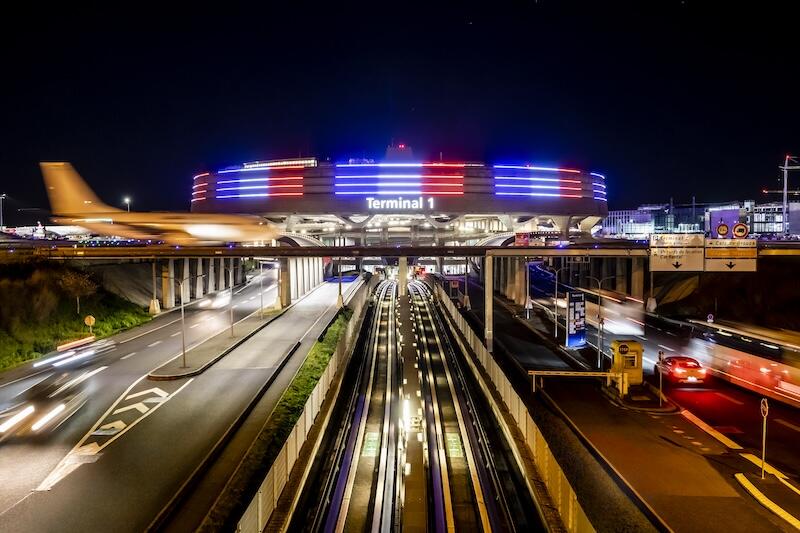
Paris Charles de Gaulle Airport.
The latest news on airports globally, with updates on financing, infrastructure expansion and sustainability initiatives.
Groupe ADP has proposed new airport fee increases for 2026 as part of France’s annual tariff approval process, setting the stage for negotiations on the next long-term Economic Regulation Agreement (ERA), which will govern airport charges from 2027. The operator of Paris Charles de Gaulle (CDG), Orly (ORY) and Le Bourget (LBG) airports has submitted to the French Transport Regulatory Authority (ART) a proposal for uniform fee hikes of 1.5% at CDG and ORY. Fees at LBG would increase by an average of 2.5%. ADP says the proposed adjustments reflect inflation, investment needs and fair capital returns, adding that tariffs must remain “moderate” in the absence of a current ERA. The ART has two months to issue its decision. The group plans to publish its draft ERA proposal on Dec. 10, outlining the framework to take effect in 2027, with consultations and negotiations continuing through 2026. ADP reported a 9.4% year-on-year revenue increase to €5.04 billion ($5.85 billion) for the first nine months of 2025, supported by traffic growth and strong retail performance.
A public consultation on proposals to modernize Scottish airspace has opened, with changes planned to flight paths serving Edinburgh and Glasgow airports. The consultation is part of the UK’s wider airspace modernization strategy led by the Civil Aviation Authority and the Airspace Change Organizing Group. The redesign covers an area of around 61,000 km2 (23,550 mi.2)and handles more than 200,000 flights annually. Changes below 7,000 ft. will be managed by Edinburgh and Glasgow airports, while NATS will introduce structured flight paths up to 25,500 ft. to improve efficiency and capacity. The overhaul is expected to cut emissions by 18,000 metric tons of carbon dioxide per year and reduce annual flying distance by 79,000 nm. Public engagement events and webinars will run throughout the consultation period, allowing communities, airspace users and industry stakeholders to review and comment on the proposed changes.
Perth Airport, Australia, has released its Preliminary Draft Major Development Plan for a significant terminal expansion, marking a key step toward developing a new integrated domestic and international terminal complex. The proposed New Terminal project, which includes new terminal facilities, aprons and taxiways, is described as one of the most complex infrastructure undertakings in the airport’s history. “The new terminal facilities will reflect a modern, vibrant and dynamic Western Australia and will provide passengers a world-class experience,” Perth Airport CEO Jason Waters says.
TAV Airports has reported a 13% year-on-year revenue increase to €1.39 billion ($1.6 billion) for the first nine months of 2025, supported by resilient passenger traffic across its international portfolio. The Groupe ADP subsidiary said EBITDA rose 14% to €467 million, while international traffic climbed 4% to 59 million passengers. CEO Serkan Kaptan says the company “sustained positive momentum across our portfolio despite a mixed macro backdrop,” adding that international traffic growth and improved commercial performance underpinned results. TAV operates a network of airports across Turkey, the Middle East, Central Asia and Europe, including Antalya and Ankara in Turkey; Almaty in Kazakhstan; and Tbilisi and Batumi in Georgia.
Birmingham Airport, England, plans to invest £300 million ($400 million) over the next four years as part of a new business plan to support passenger growth to around 17 million by 2029. The airport will spend about £75 million annually through 2029, with major projects including a £40 million airfield upgrade and a £40 million expansion of baggage systems. “We are currently in our most successful year ever at the airport and we are confident this growth is set to continue,” CEO Nick Barton says. “But we need to go further as we can see more growth coming—however, we need to do this in a responsible way.” The airport will also begin developing a new masterplan to guide long-term growth beyond 2040 and continue investments in energy efficiency and electrification.
Fraport has inaugurated a new photovoltaic installation along Frankfurt Airport’s Runway 18 West, marking a further step toward its net zero goal for 2045. The 2,800-m-long “solar fence” features 37,000 vertically aligned panels capable of producing up to 17.4 million kWh of electricity annually, supplying terminal air conditioning and the airport’s expanding fleet of electric vehicles.
Kuwait International Airport will open its third runway and a new air traffic control tower on Oct. 30. Saad Al-Otaibi, deputy director general for planning affairs and projects at the Public Authority for Civil Aviation, says the developments form part of a wider strategy to strengthen Kuwait’s position as a regional hub. He adds the 4.58-km runway will “boost air safety and increase operational capacity,” while the new control tower will be capable of managing over 600,000 annual flight movements.

Related Content