For almost a quarter of a century, U.S. commercial airport security screening has been regulated and operated by the Transportation Security Administration (TSA), whose processes have been largely mirrored at airports worldwide.
Any frequent flyer knows (or should know) the drill. ID and boarding pass in hand, shoes, belts and jackets off, laptops and other devices out of cases along with keys and small amounts of liquids and gels sealed in quart-size plastic bags before walking through the scanner. Even then, the scanner may beep and a physical pat-down might still be required. It can be tiresome, but it is effective.
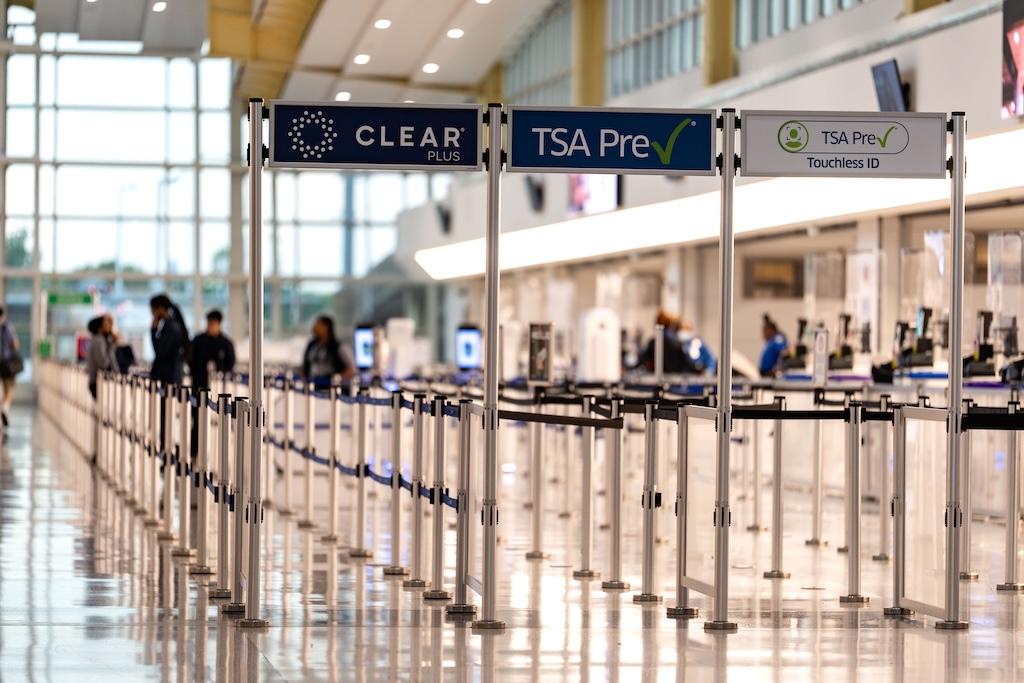
Within the U.S. (and at TSA-operated U.S. pre-security at a few approved airports around the world, including in Abu Dhabi, Canada and Ireland), one of the few but major changes since TSA was formed in 2001 was the introduction of TSA PreCheck. Officially launched in December 2013 after a pilot program, PreCheck required a processing fee and personal information from applicants, and a background check. Successful applicants are given a “known traveler” number and can use separate, expedited screening lanes. They can also keep on shoes and light jackets and their personal devices and gel bags inside their carry-on. The program has been hugely popular; there are now some 22 million people enrolled in PreCheck.
TSA was folded into the Department of Homeland Security (DHS) not long after it was formed. Both agencies were created in response to the 9/11 terrorist attacks. This year, under new DHS Secretary Kristi Noem, a slew of changes and adaptations are being rapidly released. Noem is hailing them as common-sense steps that leverage and bring the TSA in line with new technologies that reduce air travel hassle while keeping the air transport system safe.
Starting points this summer have included allowing almost all passengers to keep their shoes on throughout the screening process, creating dedicated lanes for families at some airports, and discounting or providing free PreCheck enrollment for military personnel, their spouses and people who lost a family member in military service.
These steps do seem to make sense, especially at a time when demand for air travel is still surging in the U.S. Through the Aug. 29–Sept. 1 U.S. Labor Day holiday weekend, TSA screened nearly 10.4 million, with Friday marking one of the busiest days in TSA history when almost 3 million people were screened. And screening technology, including biometric face scanners and more sophisticated detection machines, has certainly advanced considerably since 2001.
But the moves to “transform” U.S. airport screening still raise questions. These start with asking about the future of PreCheck. If more people are eligible for expedited screening at no cost, will that mean longer lines at PreCheck? Based on this editor’s experience this year, PreCheck lines already are frequently longer than the standard screening lines. And if everyone can keep their shoes on, why pay for PreCheck? Will that also lead to more people going through airport security without having provided the personal information that PreCheck requires? In May, TSA enacted a years’-long intention requiring passengers to present something it calls REAL ID at the security entrance. REAL ID raises the bar against fraudulent identity, helping ensure the passenger is who they say they are, but it’s not the same as providing personal information for background checks.
There’s also the question of implications for airport screening worldwide. Many countries and airports have adopted practices very similar to those that TSA introduced, essentially making them a global “standard.” For passengers traveling internationally, therefore, there has been a consistency through the screening process that has helped keep things moving because people know how to prepare. That might not be the case if governments and airports outside the U.S. don’t keep in step with Noem’s initiatives. A passenger on a journey through U.S. and non-U.S. airports might be allowed to do one thing at one airport but not at another, again slowing the process for everyone.
There’s also the question of when larger amounts of liquids and gels will be permitted in carry-ons. There have been hints this year that DHS and TSA are working towards lifting the liquid/gel restrictions but no actual announcements. From a crowd-pleaser perspective, that might be the real winner, but it might also increase the already burgeoning sizes of carry-on bags that people bring to the boarding gate. That could make the screening and boarding processes more complicated (and slower).
Another aspect of the changes that Noem has instigated is getting less airplay, although it has the potential to be the most dramatic. In late July, TSA issued an RFI for the development and deployment of solutions at airport security checkpoints. The RFI encouraged respondents to propose “turnkey models incorporating cutting-edge screening technologies to deliver a curated, secure, customer-centric experience.”
TSA acting administrator Ha Nguyen McNeill (another question is when will the agency appoint a permanent administrator?) said at the time that the agency was “constantly looking for innovative private sector solutions.” That sounds like a longer-term plan to privatize U.S. airport security and screening. That might not be a bad thing—TSA already partners with some companies in the field—but it should also be said that under its watch, TSA screening performance has been exemplary. There can be no falling back.
In congressional testimony in May, McNeill said TSA stood at an important strategic crossroads with the upcoming 2026 World Cup soccer tournament and the 2028 Summer Olympics. He promised “a golden age of U.S. travel” in which “fortified aviation security will be coupled with an improved, streamlined and consistent experience at airports nationwide.”
It’s a grand vision. Is it also workable?
Listen to the author and Aviation Week editors discuss TSA changes on the ATW Window Seat podcast at https://bit.ly/TSAchanges.

Related Content