This article is published in Air Transport World part of Aviation Week Intelligence Network (AWIN), and is complimentary through Mar 11, 2026. For information on becoming an AWIN Member to access more content like this, click here.

CAPA: Why Germany Is Underperforming In Commercial Aviation
Aircraft
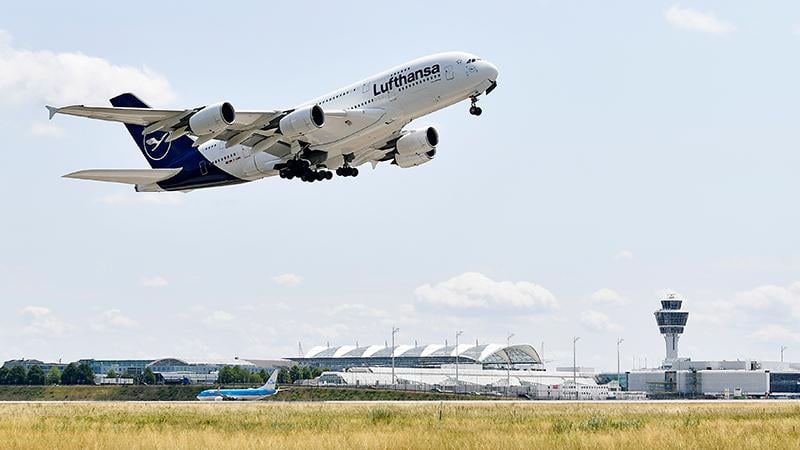
Credit: Munich International Airport

The collective top 10 European aviation markets surpassed pre-COVID capacity by almost 6% last year, yet Germany remained more than 11% below its 2019 seat levels, making it the weakest performer.

This underperformance is not cyclical or demand-led; rather, it reflects a convergence of structural, policy and cost-related factors that have fundamentally slowed Germany’s aviation recovery and reshaped its role within the European network.

On face value, Germany’s position is striking. As Europe’s largest economy and historically one of its most important aviation markets, it would normally be expected to lead an industry recovery. Instead, total seat capacity in 2025 stood at just over 255 million at the end of 2025, compared with nearly 288 million in 2019. This decline contrasts sharply with the expansion seen across Southern Europe and parts of Eastern Europe, where leisure demand and low-cost carrier growth have driven double-digit gains.

The primary drag on Germany’s recovery has been its high-cost operating environment. Germany has some of the highest aviation taxes, airport charges and regulatory costs in Europe. The air passenger tax, reinstated and increased after the pandemic (which will be lowered as of July 1), directly raised ticket prices and dampened demand, particularly for price-sensitive short-haul travel. At the same time, airports have increased charges to recover pandemic-era losses and fund sustainability investments, further eroding airline margins.

DATA
Source: CAPA – Centre for Aviation and OAG

These cost pressures have had a disproportionate impact on LCCs, which were the fastest-growing segment of European aviation before COVID-19. EasyJet, Ryanair and Wizz Air have all scaled back or redeployed capacity away from Germany in favor of lower-cost markets like Greece, Italy, Spain and Eastern Europe. This has left Germany with a structurally weaker short-haul base and fewer point-to-point services, particularly from secondary airports.

Lufthansa Group’s strategic priorities have also shaped the recovery profile. Rather than rebuilding volume aggressively, Lufthansa has focused on yield restoration, long-haul connectivity and premium traffic. Capacity has been deliberately constrained on short-haul routes, with an emphasis on feeding long-haul services through Frankfurt and Munich rather than maximizing total seat numbers. While this approach has supported financial recovery, it has limited overall capacity growth and reduced Germany’s competitive position versus more volume-driven markets.

LABOR PAINS

Labor constraints have compounded these challenges. Germany experienced acute staffing shortages across airports, ground handling and air traffic control during the early recovery phase. Industrial action and wage disputes have continued to disrupt operations, undermining reliability and discouraging airlines from rapid expansion. Compared with Southern Europe, where labor availability and flexibility have supported growth, Germany’s labor market has been a structural brake on recovery.

Environmental and political factors have further constrained aviation growth. Germany has been at the forefront of policy initiatives aimed at reducing aviation emissions, including support for rail substitution on short domestic routes and increased scrutiny of airport expansion. While aligned with long-term sustainability goals, these policies have had the near-term effect of suppressing capacity and limiting network rebuilding, particularly on domestic and intra-European services.

The contrast with stronger-performing markets is stark. Spain and Italy have expanded capacity by around 17–18% versus 2019, driven by tourism growth and aggressive LCC deployment. Greece has grown by almost 36%, and Türkiye by over 28%, benefiting from strategic hub development and state-backed expansion. Against this backdrop, Germany’s contraction appears not merely a slow recovery, but a structural divergence from the broader aviation landscape.

NETWORKS

Germany’s underperformance has also had wider implications for European network flows. Reduced short-haul capacity has weakened feeder traffic into German hubs, while some long-haul connecting flows have shifted to alternative hubs such as iGA Istanbul, Paris Charles de Gaulle and Amsterdam Schiphol. Although France and the Netherlands face their own constraints, Germany’s relative decline has altered the balance of hub competitiveness in Europe.

It is important to note that Germany’s aviation market has not collapsed in value terms. Load factors and yields have recovered, and Lufthansa Group has returned to profitability. However, this recovery has come at the expense of volume and market share, with Germany increasingly positioned as a premium, constrained aviation market rather than a growth engine.

Looking ahead, Germany faces difficult trade-offs. Without meaningful reductions in taxes and charges, or a more supportive policy environment for aviation growth, capacity is unlikely to return to pre-COVID levels this decade. Fleet constraints and aircraft delivery delays will further limit upside. Meanwhile, competing European markets continue to absorb growth that might once have flowed through Germany.

In this context, Germany’s status as Europe’s weakest large aviation market in 2025 is less an anomaly and more of a reflection of deliberate choices and structural realities. The challenge for policymakers and industry leaders will be to reconcile sustainability ambitions and cost recovery with the need to maintain Germany’s relevance in an increasingly competitive and rebalanced European aviation landscape.

Germany represents one of Europe’s clearest laggards, but the most extreme negative outlier is the Russian Federation, where capacity is down 23.7%. This decline is overwhelmingly geopolitical rather than commercial. Sanctions, airspace closures, aircraft availability issues and isolation from international markets have fundamentally reshaped Russian aviation.

Just outside the top 10, Switzerland and Poland illustrate two very different trajectories. Switzerland has slipped from ninth to 11th place, with capacity essentially flat versus 2019 (-0.01%). Poland, by contrast, is one of Europe’s most compelling growth stories. With capacity up nearly 28%, it is benefiting from strong economic growth, an expanding middle class, and the rapid rise of LCCs. On current trends, Poland is well positioned to enter the top 10 before the end of the decade.

Uncertainty, however, remains a defining feature of the European aviation outlook. Geopolitical instability, energy price volatility, aircraft delivery delays, sustainability regulation and infrastructure constraints all have the potential to reshape capacity trajectories.