Airport Updates: Latest News On The Global Market (W/C Sept. 29, 2025)
The latest news on airports globally, with updates on financing, infrastructure expansion and sustainability initiatives.
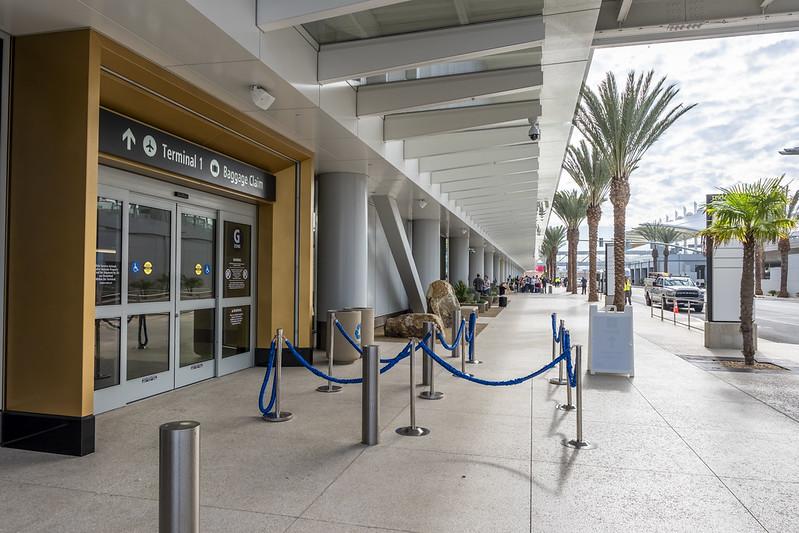
San Diego International Airport (SAN) opened a new Terminal 1 (T1), marking the completion of the first phase of a $3.8 billion project to replace a 58-year-old passenger terminal. The new terminal has 19 gates, a check-in area with 69 kiosks, a 13-lane security checkpoint, seven baggage carousels with a total capacity of handling 4,000 checked bags per hour and 90,000 ft.2 of retail space. SAN has 51 total gates, with 32 in Terminal 2. The second phase of construction on T1 will begin in early 2026 following the demolition of the old T1, which is now closed. Three additional T1 gates are scheduled to be completed by spring 2026, with eight more slated to come online in early 2028, bringing total T1 gates to 30 and the airport’s total to 62. SAN handled 24.2 million passengers in 2024, its highest-ever annual number.
Dublin Airport (DUB) said 30 new computed tomography (CT) scanners providing 3D images of carry-on bags have allowed the airport to ease liquids and laptop rules. DUB passengers “won't need to take liquids, gels or electronics out of their hand luggage at security,” DUB said. Departing passengers will be permitted to carry up to 2 liters of liquids in carry-on luggage, and liquids and gels no longer need to be packed in clear plastic bags, the airport added.
Glasgow Airport (GLA) completed a £3.7 million ($4.9 million) project to expand concessions and make other terminal upgrades. GLA added two new restaurants, upgraded existing airside and landside retail space and made “significant enhancements” to the main departure area, according to the airport.
Wellington Airport (WLG) in New Zealand and Guangzhou Baiyun International Airport signed a memorandum of understanding to develop a collaborative relationship. “The two airports have agreed to … work to share knowledge and jointly develop opportunities together,” WLG said. “The agreement covers staff training and exchanges, project cooperation and working to schedule potential future services between the two airports.”
Smiths Detection provided Malta International Airport (MLA) with technology, including new CT scanners, aimed at speeding up security checkpoint throughput. Smiths said the technology offers "remote screening capability, with a centralized control room and redundant matrix server architecture to support efficient decision-making and strengthen operational resilience.” MLA signed a seven-year service contract with Smiths for the equipment. On its website, Smiths describes its remote screening technology as allowing for more automated carry-on baggage screening. “Deploying image analysts in a central location away from the checkpoint has been proven to offer many benefits and, in this case, would allow for fewer points of human contact, making the process safer for both staff and passengers,” Smiths said. “Depending on what is found on the scanned images, each tray is either sent straight through to the passenger or automatically diverted to a recheck point. Any suspicious areas are marked and classified on the images so operators back at the checkpoint know exactly where to target secondary examinations, making rechecks quicker and less intrusive.”
Houston Bush Intercontinental Airport (IAH) and Houston Hobby Airport (HOU) introduced the Aira ASL mobile app to enable deaf or hard-of-hearing passengers to access on-demand American sign language (ASL) in terminals. “The app connects users to professional ASL interpreters via live video feed, allowing travelers to connect with a visual interpreter free of charge anywhere inside IAH and HOU,” said Houston Airports, which runs the HOU and IAH. “Using the phone's camera and screen, the Aira ASL visual interpreter can assist travelers as they navigate the airport—from check-in counters and gates to restrooms, concessions, baggage claim and other points of interest.”

Related Content