The latest news on airports globally, with updates on financing, infrastructure expansion and sustainability initiatives.
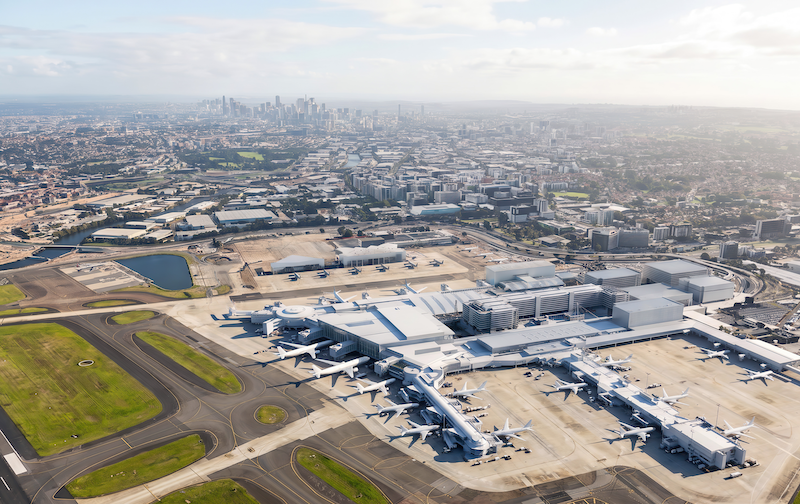
Sydney Airport’s Master Plan 2045 has been approved by the Australian government, clearing the way for long-term expansion at Australia’s busiest airport. The plan forecasts annual passenger traffic will reach more than 72 million by 2045, split between 36.4 million international passengers and 36.2 million domestic and regional travelers. Sydney Airport estimates its annual economic contribution will grow to around A$70 billion ($50 billion), while direct employment is projected to exceed 105,000 jobs. The master plan provides the framework for future investment in terminal capacity, ground transport and passenger facilities. A key proposal is the redevelopment of the airport’s domestic precinct, bringing domestic, regional and international services together in a new integrated terminal. It also includes a five-year environmental strategy focused on emissions reduction, climate resilience and more sustainable airport operations. “As Australia’s international gateway, this plan ensures we can continue supporting tourism, trade, investment and jobs while delivering the capacity needed for future generations,” Sydney Airport CEO Scott Charlton says.
Trondheim Airport has opened an extension to its west pier, adding three new gates as part of efforts to increase capacity and support future growth at Norway’s third-busiest airport. The project adds approximately 1,000 m² of terminal space, together with an 800 m² basement housing a new goods reception area. Airport operator Avinor says the expansion improves access to the three westernmost aircraft stands, enhances operational flexibility and creates additional space for future development. Construction began in June 2025. Trondheim Airport handled 4.11 million passengers in 2025, ranking behind only Oslo and Bergen among Norway’s airports.
Prague Airport has completed a CZK1 billion ($48 million) modernization program around its main Runway 06/24, allowing operations to return to normal after four-and-a-half months of construction. The airport completed 14 construction and technology projects, alongside three major third-party investments, during the closure. Key works included reconstruction and expansion of taxiway intersections, installation of more than 3.3 km of new cable routes, replacement of runway and taxiway lighting with LED systems, construction of a new cable duct beneath the runway, and installation of nearly 1 km of new perimeter fencing. Prague Airport says the upgrades will support the continued safe operation of its primary runway and that it does not expect another closure of similar scale in the coming years. The airport is also progressing plans for a parallel runway, which would allow future maintenance work to be carried out without diverting traffic to the current secondary runway.
The Government of Canada will provide up to C$49.5 million ($35.7 million) through its new Arctic Infrastructure Fund to upgrade the runway and access road at Inuvik Mike Zubko Airport, the first investment announced under the C$1 billion program. The funding, delivered in partnership with the Government of the Northwest Territories, will support runway resurfacing and improvements to the airport access road to enhance safety, reliability and cargo capacity. The investment complements a previously announced C$230 million commitment from Canada’s Department of National Defence to extend and modernize the airport’s runway. Inuvik serves as a key passenger, cargo and emergency response hub for Canada’s Western Arctic and is also a Royal Canadian Air Force and NORAD Forward Operating Location.
Simon Westaway has resigned as CEO of the Australian Airports Association (AAA), with Head of Policy and Advocacy Natalie Heazlewood appointed acting CEO from Aug. 17 while the association recruits a permanent successor. Westaway says he has decided to step down after reflecting on the association’s next stage and to spend more time with his family in Melbourne. He said the AAA was "well placed for its next stage," citing its advocacy on behalf of Australia’s A$105 billion ($75 billion) airport sector and strong relationships with members and government.

Related Content