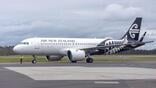
AirBaltic will reduce the number of destinations served from the Baltic capitals in summer 2027, cutting most deeply at Tallinn, Estonia, and Vilnius, Lithuania, as it concentrates capacity around its primary Riga, Latvia, hub.
The Latvian airline plans to serve 57 destinations from Riga, 13 from Tallinn, and eight from Vilnius during the season, which runs from late March through October. It intends to increase frequencies in selected established markets and use Tallinn and Vilnius for a smaller number of point-to-point services.
The schedule implements a revised business plan under which the airline is reducing its Airbus A220-300 fleet by one-third, lowering costs and seeking €225 million ($260 million) in interim financing. Bondholders approved a series of extraordinary resolutions linked to the restructure in August.
OAG Schedules Analyser data shows AirBaltic served 67 destinations from Riga during the week beginning July 20. Its summer 2027 program comprises 57 destinations, marking a reduction of 15%.
Twelve destinations in the July 2026 schedule are absent: Aberdeen, UK; Antalya, Turkey; Bergen, Norway; Batumi, Georgia; Dublin; Faro, Portugal; Gothenburg, Sweden; Larnaca, Cyprus; Malta; Olbia, Italy; Valencia, Spain; and Yerevan, Armenia. Madeira, Portugal, and Sharm el-Sheikh, Egypt, are additions compared with the peak schedule, although both will operate only during April.
The contraction is sharper at AirBaltic’s secondary Baltic bases. Tallinn’s network will shrink from 24 destinations to 13 in July 2027. Athens and Rhodes, Greece; Billund and Copenhagen, Denmark; Burgas, Bulgaria; Hamburg, Germany; Malta; Oslo; Palma de Mallorca, Spain; Split, Croatia; and Tirana, Albania, are absent.
Vilnius will fall from 14 destinations to eight. Berlin; Heraklion, Greece; Nice, France; Palma de Mallorca; Prague and Zurich have been removed.
Across the three Baltic capitals, the number of nonstop routes will fall from 112 to 78, reflecting AirBaltic’s shift from network breadth toward concentrating capacity in markets with stronger demand and revenue potential.
Riga remains at the center of that strategy. The airline plans to operate up to 14X-weekly to London Gatwick, 12X-weekly to both Paris and Vienna and daily flights to Barcelona, Rome, Hamburg and Dusseldorf, Germany. Other increases include Milan at up to 6X-weekly; Athens and Nice at 4X-weekly; and Alicante and Split at 3X-weekly.
“Our network is designed around the travel needs of our passengers and the markets we serve, with a strong selection of destinations for both business and leisure travel,” AirBaltic VP network management Mantas Vrubliauskas says. “At the same time, we are increasing frequencies on a number of popular destinations, offering even greater flexibility and strengthening connectivity between the Baltic region and key destinations across our network.”
The airline is also redesigning its Riga hub schedule to shorten connection times and improve transfers between the Baltic region, Northern Europe and destinations elsewhere in its network.
This more concentrated, Riga-centered model is already evident in AirBaltic’s winter 2026-27 schedule. OAG data shows systemwide capacity falling 10.8% to 2.37 million scheduled seats from 2.66 million in winter 2025-26. The number of flights is also down 10.8%, from 18,345 to 16,361.
Capacity from Riga is scheduled to fall 7.5% to 943,080 departure seats this winter, compared with winter 2025-26, while Tallinn falls 20.8% to 205,610 seats, and Vilnius declines 14.4% to 189,370. Tampere, Finland, capacity is also set to contract 24.3% to 25,230 seats.
Catania and Pisa, Italy; Dublin; Faro; Kittila, Finland; Ljubljana, Slovenia; Malta; Marrakech, Morocco; and Salzburg, Austria, are absent from Riga’s forthcoming winter schedule, while Kuusamo and Oulu, Finland; and Turin, Italy, are added. Tallinn loses winter services to Barcelona, Copenhagen, London Gatwick, Gran Canaria and Nice, while adding Vienna. Vilnius drops Dubai; Gran Canaria, Portugal; and Krakow, Poland, but adds Geneva.
The network changes align with AirBaltic’s forecast that scheduled-service available seat kilometers will fall 9.4%, from 9.6 billion in 2026 to 8.7 billion in 2027. Revenue is expected to decline from about €900 million to €800 million as capacity contracts, although before-tax earnings is forecast to increase from €158 million to €192 million as cost reductions take effect.
AirBaltic plans to reduce its fleet from 54 Airbus A220 aircraft to about 36 by year-end before gradually rebuilding to 40 by 2030. Its previous strategy envisaged operating 100 aircraft by the end of the decade. The airline is also seeking to increase aircraft, crew, maintenance and insurance (ACMI) flying to improve utilization and reduce exposure to seasonal demand.

Related Content