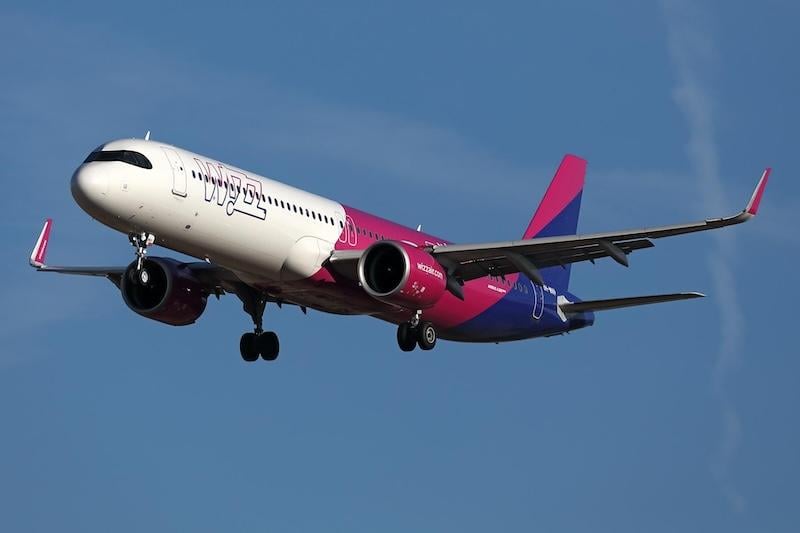
Wizz Air is preparing for a slower expansion through 2033 as the ULCC adjusts its Airbus orderbook, sells newly delivered aircraft and braces for prolonged Pratt & Whitney GTF engine groundings that will continue limiting fleet availability into 2027.
The airline confirmed that its amended Airbus agreement, announced on Nov. 7, will reset annual fleet growth to roughly 10% to 12% from fiscal 2027 onward, down from the 20% expansion rate it expects this year. The delivery changes involve deferring 88 A321neos into the early 2030s and converting 36 A321XLRs to A321neos.
Speaking following the publication of Wizz’s first-half financial results, CEO József Váradi told analysts the restructured orderbook “programs the growth against the risk profile of execution” and creates stability for the next decade. Under the new plan, Wizz expects its fleet to rise from 256 aircraft in fiscal 2026 to 384 in fiscal 2032, before ending slightly lower at 379 in 2033—well below previous ambitions that envisioned 500 aircraft by 2030.
The slower growth will only become visible in about a year, once the aircraft already committed for delivery over the next 12 months arrive and the deferred units begin reducing annual additions. The carrier also reiterated it expects to become an all-Neo operator by 2029 as its remaining prior-generation A320s and A321s exit the fleet.
Wizz has also begun using selective aircraft sales to smooth near-term growth. In November, the carrier took delivery of three A321neos and immediately sold them to a lessor for onward lease to another airline. Váradi called the transaction a “short-term phenomenon, not a structural matter,” but said the move helps moderate capacity.
The airline expects an average of 30 to 35 aircraft to remain grounded through the end of fiscal 2026, improving only slightly to 25 to 30 through fiscal 2027. To support operations, Wizz plans to build a pool of roughly 100 spare engines by next summer. Váradi says the recovery plan agreed with Pratt & Whitney positions the carrier to “unground the entire fleet by the end of 2027,” although engine turnaround times continue to remain at about 300 days.
Net profit increased 2.6% to €323.5 million ($376 million), boosted by a rise in profitability in the second quarter as fuel prices eased, flight disruption costs fell and one-off wet-lease expenses from the prior year did not recur.
The airline ended the period with €1.98 billion in cash-up 14.3% since March and said it plans to repay a €500 million bond maturing in January 2026 using internal liquidity.
For the six months ending Sept. 30, revenue rose 9% year on year to €3.34 billion on 8.9% ASK growth, while operating profit increased 25.8% to €439.2 million. EBITDA reached €981.3 million, up from €826 million a year earlier.

Related Content