The U.S. has sanctioned 27 more Iranian airlines as it steps up economic pressure against Tehran.
The Sept. 8 move comes as part of "Operation Economic Outcast," which aims to rack up sanctions against Iran’s economy as part of the conflict between the U.S., Israel and Iran.
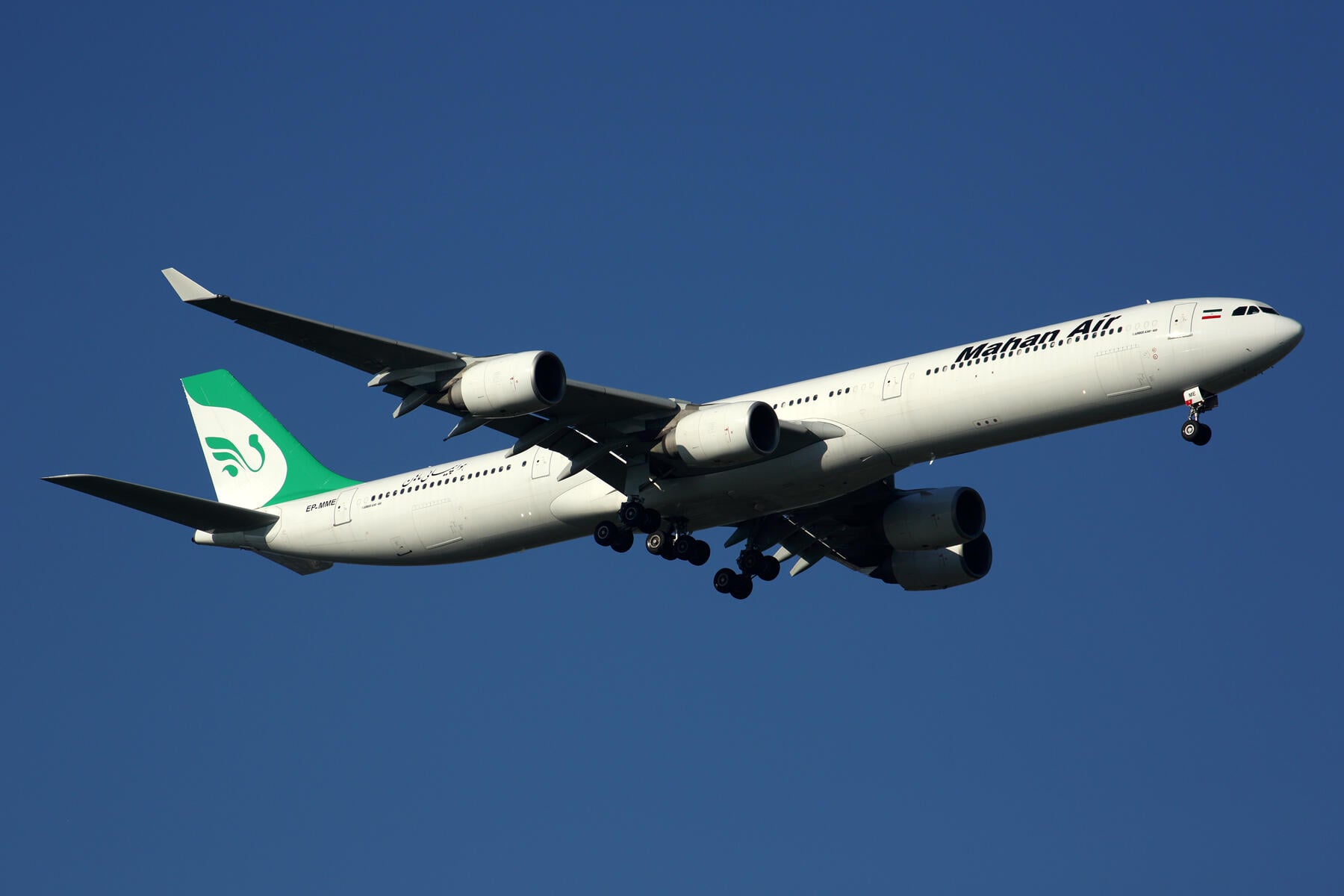
Several major Iranian carriers, notably Mahan Air, which has long been associated with moving men and materiel for the Iranian Revolutionary Guard Corps, have been under sanctions for years. Iran has resorted to a complex global web of shell companies and intermediaries to source second-hand aircraft and spares to keep its aging civil airline fleet operating.
The 27 airlines named under the U.S. Treasury Department’s Office of Foreign Assets Control (OFAC) latest edict include Air Shiraz, Asa Jet Airline, Ata Airlines, Atlas Aviation Group, Ava Airlines, Chabahar Airlines, Erwan Airline, Fly Kish Airlines, Fly Persia Airlines, Iran Air Tour, Iran Aseman Airlines, Jsky Airlines, Kish Airlines, Karun Airlines, Lad Airways, Mehr Airways, Nasim Air, Pars Oghyanous Kish Company, Qeshm Air, Raimon Airways, Saha Airlines, Sepehran Airlines, Soroush Air, Taban Airlines, Toos Airlines, Varesh Airlines and Zagros Airlines.
As well as the airlines themselves, any individual or company assisting them may also be sanctioned under the U.S. move.
In a statement, OFAC said that its latest decision “also targeted covert front companies, foreign intermediaries and deceptive transshipment routes that Iran relies on to obtain U.S.-origin aircraft and sensitive technology.
“In addition to OFAC’s action, Treasury’s Financial Crimes Enforcement Network (FinCEN) is issuing an alert asking financial institutions to report procurement networks supporting Iran’s aviation industry.”
“Let this be a warning to anyone doing business with Iran’s remaining airlines, all of which we sanctioned today: You are at risk of being cut off from the global financial system,” Treasury Secretary Scott Bessent said.
OFAC is taking action against cargo service providers and general sales agents that have serviced Mahan Air’s international flights, as well as a range of companies and individuals that OFAC says participated this summer in helping funnel three used Boeing 777s to Iran.
“Concurrently, OFAC is suspending three Iran-related aviation authorizations to put additional pressure on the Iranian regime. These include authorizations that allowed for overflights and for non-U.S. airlines to fly U.S.-origin or U.S.-controlled commercial aircraft into Iran. OFAC will consider aviation safety-related requests on a case-by-case basis,” the office said.
The Iranian civil fleet has suffered heavily in the current conflict, with Tehran saying that around 100 airliners have been destroyed or damaged.
OAG Schedules Analyser figures show that the number of scheduled departure seats from Iranian airports has dropped by 25% over the past year, from 1.2 million in September 2025 to just over 900,000 this month.
Domestic capacity is down just 2% to 775,679 seats, but international capacity has plummeted 69.1%, from 417,815 to 129,008 seats. International services account for just 14.3% of the market, compared with 34.5% in September 2025.
There are currently 27 international routes serving 11 countries, compared with 88 routes and 17 countries in September 2025. China is now Iran’s largest international country market, followed by Turkey, Iraq and the United Arab Emirates. Those four countries account for 92.2% of Iran’s international capacity
Foreign-airline capacity for carriers into Iran has almost disappeared entirely, from 238,799 departure seats to just 1,924, a reduction of 99.2%. Armenia Airways is the only foreign carrier with capacity in September 2026

Related Content