Syrian Aviation Set For Boost After U.S. Drops State From Terror List
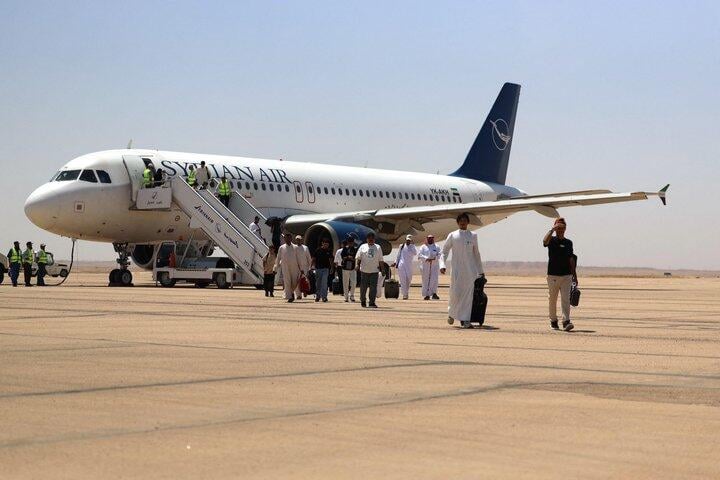
Syria’s civil aviation industry could see new investment after the U.S. formally removed the country from its list of state sponsors of terrorism on Aug. 24, ending a designation that had stood since 1979.
U.S. Secretary of State Marco Rubio announced the decision on social media site X, saying: “Today, I formally rescinded Syria’s designation as a State Sponsor of Terrorism. This action unlocks new potential for Syria’s economic revitalization and progress.”
Responding to the news, Omar Hosari, the head of Syria’s General Authority of Civil Aviation and Air Transport, said on X that the removal eliminated one of the “biggest obstacles that shackled Syria and isolated it from the world for years.” He called it a “practical and strategic shift” that opens the door to rebuilding ties with airlines, manufacturers, lessors, insurers and financing firms, and to restoring long-severed air routes.
Hosari said the next phase is about “turning this openness into tangible results,” pointing to better airports, a stronger national carrier, a wider destination network, greater investment and a modernized aviation sector that returns Syria to its rightful place on the global air map.
Market On The Rebound
Syria’s aviation sector has been recovering steadily since the fall of longtime ruler Bashar Assad in December 2024. According to current OAG data, seat capacity more than doubled that summer—up 118.5% between summer 2024 and summer 2025—and has grown a further 54.2% in summer 2026 compared with the previous year.
The number of airlines serving Syria has jumped from four in summer 2024 to 18 today, while airport-pair connections have climbed from 17 to 43 over the same period.
Foreign carriers now dominate the market. Syrian operators, which controlled 61.8% of capacity in summer 2024, now account for roughly 24.7%. Royal Jordanian leads foreign carriers with 126,816 departing seats—a 10.5% share—followed by Air Arabia, Turkish Airlines, Flynas, Jazeera Airways, Flydubai and AJet. The UAE, Turkey, Kuwait, Saudi Arabia and Jordan together supply nearly 88% of all departing seats.
National flag carrier Syrian Airlines has scheduled 104,100 two-way seats for summer 2026, down 34.5% from last summer, but now flies 16 routes—up from just four a year earlier—including new destinations such as Amsterdam, Istanbul, Kuwait and Riyadh, Saudi Arabia.
Syrian Airlines’ active fleet includes three Airbus A320s and one Boeing 737-500, alongside a grounded A320 and two A340s, according to CAPA data.
Fly Cham, the country’s largest airline, has expanded faster, with 489,996 two-way seats scheduled for summer 2026, a 28.6% increase, with its network doubling from nine to 18 airport pairs in a year. The carrier operates four A320s, with a fifth grounded.
With Syria’s removal, only three countries remain on the U.S. state sponsor of terrorism list: Cuba, Iran and North Korea.

Related Content