This article is published in Aviation Daily part of Aviation Week Intelligence Network (AWIN), and is complimentary through Sep 03, 2026. For information on becoming an AWIN Member to access more content like this, click here.
Qantas has advanced the replacement of its Airbus A380s by 3 to 4 years and confirmed it is negotiating with Airbus and Boeing to exercise more widebody options.
The carrier intends to start the replacement of its A380s in mid-2028, Group CEO Vanessa Hudson said during an annual earnings media briefing. The company had previously indicated it was aiming to start the A380 retirement in fiscal 2032, which begins in mid-2031.
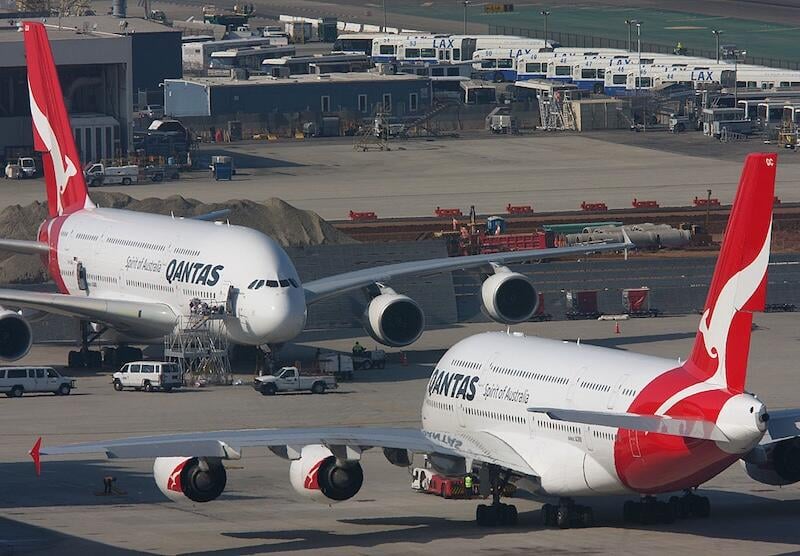
Qantas operates 10 A380s, which were delivered beginning in 2008. The carrier has stated that the A350-1000 is the intended replacement.
The carrier is not releasing details on how long the A380 phaseout will take. Hudson said Qantas is not being more specific on the retirement timeline because it needs to maintain flexibility. “We’ve got confidence in the delivery stream of [replacement] aircraft … as more come online, we’ll be progressively updating [on] the conclusion of that retirement,” Hudson said.
Hudson said the carrier is looking forward to getting the new-generation replacements because they are “fantastic aircraft” with better fuel efficiency that will help with fuel costs and sustainability goals. They will also allow new cabin products to be introduced.
She noted that the A380 is now “an older aircraft,” so maintenance costs will increase over time. This means the costs of flight disruptions will also inevitably rise.
Confirming a retirement starting date is “important for pilots to understand what promotional opportunities [there] are and what aircraft to focus on,” Hudson said.
Qantas’ widebody orderbook currently comprises 12 A350-1000s, 12 A350-1000ULRs and 12 Boeing 787s. The ULRs will be for growth on ultra-long-haul routes, and the -1000s will begin the replacement of the A380s.
The 787s already on order will help replace the carrier’s A330s, which will be retired beginning this year. However, additional orders will be needed to complete the replacement of the carrier’s A380s and A330s.
The carrier has revealed it is in negotiations to exercise options for 20 more widebodies, comprising a mix of A350-1000s—not the ULR version—and 787s. These follow-on orders are intended for delivery from 2030, although Hudson would not reveal when the deal will be reached to exercise the options.
The Qantas Group expects to take delivery of a total of 31 aircraft in fiscal 2027, which began July 1. These will comprise 28 Airbus narrowbodies, and the first three of its A350-1000ULRs are due in April, May and June. The carrier’s next 787-9s are due in fiscal 2028 and will include a new business class product. Each of the new 787s will have 42 business class suites with sliding privacy doors.
Qantas will essentially use A321XLR deliveries to replace those A330s that are retired before the 787s begin arriving.
The group reported a net profit of AU$1.29 billion ($926.3 million) for fiscal 2026, which was AU$316 million lower than the profit in the previous fiscal year.
Its fuel bill increased by AU$610 million, although it limited the net impact of the Middle East crisis on its earnings to AU$420 million due to fare and capacity adjustments, and the redeployment of some aircraft to cater to increased demand for travel to Europe.
Qantas' international capacity was up 6.7% year over year in fiscal 2026. Domestic capacity increased by 3%. Its LCC Jetstar increased its domestic capacity by 4% in fiscal 2026, with international rising 11%.
The group forecasts Qantas international capacity to be up 4% year over year for the first half of fiscal 2027, with domestic dropping 4%. Jetstar international capacity for the fiscal first half is projected to be essentially flat, while its domestic capacity is expected to be down 2%.