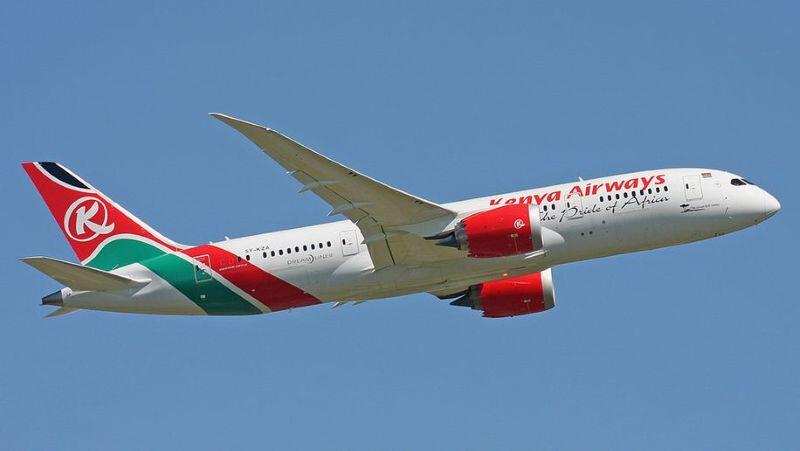
Kenya Airways reported strong operational metrics for the first half of 2026, with passenger traffic reaching 2.2 million and load factor improving to 76.3%.
The airline also saw an 18% year-over-year increase in cargo revenue, supported by expanded freighter capacity and plans to scale daily cargo operations to 250 metric tons.
The national carrier generated 81 billion Kenyan shillings ($625 million) in revenue for the six months through June 2026, even as it operated with 9% less capacity than a year earlier. Despite these gains, volatile global jet fuel prices and supply chain disruptions weighed heavily on profitability. The airline reported a first half net loss of 16 billion shillings; its first half loss last year was 12 billion shillings.
Jet fuel averaged $142 per barrel during the period, with a 72% price spike between March and April 2026 pushing costs as high as $213 per barrel. The airline attributed the losses primarily to these fuel price fluctuations, compounded by global parts and engine shortages that extended engine turnaround times to between 90 and 120 days, limiting fleet availability.
To address these challenges, Kenya Airways is investing in expanding its Maintenance, Repair and Overhaul (MRO) capabilities to mitigate long-term bottlenecks.
Cargo operations have become a bright spot for the airline. Backed by a Boeing 747F capacity purchase, Kenya Airways aims to grow its regional cargo market share from 11% to 40%. Interim CEO George Kamal told Aviation Week in June that the airline is exploring the addition of widebody freighters to its fleet, which currently includes four 737Fs. The carrier is also considering introducing the Embraer E2 regional jet to enhance operational flexibility.
Kenya Airways’ network spans 49 airport pairs, 44 airports and 33 countries, with Nairobi remaining the dominant hub. Current data from OAG Schedules Analyser shows 436,115 two-way seats booked for August 2026, down just 0.4% from August 2025. Nairobi accounts for 90.9% of total capacity, with Africa making up 71.5% of the airline’s overall capacity.
However, the airline is expanding its footprint beyond Africa, with European capacity up 13.7% and Asian capacity up 28.9% year over year, while domestic capacity has fallen 16.4%.
According to the CAPA – Centre for Aviation Fleet Database, Kenya Airways’ fleet includes two 737-300Fs, nine 737-800s (one inactive), two 737-800Fs, one 777-300ER, nine 787-8s (two inactive) and twelve E190s (five inactive). The airline currently has no aircraft on order.

Related Content