This article is published in Aviation Daily part of Aviation Week Intelligence Network (AWIN), and is complimentary through Jun 13, 2026. For information on becoming an AWIN Member to access more content like this, click here.

Azul CEO Sees Growth Potential In Brazilian Domestic Markets

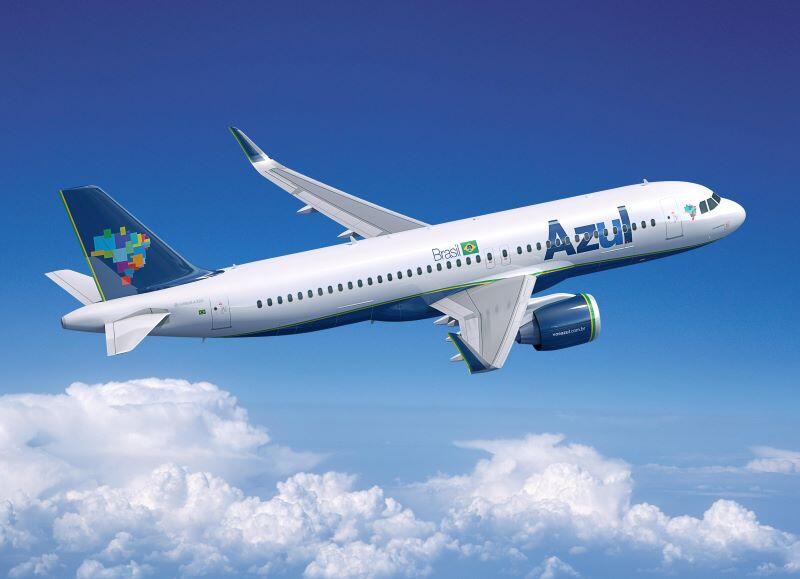
Azul A320neo

Azul Airbus A320neo

Credit: Airbus

RIO DE JANEIRO—While Sao Paulo-based Azul’s international business is important, the opportunities to further grow domestic business are huge, the airline’s CEO believes.

“The way we think of Brazil, which is a massive country with 220 million people in it, and when we look at our international business, Brazilians like to go to Florida, to Europe and so on,” Azul CEO John Rodgerson told ATW on the sidelines of the IATA AGM in Rio de Janeiro on June 6.

“We see Lisbon, Porto, Madrid, Miami and Orlando as the same as other Brazilian cities; some of them are a little bit further east, some of them a little bit further north,” he said. And Azul plans to continue connecting its hubs with those cities.

However, the Brazilian domestic market offers big potential for growth.

“We fly to 140 cities inside Brazil; our closest competitor goes to 62. We fly everything from the Cessna Caravan to the ATR and the Airbus A320neo. We truly connect all of Brazil,” Rodgerson said. And the Brazilian home market continues to grow, creating new opportunities.

“Most of our competitor carriers are operating Sao Paulo-Rio de Janeiro and Sao Paulo-Brasilia. Some 90% of their seats are dedicated to those cities,” Rodgerson said. “Obviously, it’s a very competitive market in which you have three airlines with roughly the same amount of market share that’s within 10 percentage points of each other.”  

However, on 80% of Azul’s domestic routes, there is no competition.

“We are doing something that is fundamentally different,” Rodgerson said. “We have about 180 aircraft, including 10 [Airbus] A330s. We continue to take delivery of some GTF-powered Embraer E2s each year, along with [CFM] LEAP-powered A320neos and some A330-900s. For now, we plan to take between five and eight aircraft per year over the next four to five years or so. That allows us to be opportunistic.”

“The problem is, you order an aircraft five years before you get it. And you have no idea what the conditions of the market will be when you receive the aircraft,” Rodgerson said.

“We need demand, we have a dollar-based cost structure in a developing economy. How the exchange rate moves really impacts us,” Rodgerson said.

But Rodgerson noted that Azul was not in need of capital. Azul emerged from Chapter 11 bankruptcy protection in February with $850 million in new equity investments, while debt and lease obligations were cut by $2.5 billion

“But we certainly want long-term, strong partners,” Rodgerson said.

Azul has an unusual relationship with two US majors. United Airlines is Azul’s largest shareholder today, with an 8% stake, while American Airlines will soon become an equal shareholder when its partnership with Azul gets regulatory approval, which is expected within a couple of months. Additionally, United invested $100 million in Azul and American plans to do the same once the regulatory green light is given.

Kurt Hofmann

Based in Austria, Kurt covers European air transport for ATW.