This article is published in Aviation Daily part of Aviation Week Intelligence Network (AWIN), and is complimentary through Jul 12, 2026. For information on becoming an AWIN Member to access more content like this, click here.

Gulf Conflict Presents Chance To Reshuffle Network: SalamAir CEO

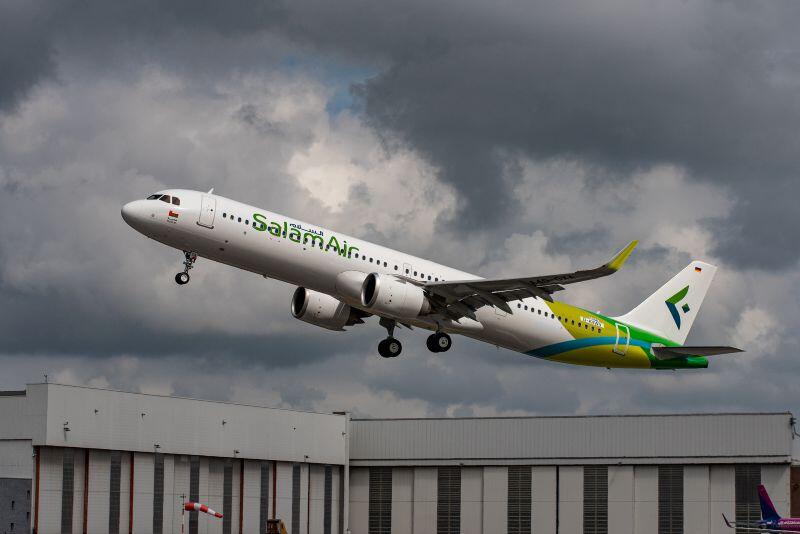
SalamAir A321neo
Credit: SalamAir

RIO DE JANEIRO—Oman-based LCC SalamAir is making certain adjustments to its network, ones necessitated by ongoing conflict in the Gulf.

“We are changing how to build the network. It is a basic airline strategy: Stop flying to places you can’t make money,” SalamAir CEO Adrian Hamilton-Manns told Aviation Week on the sidelines of the recent IATA AGM in Rio de Janeiro on June 8.

“During the last six months, because of the closure of Doha, Qatar, we are no longer going back to Doha; we are also not going to Kuwait. We are basically staying out of the entire western side of the gulf cities,” he said.

These markets are highly competitive, the CEO noted. “It is very hard to make money. Also offering the lowest fare, you are still under control from your competitors. Iran was good for us, also Iraq, but we can’t fly there [anymore],” he said. Other highly competitive markets the carrier has left include Bangkok and Phuket.

“We also took the opportunity last year to exit Delhi, because we had only two flights per week, this makes no economic sense, the same we did with Chennai in India,” Hamilton-Manns said.

Therefore, SalamAir launched new routes including to Damascus, Syria; Beirut, Lebanon; and more points in Africa will soon join the network, such as Djibouti and Asmara, Eritrea. “The focus is to stay away from traditional points,” he said. New destinations like Vienna, Austria, come online in June. Meanwhile, Medan in Indonesia will follow in July.

Vienna became the first European destination for SalamAir, since it closed Munich four years ago. “The Gulf war allowed us to reshuffle the network,” he said. “Airlines have to be nimble. You got to be flexible. You got to chase opportunities. Good and bad. This was an opportunity.”

GROWING FLEET
SalamAir operates nine Airbus A321neos and six A320neos. “One more A320neo will join our fleet in July and, two A320ceos will join in two weeks’ time,” Hamilton-Manns  said. The A320ceos are needed to stabilize operations and to diversify the risk-scenario portfolio related to the CFM engine issues on the A320/321neo fleet. “Then we have a total of 18 aircraft,” he said.

On March 26, the government of the Sultanate of Oman announced its acquisition of a majority ownership stake in LCC SalamAir. “This gives us stability for the future, that’s the key part. We suffered obviously with the engine issues and all the rest. The country is backing us to grow,” the CEO said. “But it adds pressure on us. You have to do the right thing for Oman.”

Regarding route overlaps with flag carrier Oman Air,  “We actually only overlap on 10 routes, which represents 12% of ASKs. It is minor,” Hamilton-Manns said. “To Saudi Arabia, one domestic route, and to India.”

Kurt Hofmann

Based in Austria, Kurt covers European air transport for ATW.