This article is published in Aviation Daily part of Aviation Week Intelligence Network (AWIN), and is complimentary through Jul 12, 2026. For information on becoming an AWIN Member to access more content like this, click here.

EuroAtlantic Shifts Toward Long-Term ACMI

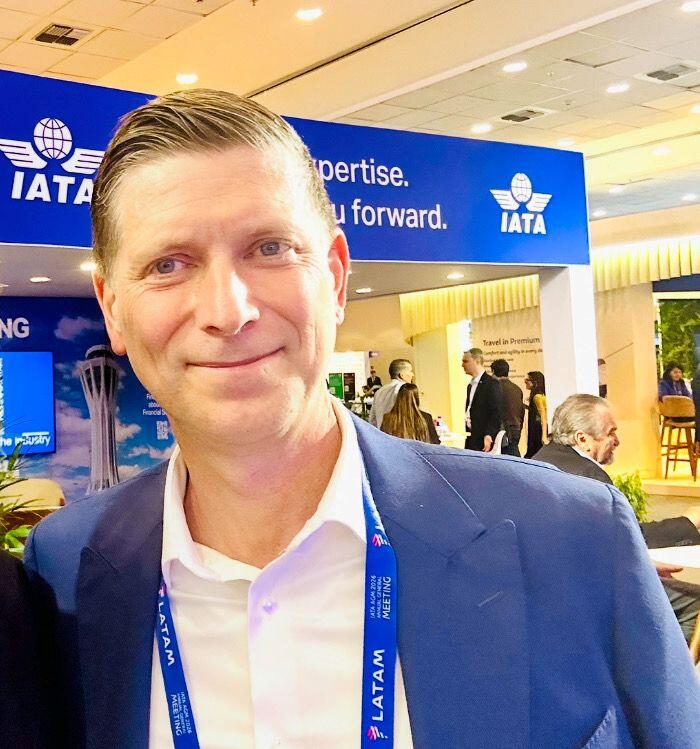
EuroAtlantic Airways CEO Pauls Calitis CEO.

EuroAtlantic Airways CEO Pauls Calitis CEO.

Credit: Kurt Hofmann/Aviation Week

RIO DE JANEIRO—Portuguese widebody aircraft wet-lease specialist euroAtlantic Airways (EAA) is targeting long-term contracts.

“The aircraft-crew-maintenance-insurance (ACMI) widebody market is a very special area of the business. Now there is a new momentum and a new direction for the company to go in,” CEO Pauls Calitis told Aviation Week on the sidelines of this week’s IATA AGM in Rio de Janeiro.

According to Calitis, the carrier has a total of six aircraft, including three Boeing 767-300ERs, two Boeing 777-200s and one Airbus A330. “Two more aircraft [A330s] are in the induction process,” he said.

“In the ACMI widebody market, we are the only ones operating both Boeing and Airbus,” he said. For EAA, the A330 is something new over the last year.

“Obviously, one of the key elements is to get this fleet mix right and have fleet development,” Calitis said. The incoming A330s will also be part of a future fleet renewal over time, because at some point the 767 will be phased out.

“The plan is also to grow on both sides, to keep this unique position to have both aircraft types, to fulfill different appeals to different customers and to have diversification here,” the CEO said.

EAA historically worked mostly on short-term, ad hoc ACMI operations. “This business is very seasonal, and it was a very last-minute operation,” Calitis said. Now the focus is on long-term lease contracts with airlines.

“We are looking into strategic partnerships and developments, building customer confidence. Then they see and take us as part of their fleet network process,” he said. Airlines can optimize peak seasons or address situations when aircraft manufacturers have delivery problems. “But also airlines can adjust the capacity in a clear way, in a way to test markets, for different sizes or when not enough pilots are available,” he said.

Calitis added, “But of course, there is still a component of last-minute flying as well for charter work.”

Compared with the very competitive narrowbody ACMI business, which has seen a lot of growth in recent years and currently faces over-capacity problems as airlines need fewer aircraft, the widebody segment is structurally different. “On the widebody side, you don’t have as many units outside,” Calitis said. “Our plan is a smart and controlled growth, meaning having 12 aircraft in the next three years.”

Most ACMI providers like EAA utilize secondhand aircraft. “It is a very distinct niche. We are looking for early mid-life aircraft, around 10 years old,” he said. Those aircraft are reliable and proven. From a maintenance and cost perspective, this also makes sense. “Also, the Boeing 777-300 is something which is definitely of interest for us,” he noted.

Aircraft types like the Boeing 787 are a different category and could play a role in the long-term fleet planning.

Asked whether the current situation of high fuel prices has an impact on EAA’s operations, Calitis said that in the classic setup, the customer is carrying the direct costs like fuel, handling, and overflight charges. “Fuel directly is not our exposure,” he said.

EAA has around 600 employees.

Kurt Hofmann

Based in Austria, Kurt covers European air transport for ATW.