This article is published in Aviation Daily part of Aviation Week Intelligence Network (AWIN), and is complimentary through Jul 09, 2026. For information on becoming an AWIN Member to access more content like this, click here.
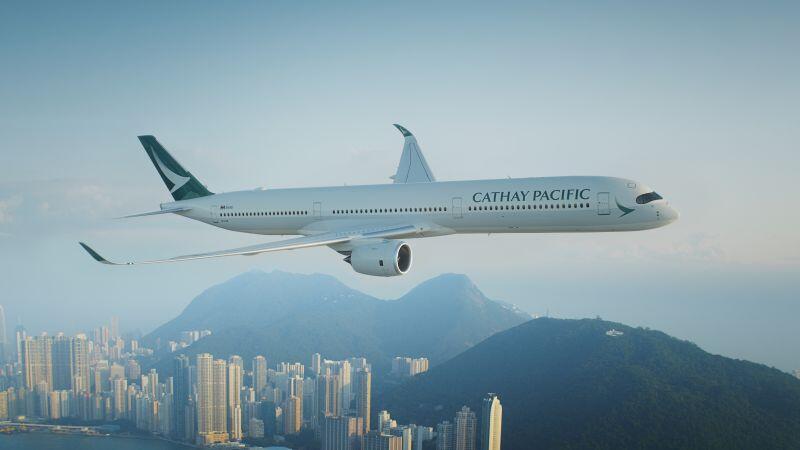
Cathay Pacific Airbus A350-1000
RIO DE JANEIRO—Cathay Pacific Airways entered 2026 in a strong position and remains on track to deliver its 2030 Vision strategy following two solid-performance years.
The Hong Kong-based carrier’s CEO, Ronald Lam, acknowledged there are challenges this year, not least the high jet fuel prices since the outbreak of the war in Iran and closure of the Strait of Hormuz. However, in a briefing on the sidelines of the IATA AGM in Rio de Janeiro on June 7, he also noted that the Cathay Group, which includes Cathay Pacific, Cathay Cargo and LCC Hong Kong Express, saw a “very strong” first quarter.
“We have been using different means to mitigate the cost increases. I hope that the crisis will end soon and that jet fuel prices go back to normal,” Lam said. “Our objective is to try and keep our capacity and network intact. And so far, we have been pretty successful with that objective.”
Cathay Pacific—which celebrates its 80th anniversary this year—and Hong Kong Express canceled only a small percentage of flights in May and June and does not plan to cancel any in July or August.
Although earlier launches of service to New York Newark and Washington Dulles did not work out commercially and were suspended (the airline still operates to New York JFK), new service to Dallas Fort Worth International Airport, home hub to oneworld alliance partner American Airlines, continues. Cathay resumed nonstops in March to Seattle, home hub to Alaska Airlines, another oneworld partner.
“We have a very strong North American network. We fly, for example, three times daily to JFK and three times daily to LAX,” Lam said.
Demand through August continues to be strong, though Lam said they had noticed preferences for nonstops between Hong Kong and Europe, or to transit via Hong Kong, while people are also making their reservations later.
Every crisis, including wars and sudden spikes in jet fuel costs, teaches the importance of improving fundamentals, Lam noted.
“I say, let’s not spend 100% of our time dealing with the crisis. Let’s devote half of our time to continuing with the transformation we need: uplifting the customer experience, enhancing digital leadership and the sustainability agenda,” he said. “Our 2030 Vision plan continues ... and when this crisis is over, we will be a stronger Cathay Pacific. We are here for the long game. We need to be a more resilient, competitive Cathay.”