This article is published in Aviation Daily part of Aviation Week Intelligence Network (AWIN), and is complimentary through Jan 30, 2026. For information on becoming an AWIN Member to access more content like this, click here.

Air France-KLM CEO Sees 'Pivotal' Year With Progress On TAP, SAS Deals
Ben Smith

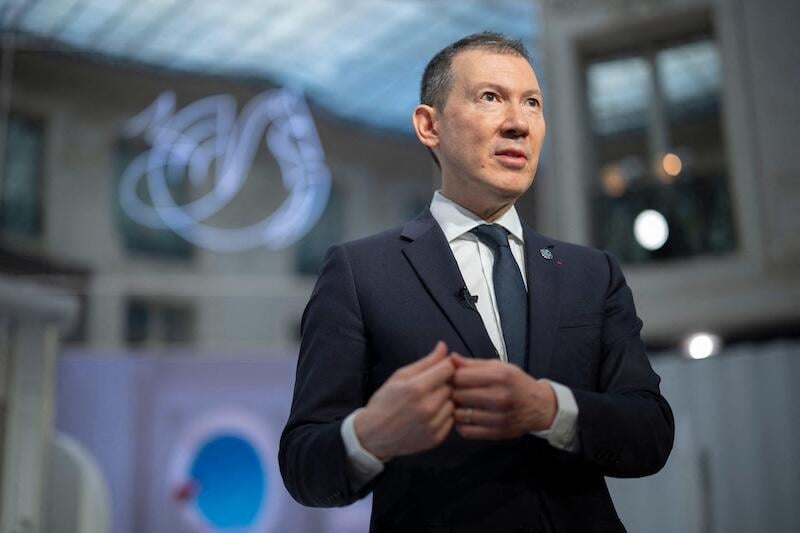
Ben Smith, CEO of Air France-KLM, pictured in 2025.

Credit: Eliot Blondet/Abaca Press/Alamy

PARIS—Air France-KLM hopes progress on deals to take a majority stake in Scandinavian Airlines (SAS) and invest in TAP Air Portugal will make 2026 a transformative year for the group's structure that could see it become a “European global champion,” according to its CEO.

“2026 will be a pivotal year for Air France-KLM,” CEO Ben Smith told journalists at a New Year's media event on Jan. 21. “When we next celebrate our wishes to the press in 12 months' time, I hope Air France-KLM will comprise one or maybe two additional airlines.”

Smith noted that the regulatory process for the approval of its SAS takeover was underway, “and we hope that phase will be completed by the second half of this year, providing Air France-KLM with a third hub at Copenhagen Airport.” 

“Air France-KLM is clearly moving into a new phase, going from a structure with one leg in France and the other in the Netherlands, to a European global champion,” Smith continued.

The group bought a 19.9% stake in SAS in 2023 and said last year it would increase that to a majority stake.

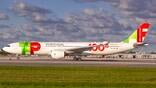
“In parallel, we are actively working on the privatization process of TAP Air Portugal, which is entering its second phase with the submission of non-binding offers,” Smith said.

Later, when asked on the sidelines of the event about the timing of a TAP deal, Smith sounded a more cautious note, saying: “The schedule is not transparent. In the next weeks and months, if all goes well, we should be in a position to submit a non-binding offer.”

The group would like to move quickly but progress on a deal depends on the Portuguese state, he added. “For us, strategically it is clear, but it depends on the objectives and what the state wants. At the moment, they do not want to sell a majority stake, and we need to understand what that means concretely.”

Lisbon-based TAP is seen as a prized asset by Europe's three leading airline groups because of its strength in the Europe-Latin America market, in particular on routes to and from Brazil. International Airlines Group and Lufthansa Group also submitted expressions of interest.

Looking back at 2025, Smith said the group's airlines had hit the milestone of 100 million passengers and noted that its ongoing premiumization strategy, including the launch of Air France's new La Premiere first class cabins last year, was “a key lever of differentiation,” as the group also pushes ahead with its fleet renewal program.

Air France CEO Anne Rigail said the new La Premiere product would shortly be launched on routes to Tokyo, followed by Abidjan, Cote d'Ivoire.

Meanwhile, progress on installing Starlink Wi-Fi across the fleet is ongoing, with an objective of 100% of the Air France fleet being equipped by the end of the year.

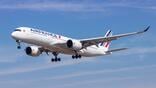
Last year, Air France reached the symbolic milestones of 40 Airbus A350s and 50 Airbus A220s in the fleet, Rigail said, meaning the airline's fleet is currently made up of 45% new-generation aircraft. Its target is 80% by 2030.

Referring to the broader context, Rigail said: “The political and economic uncertainties generate a bit of a wait-and-see attitude with our customers, which can have an impact on our bookings.”

Air France is meanwhile in the process of consolidating its Paris operations at its Charles de Gaulle Airport hub for the start of the coming summer season, leaving low-cost unit Transavia to develop its offering from Orly, the French capital's second airport.

Air France will maintain some important maintenance activities at Orly, however, and plans to recruit more than 1,000 people to its maintenance facilities there by 2027, Rigail said.

Rigail also noted that Air France is investing in AI, with flight crews soon using AI to help adjust flight plans to reduce fuel consumption and avoid contrails.

For KLM, CEO Marjan Rintel pointed to a “very challenging” start to 2026 because of extreme weather that caused major disruption to operations.

“For many, it was a very unpleasant experience,” Rintel said. “KLM and Schiphol [Airport] will conduct an independent evaluation of what happened and how we can do better.”

Referring to the Dutch carrier's fleet renewal plans, Rintel said the last Boeing 787 due to join the fleet should be arriving by the end of the month, and KLM's first A350 should arrive by the end of the year.

The group will push ahead with its “Back on Track” cost-cutting program, which Rintel said was a necessary effort with financial pressure expected to continue in 2026.

Helen Massy-Beresford

Based in Paris, Helen Massy-Beresford covers European and Middle Eastern airlines, the European Commission’s air transport policy and the air cargo industry for Aviation Week & Space Technology and Aviation Daily.