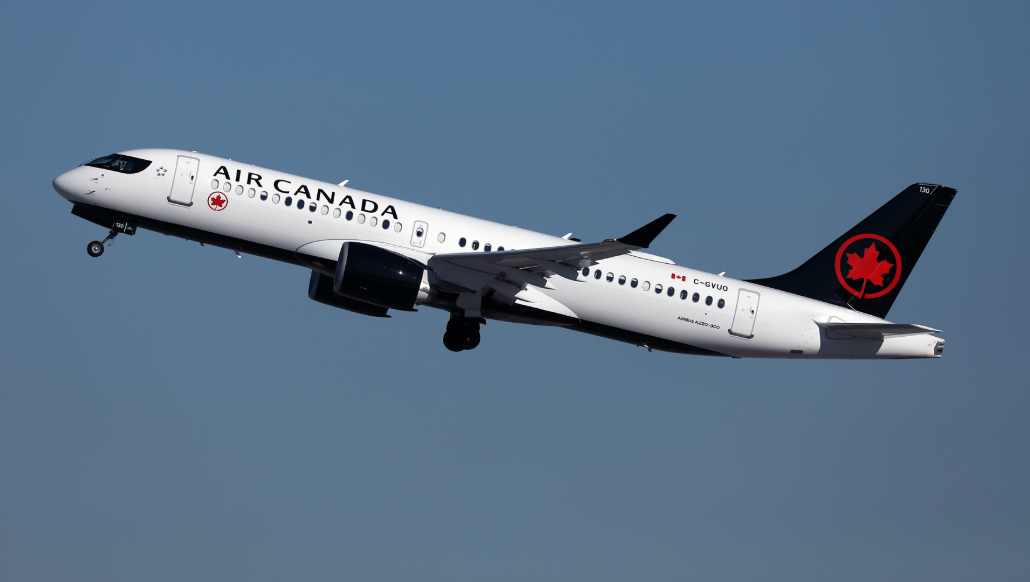
Air Canada is reshaping how it plans routes and capacity as it adopts more conservative fleet assumptions, according to the airline’s VP of network planning, strategy and scheduling.
Speaking at the CAPA Airline Leader Summit in Lisbon, Alexandre Lefèvre said the carrier has adjusted its planning discipline to reflect a more volatile operating environment, where supply-chain disruption, engine reliability issues and geopolitical uncertainty have become structural challenges.
“I’ve stopped making scenarios, because you’re always wrong,” he said, reflecting on lessons learned during the COVID-19 pandemic, the Boeing 737 MAX grounding and ongoing engine issues. Instead, he said, the airline is focusing on building flexibility into its fleet and network so it can adjust quickly as conditions change.
One of the biggest shifts has been in fleet planning. Lefèvre said Air Canada no longer takes aircraft delivery timelines at face value.
“Usually you take the [planned delivery] day and you add six months or 18 months, depending on the time window.” That more cautious approach, he said, has helped improve forecasting accuracy.
The comments come as Air Canada continues to manage the operational fallout from Pratt & Whitney geared turbofan (GTF) engine issues affecting its Airbus A220 fleet, which is used on short- and medium-haul routes in eastern North America.
Lefèvre said engine-related groundings have forced the airline to consolidate and reduce frequencies on some routes, limiting its ability to fully deploy capacity even as demand has recovered in many markets.
Those constraints were a factor behind Air Canada’s decision to temporarily return four slots at New York’s LaGuardia Airport.
Earlier in December, the U.S. FAA granted the airline a one-month waiver from minimum slot usage requirements at LaGuardia for part of the summer 2025 scheduling season, acknowledging that engine maintenance delays were beyond the carrier’s control.
According to the FAA, about 5% of Air Canada’s A220 fleet was unable to operate a full schedule as of March 2025 because of maintenance backlogs and supply-chain issues related to engines.
The waiver covers the period from March 31 to April 30, 2025, allowing Air Canada to retain historic rights to the returned slots despite falling below the 80% usage threshold.
While the LaGuardia waiver deals with a narrow operational problem, Lefèvre said the larger task is building resilience rather than relying on short-term solutions. “Get your long-term objective and then learn to adjust,” he said. “You just need your aircraft and crew to be available ... Flexibility we learned through COVID is important considering the industry is always very volatile.”

Related Content